Nuns Practicing
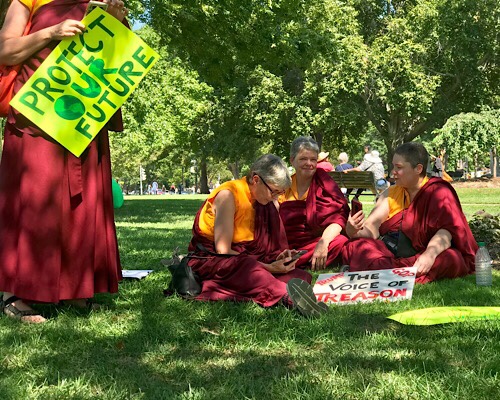
Peace and light, E — Posted with WordPress for BlackBerry.
World Wide Knit in Public Day is this weekend — June 13th (and 14, 20, and 21). What will you be knitting? I have started a pair of leg-warmers. The pattern was really for ankle warmers, but I have chosen to make them longer than the pattern suggested. The nice farmers who raise the sheep, spin and dye the yarn, and sell it at the Dupont Fresh Farm Market, called them “yoga socks.” The yarn is beautiful. The sample pair looked like something I would want on my feet in colder weather. The project was small enough to tuck into my carry bag. Definitely a go for summer knitting (unlike the three-quarter finished mohair shruggy that has become a lapful of furry stuff).
“Why are they so short?” I asked. “We had originally designed them to be longer, but our teacher said we might need to grab our ankles?” they explained. “When would you do that, when it would not matter whether you were touching fabric instead of your skin,” I puzzled out loud, not out of criticism, but really wanting to know, thinking maybe in Pilates. The farmers could not really think of a reason. I bought an extra skein along with the kit to make the — oh, let’s call them footless socks — calf height. The yarn has a bit of a stickiness to it, so they are not slippery. They will be good to wear for yoga.
I’ve never knitted on double-pointed, size 2 needles, in the round before, though I happened to have four in the house (picked up at a yard sale for a $1 a decade or two ago and put in the sewing box). I tend not to knit from patterns for whole projects. So I had a little learning to do. The pattern did not explain how to use the double-pointed needles; that knowledge was assumed. I am not used to the contraints of following a pattern. Doing so, on occasion, though, forces me to learn a new technique. It took my a couple of hours to get into the rhythm, but now I’ve eased into the project.
I sometimes seek the same type expansion with cooking. Though easily able to cook something delicious without a recipe with most ingredients, sometimes I pick out a complicated recipe just to expand my skills in the kitchen.
Yoga, most of all, benefits from a combination of free exploration and attentive development to the knowledge imparted by a teacher. We are most full and expanded when we combine experience and teachings. We receive the teachings and then we practice again and again to make it not just our own experience, but part of our being. This process is called vikalpa samskara.
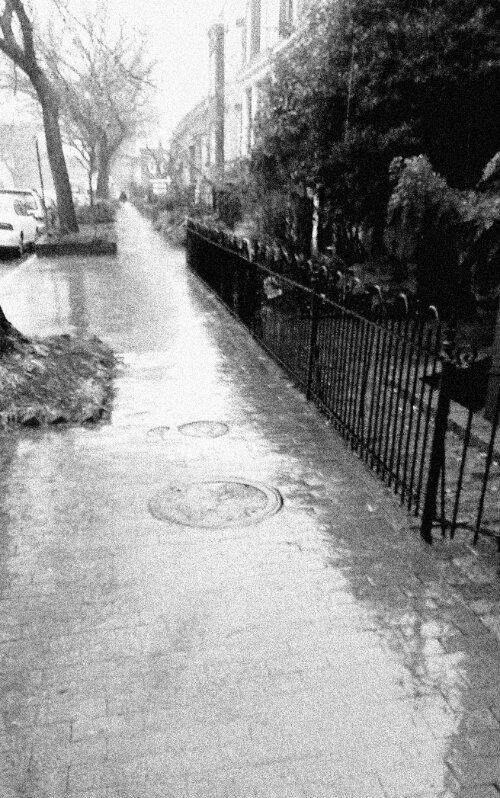
It was good to get outside for awhile, as wet as it was. The mild air promised spring.
Today, before going to Georgetown to volunteer at the Lantern, I went to the morning session of the weekend workshop at Yoga Shala with Ross Rayburn. It was delightful to practice with people from the Anusara days, and to witness how we have grown and shifted