Red Tulips
v
v
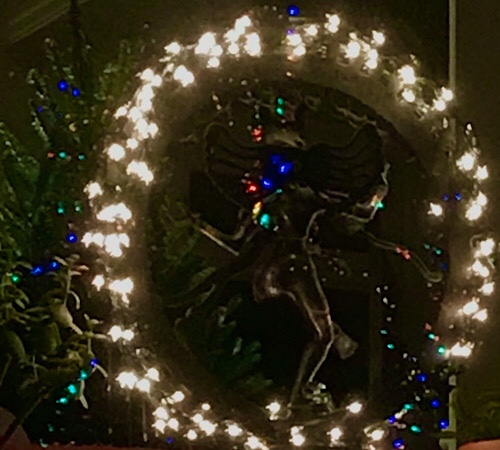
This murti of Nataraja has been in the window of a store near where I work for at least 20 years. I often walk past is and just as often stop to admire it. I have never really considered taking it home, lovely as it is. The murti is simply too large for any of my rooms. I have mentioned its needing a home to a couple of different friends, who were looking for large murtis of Nataraja, over the past few months, but none have followed through.
Today, when I was walking past it on a lunchtime walk to the bank, I noticed a “commercial property for rent” sign in the window. I will miss having this resplendent image in my work neighborhood, but not enough to buy it and bring it home. I decided, though, to take a photograph. I know the owner only very casually, but well enough to know he is retiring, rather than being driven out by rising rental costs or the recession. The neighborhood has gotten trendier since Nataraja first appeared in the window. Nataraja might be replaced with a delicious restaurant or a fabulous store purveying things that entice me. Or the space could stay vacant or be used for something that holds no interest for me whatsoever.
Nataraja–lord of the dance of concealment and revelation, of dissolution and manifestation–is dancing here. The murti will be sold or transported away when the shop closes and will physically be gone.
I will have my memories of the image, a photograph I took with my BlackBerry, and will have had a sweet opportunity to observe the lord of the dance dancing away his own image.
Geeta Iyengar, in Yoga, A Gem for Women, sums up the proper diet according to Ayurveda as follows:
“A balanced diet, in moderation, is the best. Ayurveda says that the stomach should be filled with two parts of solid food and one part of water, and that one part of the stomach should be kept free for the movement of air. Food which is not congenial to the system should be avoided. Too oily, dry, spicy, and sour foodstuff are not good for the system. A diet which is balanced, light, varied, and well cooked is ideal for health.”
In other words, to be healthy, we should eat fresh, varied, well-prepared, tasty food. We should eat with sufficient awareness to know enough the effects of what we eat on our energy level, sleep, digestion, and ability to move and think that we know what is good for our system in small, large, or any quantities (and eat mindfully in accordance with that knowledge). We should not eat to the point of fullness and beyond (this is a common suggestion in the West for losing weight, i.e., stop eating when you are full or right before — think getting away from the unrealistic American portion size). Any other dietary practices should serve to find this place of moderation and enjoyment, the two real keys to health and happiness with and in eating. Diets that take us away from balance will be hard to follow, unhealthy, and cause all sorts of other shifts in our mind-body. What is best for you depends on your own knowledge of yourself and your environment.