Statuary Around Town

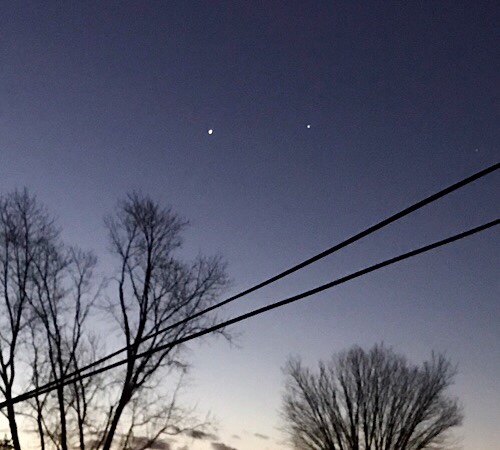
It’s a lovely meditation on perspective–seeing two planets so far apart seem so close to each other and also so much closer to us than usual.
I think some of the sense of surprise is because most of our two-dimensional depictions for explaining the planets show Earth between Venus (the near planet allegorically associated with love and connection) and distant Jupiter (the weighty one, the guru planet).
How could I be facing, the two together, as if they are far closer to each other than each to me, and nothing else visible but clouds at the eastern horizon and a setting half moon to the west?
A work colleague of mine graciously said to me that he did not know how I got through certain meetings without yelling, he did not know if he could do it. I replied that lots of yoga helped. “Maybe I should get back to transcendental meditation,” he said, “but I found it did not really help; I should find something, though.”
I said that I tried to think of the challenges at work as just part of the dance that yields such rich abundance for me. The discussion carried on, and we not only resolved the minor problem that had led to the phone call, but also felt a deeper connection that will make it easier in the future to resolve work issues that we mutually encounter.
What I like best about the myth of Nataraja is that the dance is not for the purpose of creating the world or with any particular design, but for the sheer bliss of dancing — anantatandava. The dance makes possible both destruction and creation, but it is not its reason. When we engage in the dance of our own lives, yoga invites us just to dance fully with wonder at the rich diversity of experience. We make choices and seek to be more aligned, but ultimately we are just dancing.
Uma, the goddess, top of the tattvas.

Peace and light, E — Posted with WordPress for BlackBerry.
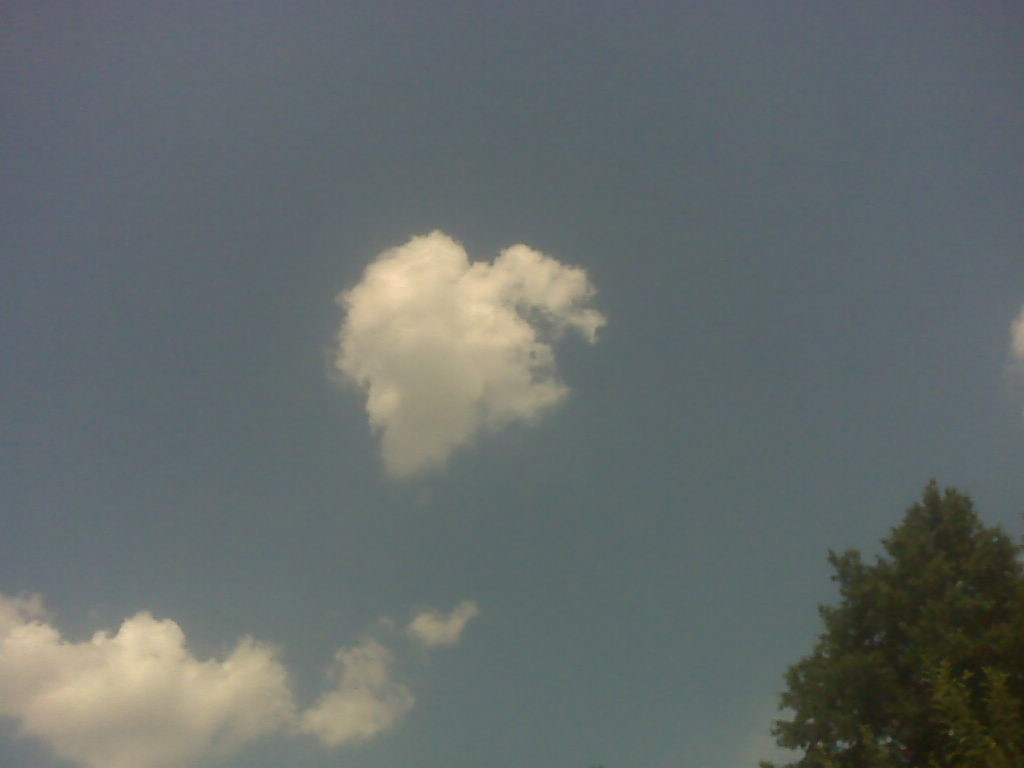
I am reminded
Again to look for beauty
Whatever happens.
Peace and light, E — Posted with WordPress for BlackBerry.