State of the Garden

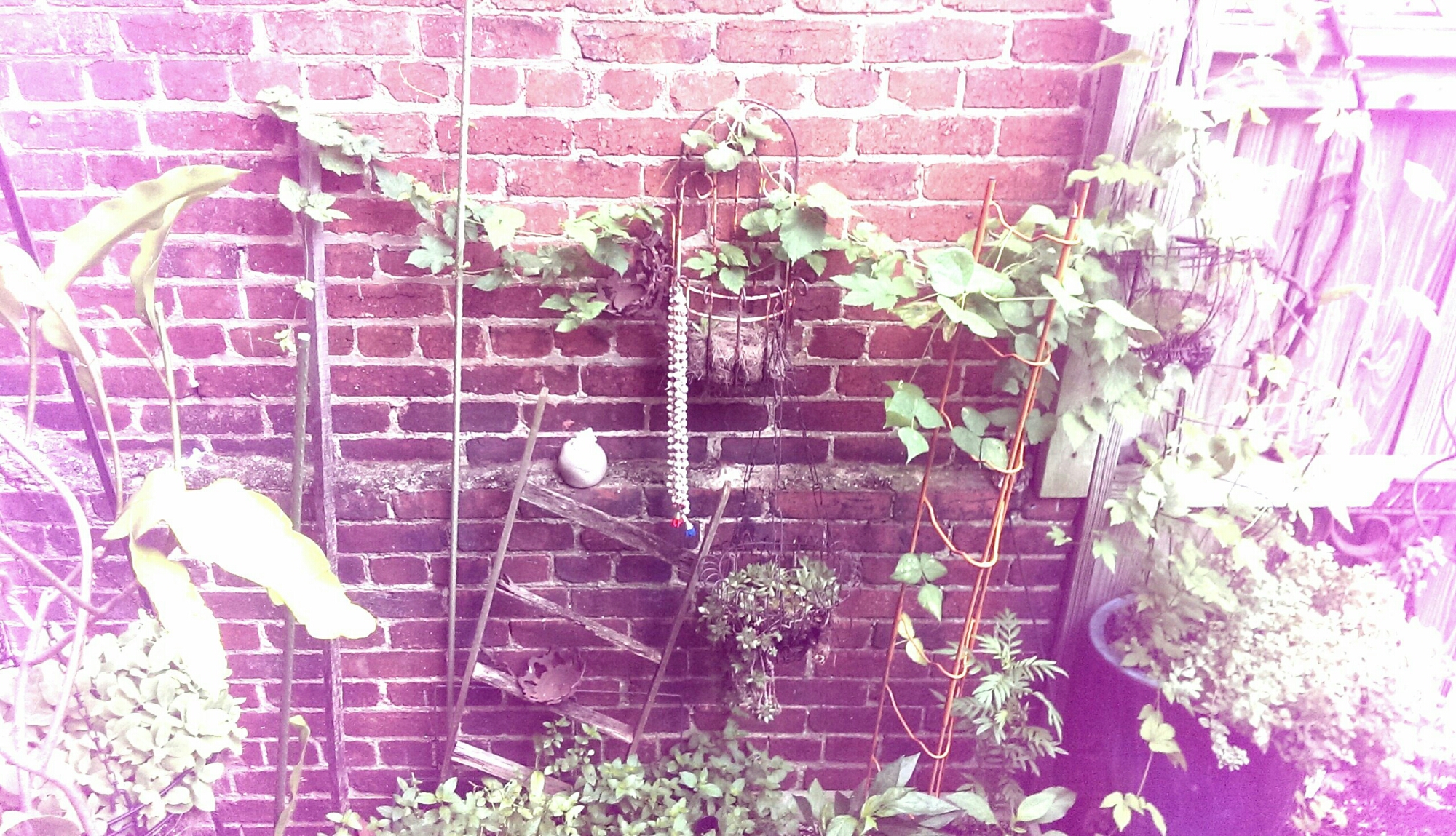
Last weekend, despite the heat, I was moved to make and implement a major change to the back garden.  About 15 years ago, I planted a grape vine.  It took a few years to establish itself and then had a few years that harbored promise.  There were a couple of spectacular years with perfect clusters of sweet grapes so bountiful l shared liberally with both friends and the birds, while still having a marvelous abundance for myself.  For the past three or four years, though, the grapes have been pretty much only for the birds.  The vine was breaking up the lattice of the fence and providing a tangled bridge for weeds from the completely untended yard adjacent to mine to climb.  The whole tangled mess shaded and blocked from rain precious planting space.  It was also becoming a time-consuming maintenance activity.

The kiwi similarly was a noble and ambitious experiment for a tiny urban garden.  But it was an overwhelming thug and only bore fruit generously once in eight or nine seasons the last of which was three years ago.

Oh how exquisite the kiwi berries were when there were any. It was time to recognize, with space and light and water and time so precious, that memories of delicious times did not warrant the  resources the grape and kiwi consumed.

I ruthlessly cut the vines back to the ground.  They may or may not try to grow back, and if they do, I may or may not try allowing them back, but as a controlled espalier.  I kept most of the woodier vines and will integrate them into the trellisses and other supports.

The hops vine given to me as a present this spring grew inches within hours of getting more light and space. I look forward to cool weather planting and new delicious offerings from the garden.

Could there be a lesson from this experience applicable to other aspects of life?  Perhaps.
Similar Posts

  • |

    Ice and garden greens

    Went out into the backyard despite (or perhaps because of) the freezing rain.  The greens had a thin coating of ice, but were still bright.  Picked big handfuls of mixed asian greens, arugula, and chard.  The ice cracked off as I picked them.  Later in the morning, I will saute the greens with tofu for a nice brunch.  I have dough rising for pizza for the neighborhood solstice open house.  I think about making crackers.

    Tomorrow, some of the greens growing will be frozen food.  I’ll make an italian bean and greens soup with those leaves.  When it gets back up to 50F, which it is supposed to do within the 15-day forecast, there will be new growth.  The chard just might make it all the way through the winter.  The arugula — it’s less likely.

  • More Thoughts on Consent

    I’m pretty sure that I am not alone in wishing that I would be assisted or touched–in yoga class or elsewhere–exactly when and how suits me without my having to say a word. But permeable/bridgeable boundaries require clear and steady awareness and communication.

    I’m in the middle of a weekend workshop at Sun and Moon Yoga out in Fairfax (a whole different place from where I live and spend my time in the DMV, but that’s another story) with Dianne Bondy (check her out on social media or get her book) on making yoga more inclusive and accessible to all.

    One of the many things discussed was consent. Since I wrote about my reaction to having to say yes or no to physical assists by hand raising, I’ve also been at a studio with cards that one takes and puts on one’s mat to say “no; please don’t touch me.” What if the card ends up under a prop? What if you don’t want other students to see that you don’t want (or want) assists? What if you change your mind?

    The solution Dianne has seems the best I’ve seen. Every body gets a card (she uses playing cards from the dollar store). Face up means I am open to the possibility of an assist. Face down means leave me completely alone. Students can change which side is up throughout the practice.

    If the card is face up, it’s just agreeing to further the conversation. Seeing that level of consent, Dianne said (as I was taught in my Anusara teacher trainings), if she thought there was something beneficial to offer, she then would ask while approaching if it was ok to offer an assist. If the answer was “yes,” then she would give a verbal assist. Only if the verbal assist was insufficient, would she ask if she could offer a physical assist and would say where she would touch the student to give the assist BEFORE doing so. The student would then have another opportunity to say “no” or provide limits on the permission.

    Of course, in a big public class, this all gets done quite quickly, but I think this really is the only thing that works. I’m also sure, from my personal teaching experience, that there might be an occasional moment, like catching a student about to fall and maybe take down another student, that an urgent intervention must be done regardless of prior permission for assists generally–but those should be rare indeed.

Leave a Reply

Your email address will not be published. Required fields are marked *

This site uses Akismet to reduce spam. Learn how your comment data is processed.