From the Garden Before Starting My Work Day
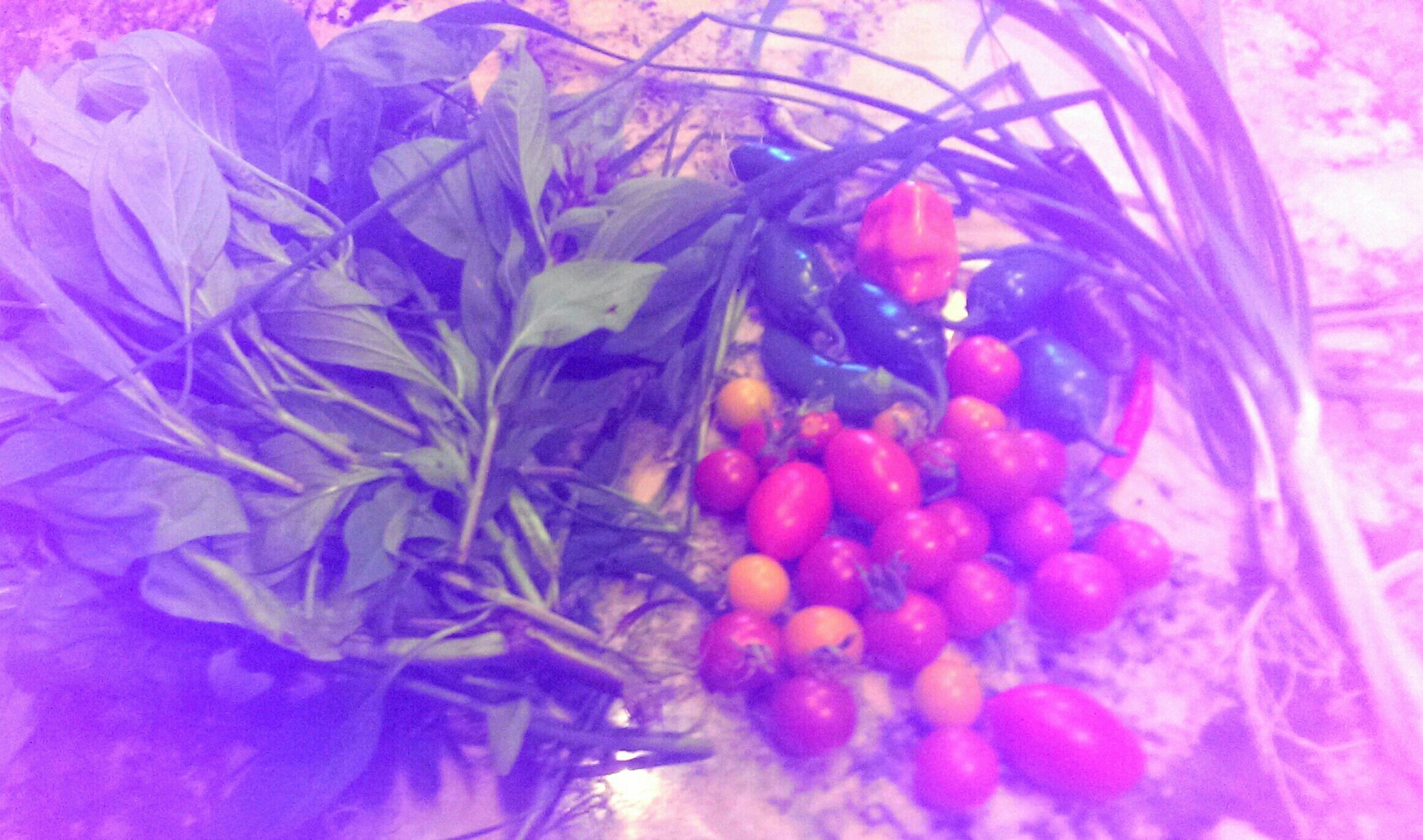
And then pasta with pesto and cherry tomatoes for lunch.
And then pasta with pesto and cherry tomatoes for lunch.
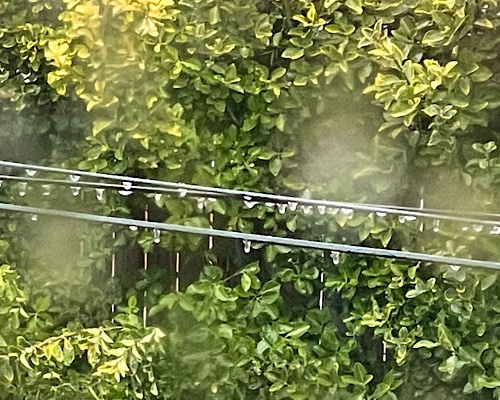
Drops of ice like jewels on the telephone wires.
When we are on our mats, being open to grace — the first Anusara alignment principle — includes being open to the teachings so that we can receive and act on them in a healing and loving way. Adding to that muscular energy by lovingly embracing skin to muscle to bone in a conscious embrace, drawing into our center to recognize our inner spirit, and drawing from periphery to the focal point brings us into optimal balance. This pulsation serves as a way off the mat to open, inspire, and engage us in progressively more intentional and uplifting ways of living.
Being open to inspiration from friends and about town, open to learning new ways to be kind to the earth and to ourselves, is a way of bring the principle of “opening to grace” off the mat. Actually keeping the intention and acting on it has the attentive embrace of muscular energy, which draws us onto our inner light in a loving embrace so that we can better serve.
I was thinking about Anusara principles off the mat, yesterday when I went visit a friend in NW one of whose roommates fosters cats. There is a community garden in the back and the house is warm and friendly. In the bathtub were two buckets filled with water leftover from showers. Instead of using fresh, potable water to flush the toilet, when it is time to flush (honoring the drought axiom about yellow mellowing, etc), the house residents fill the tank with the gray water from the shower.
Find it too complicated an idea to shower with a bucket in the bathtub with you? You can still save water by filling your watering can or bucket when you run the water to warm up enough to get into the shower. That will save a few gallons. Not up to using the water to flush the toilet? Use it to water houseplants or for cleaning floors, etc. Or take it outside to water potted plants.
First step is opening and witnessing the possibilities and understanding where you are ready to expand. The second step is to try to more consistently live your inspiration. I know when I see people living with such intention I take better care to move in that direction, even if I am not ready to go as far.
Do you know who is growing and transporting your food? How about your clothes? What about home furnishings and electronics? Sometimes we cannot avoid consuming things that were created under dangerous and harmful conditions, but we can be progressively more aware and thoughtful in our consumption if we put our mind and will into it.
Peace and light, E — Posted with WordPress for BlackBerry.