Similar Posts
State of the Garden
I think during World War II, backyard gardens supplied something on the order of 40 percent (don’t quote me on this) of the nation’s produce. Were we to do that, how much it might contribute to alleviating any shortages–with so much of our food from beyond closing borders.
How might it help shift our growing climate imbalance and social inequality and the hideous chaos it unleashes? Wouldn’t growing some of your own food be a healthy strategy?
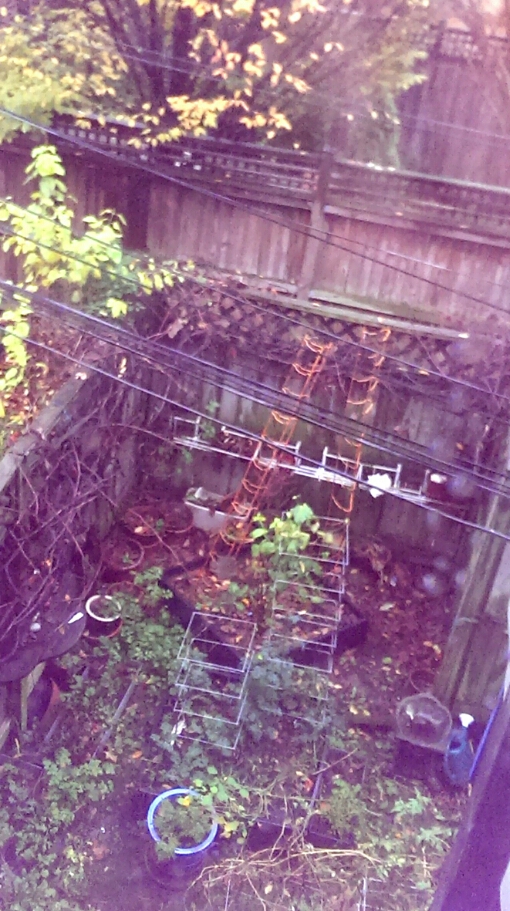
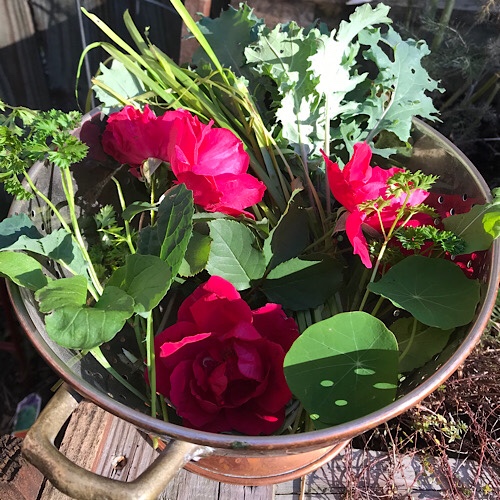
The generous harvest from today’s garden all came up from prior year plantings. I may joke about how many variations of greens and grains and pulses I can come up with, but the greens are from my back garden, bursting with nutrients, and everything else is a long storage pantry item (including in recent years, dried beans, for having grown enough of them). Most anything else is a luxury. I can go a long time between trips to the grocery store and still have well-flavored, healthy, and inexpensive meals.

Sprouted Lentil Salad
When I came home from teaching today, I put together a salad of sprouted lentils, celery, spring onions, and walnuts, dressed with walnut oil and aged, organic balsamic vinegar. What made the salad special was freshness of the lentil sprouts, the subtlety of newly ground pink himalayan salt and the little luxury, the balsamic vinegar. In the summer, it would be great with a new cucumber from the garden on a bed of fresh mixed greens.
Gardening When It’s Not Quite Time (and Sauca)
The first of Patanjali’s niyamas (part of the ethical precepts that are precursors to the practice of asana, pranayama, and meditation) is sauca — purity or cleanliness. The practice of sauca includes in it a literal exhortation to be physically clean. I think it also carries with it a sense of order, a cleaning out of physical, mental, and emotional clutter, so that we have more clarity. When we find more clarity, we can be more in the flow with the inexorable sequence of time and space.
Experiencing how we fit into the pulsation of time and space is one of the exquisite joys of gardening. This time of year, avid gardeners are eager to get int the garden, and it is tempting to get started to soon, to start new things without cleaning out the old. When we are more experienced (and know better the optimal sequencing of starting the garden with the shifting of the seasons), we also know that we might have gotten a few days in the 50s F, but it is still winter.
Emphasizing the practice of sauca now will serve the whole gardening season. When it is still cold, but the heart yearns for the garden, is the time to be planning, reorganizing, and cleaning to get ready for the days when it will stay warm enough for growing outside a cold frame or protected area. As I use a lot of containers, now is the time for me to see what containers need repairs, removal of perennials that did not make it through the winter, and new soil. It is the time to prune what is better pruned now than in the fall. This is not just trashing everything, but seeing what should be preserved, what should be repaired, what should be cleaned, and what should be discarded or given away. It is cleaning out what gets in the way of an optimal flow of energy to experience the greatest effulgence of nature. By practicing the cleaning and clearing out phase with intention and enthusiasm, I am present with the garden and also in sequence with the light and the temperature. In this way, just as I am when I practice these principles on the mat, I get the bliss of yoga.
- Art and Culture | Asana, Pranayama, and Yoga Practice | Community and Family | Dance/Contact Improvisation | Food for the Body | Food for the Mind (Yoga Philosophy, etc) | Poetry
Spam of the Day (Antithesis of mindfulness?)
Really no matter if someone doesn’t be aware of after that its
up to other users that they will help, so here it takes place.