Statuary Around Town


After days of self-quarantine in anticipation of a visit to the dentist for regular care, it was good to be out and about for a bit.
My temperature was 95F on the thermometer used by the receptionist. It’s usually low relative to “normal,” but still.

The moon had risen in all her glory when I left Willow Street Yoga in Silver Spring (from a talk with Dr. Manoj Chalam about archetypes yesterday evening and headed for the metro home. I thought about how the moon shines fully no matter what is below: a pristine mountain lake, a construction site, a palace garden, a land devastated by one of the Four Horsemen, or the street in front of my house. What I think is the goal of most “spiritual” practice is to find a place where, being able to see the light all the time, one can live with uncertainty and challenge and have a greater capacity to serve from one’s unique place.
When I was out gathering vegetables and herbs and doing basic tending for the day, I realized a cardinal, who is a regular visitor, had let me get closer than ever before. Then I saw that he was about to try and swallow a praying mantis. I got almost face to face before he let go.
At first the praying mantis was turned upside down, and I wasn’t sure if it was ok. Then I realized it was holding on to a bee.


I saw this beautiful roll of chicken wire in the Enid Haupt garden when I was walking back to the office after a quick visit to see the Gods of Angkor exhibit at the Sackler Gallery (sorry about the absence of links; blogging from the BB).
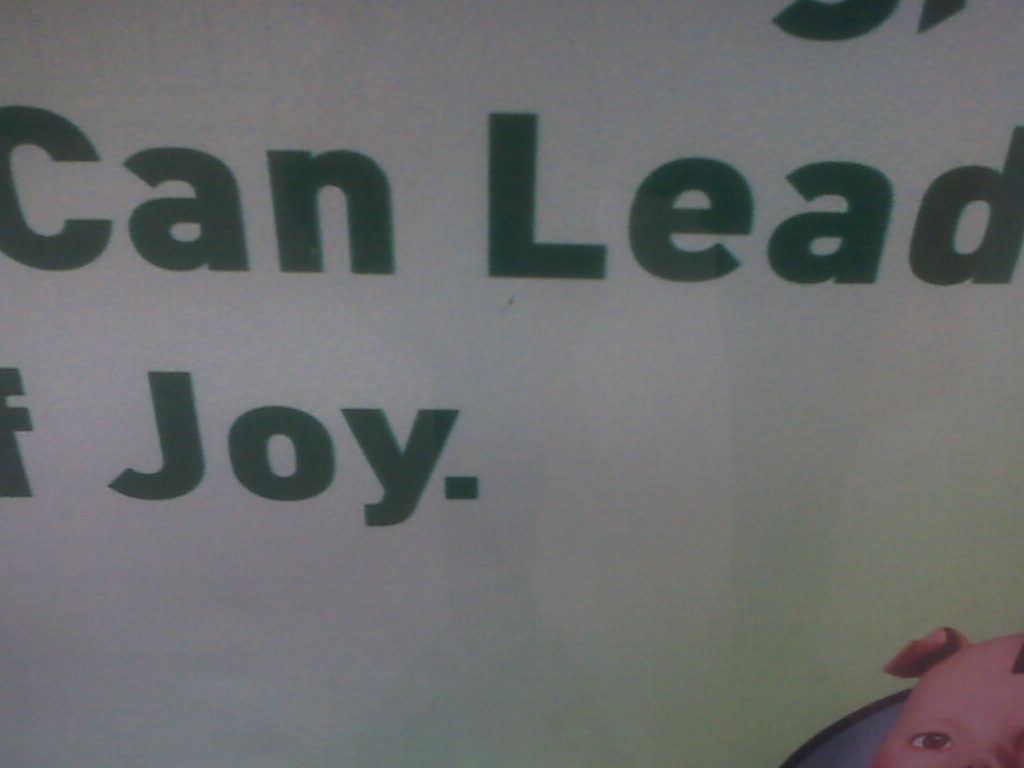
I was first introduced to the idea of “found poetry” in junior high school and have developed a life-long habit of photographing words to change, enhance, and/or question their meaning and hidden beauty by the act of extracting them from their original place and presenting them as a photograph. Marcel Duchamp and others did what poets and photographers were doing with words with ordinary objects by presenting them as sculpture.
Here, where I have photographed the chicken wire roll, is the art a sculpture (because I could treat it as such) of which I have taken a photograph–the photograph being mere documentation? Is the art the photograph of what I have seen to the extent I am offering it as a vision and a dialogue generated by what I saw? Or is the photograph merely a snapshot taken with a hand-held computer device documenting an object that happened to be sitting there–not art at all? If it were not for artists such as Duchamp, could I or would I even be able to ask this question?
I think that analogous types of questions have been and can be asked about the variety of religious and mystical experience. Is there a particular way they must be experienced? Do such experiences have to fit within a prescribed framework to be valid? When are such experiences madness or delusion and when are they the voice of the spirit? Who gets to decide? Does it depend on the era and the culture in which the experiencer lives? Does the answer to any of these questions matter if the experiences lead one to a more loving, compassionate, and beauty-filled life?
I contemplate (practice bhavana on) the yoga principle abhuta (wonder) on a fairly consistent basis. When we can find wonder in sheer miraculous diversity of manifestation, we can enter a space of joy whence we can more likely respond in the highest.
This afternoon, perhaps because I have so recently gone on a practice intensive, I experienced a spontaneous uprising of delighted wonder on receiving an email that would otherwise cause me some consternation and annoyance. Instead, my first reaction was, “My goodness! Another one just like the others, but still new and different! Amazing how that happens. And now I will have to respond.”
I felt that way again as I joined the rush hour crowds on my way from work to go lead the restorative class at Takoma Park. (If you’re in town, drop-ins welcome. Thursdays at 8pm at Willow Street Takoma Park through the end of May).
Peace and light, E — Posted with WordPress for BlackBerry.