Bimba-Pratibimba

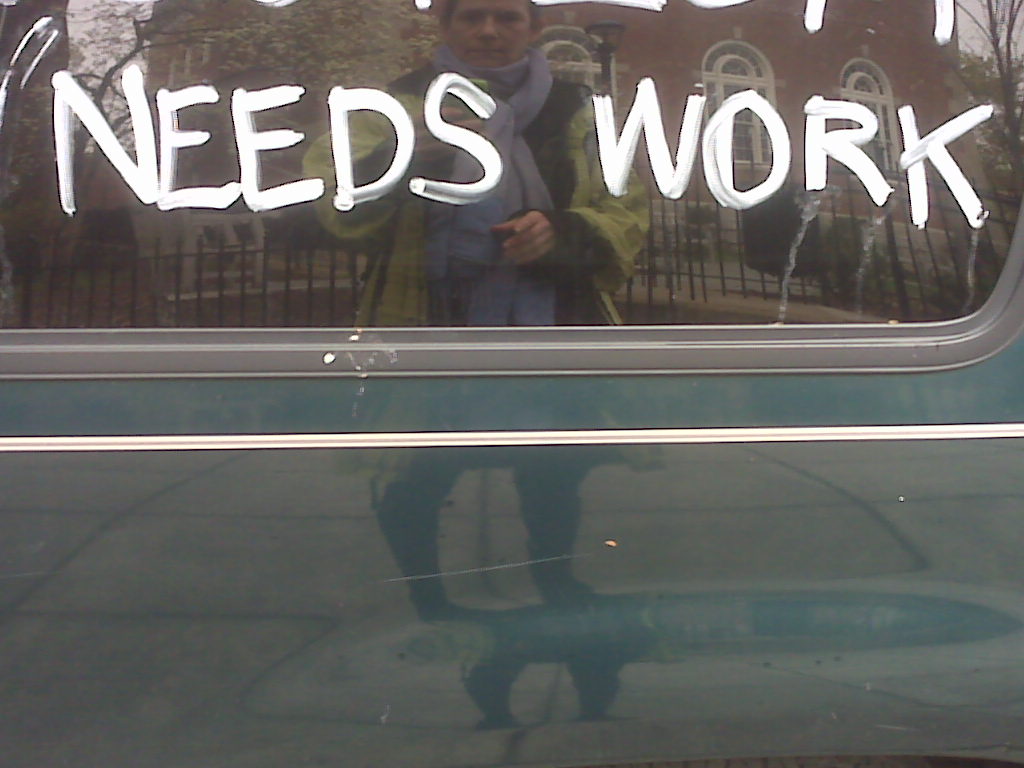
I haven’t photographed the t-shirt with the statement “it’s all good” to go with the sign below “needs work,” but I would need to if I wanted to show the apparent philosophical tangle of tantra.
The tantric texts do tell us that it is all good; more accurately, they tell us that all is divine and perfect, and that we are just an element of the “all.” It is hard to believe that when we can see suffering and bad behavior (including some of our own) all around us.
The tricky thing about the declaration that all is divine is that it does not mean that there is no work to be done. The work, though, is not to fix ourselves or what is wrong or bad. Rather, the work (sadhana) is to study so that with discrimination (viveka) we can determine what is out of alignment and causing our own suffering or contributing to suffering of other beings and move towards and unveil the perfection and fullness that we are.
It is sort of like finding a great treasure that has been neglected and misused out of ignorance or carelessness at a yard sale. It takes knowledge to recognize that the cheap, discarded thing is a treasure and skill and effort to restore its intrinsic worth.
Peace and light, E — Posted with WordPress for BlackBerry.
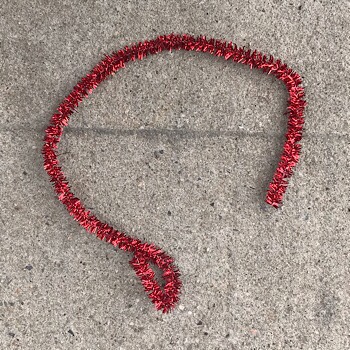
“I realize that often I don’t listen,” said one young woman to her friend. “So I started winding a pipe cleaner around my finger.”
“A pipe cleaner?!” responded her friend.
“Yes. A pipe cleaner. When I realize I’m not paying attention I touch it, and that helps me listen.”
To myself, I thought, “well, if it works for her, although perhaps at some point she can just notice and would no longer need the pipe cleaner.”
And then the next morning, among the things I saw discarded on my walk–a rather fancy pipe cleaner.
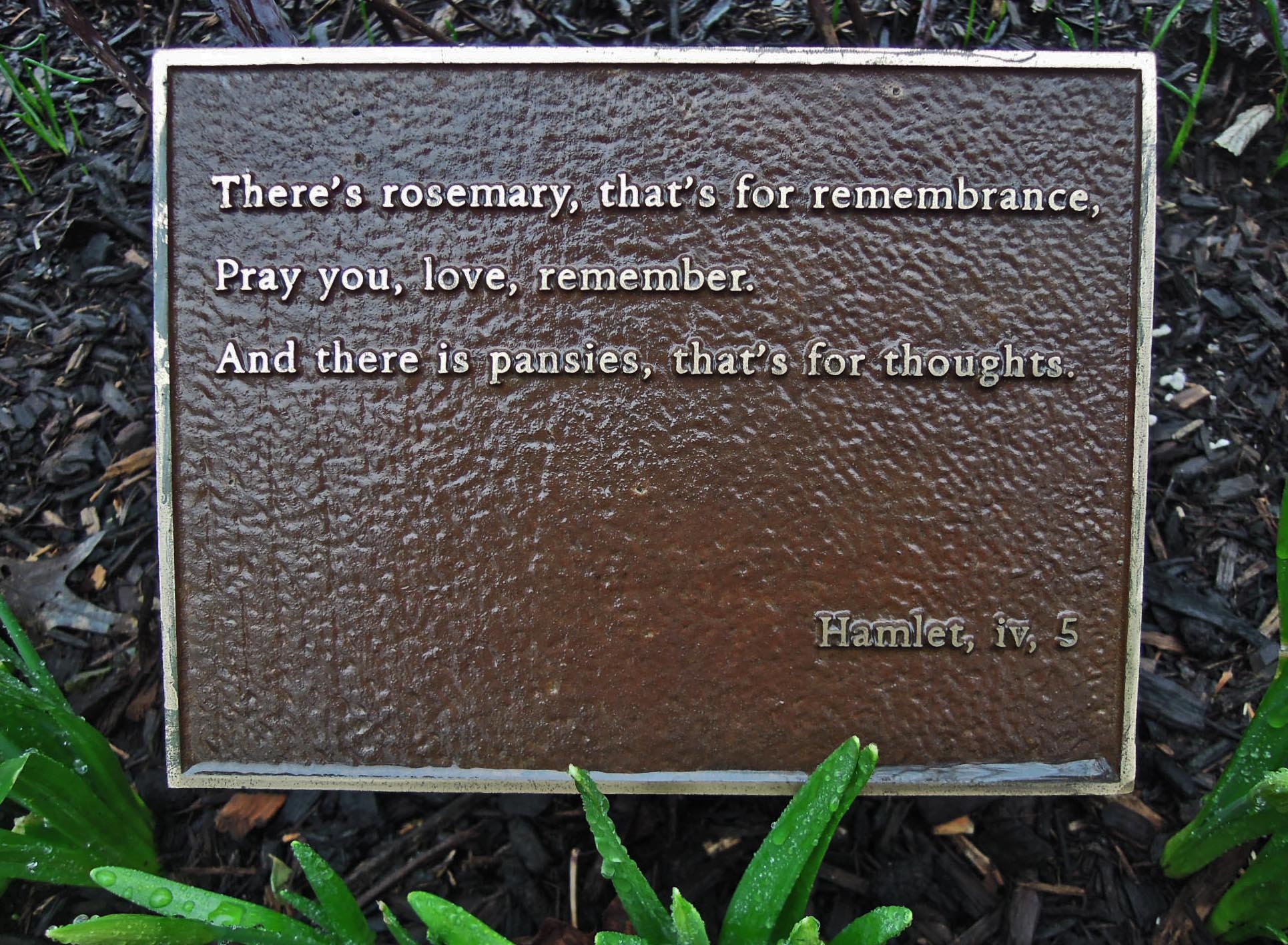
In recent months, I have listened to the stories of a number of close friends and co-workers as they navigate the difficult process of saying their good-byes to the tangible, physical embodiment of a loved one and participating in the loved one’s own good-bye.
I find myself filled with memories of those I still love though the loved one is no longer embodied in the physical form in which I met them. For me and for those with whom I share my memories, they live on as such and. in greater and lesser amounts, in how I think, respond, and act to this day and beyond.
When we choose a tantric path, we choose to experience pleasure as an expression of spirit, rather than seeking to transcend such experience as would one who is on the classical renunciatory yoga path. The choice to remain engaged, to honor mind and body as divine, comes with great responsibility.
When we choose engagement, we choose to experience the divine reality not just of pleasure, but also of pain. The true tantric path does not turn a blind eye to ugliness and suffering. Just taking the pleasure without recognizing its opposite is not authentic practice. If the pleasure of the sunrise is “real,” then the garbage on the beach is just as real.
Recognizing the reality of ugliness and pain as part of the play of the real does not mean, though, that it should diminish our joy in the beautiful and in the dance of the play of opposites of life.
Rather, it is our delight in and engagement with beauty that invites us to serve as best we can to alleviate suffering, to try and clean up the garbage where we can. In other words, as we recognize that ugliness and destruction are part of the play (lila), we seek to be heart-full rather than heart-broken when we witness the suffering from violence to others or our living planet. If we let our hearts break, we become blind to the beauty. Like those who only see what brings pleasure, those who only see the painful are also not experiencing all of the real.
As I head back to the world inside the Beltway, I bring the deepened and replenished sense of beauty and the dance that I always get from collective study and practice. I will try to share the privilege of having this experience by doing my best to clean up what garbage I can, while still dancing and loving in the light.

Classical yoga philosophies (as opposed to tantra) teach us that our mind/body are not real; what is real is “God,” and when we truly know this, we will experience freedom. I personally don’t ascribe to teachings that hold a concept real, but ourselves unreal.
I do think, though, that the practice that comes from this theory that advises us to pause, to step back, and to notice when our reactions to things are so bound in previous limited experience or expectation or dogmatic teaching that we’ve created unnecessary constrictions and suffering.
What appears to be caught or bound or stuck might not necessarily be so.