Signs Around Town

 I returned home last night from eight days away, five of which were truly on retreat — just meditating, bathing in hot springs, hiking, eating well, practicing yoga, and celebrating with dance and music. To see pictures, click here.
The focus of the week was honoring the past and engaging in the present so as best to serve the future.
We left Breitenbush Hot Springs mid-afternoon on Thursday. Rather than take a red eye, I stayed Thursday night at an airport hotel and took an early morning flight home on Friday. I woke early Friday morning and rested in meditation to ease the shock of going from an off-the-grid community in the forest to an airport hotel. This rainbow glowed over the airport while I was waiting for the hotel shuttle to take me there for my flight.
The rainbow reminded me to carry the deep joy of the retreat home with me.
I went to a two session workshop with Jessica Sandhu at Dupont Circle Yoga today, which, being New Year’s Eve, included an invitation to establish a sankalpa (which is something like setting an intention) and a yoga nidra practice to help instill it.
Then I walked home with the last of the afternoon sun and another spectacular sunset.
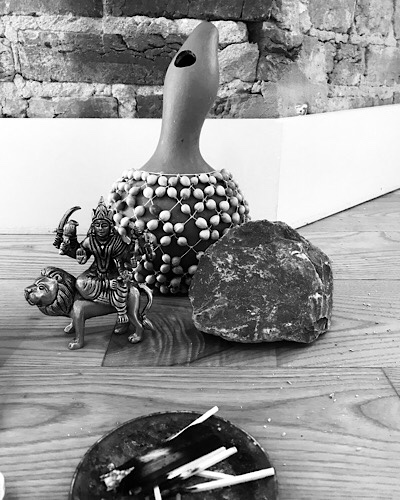
For the past week, I have been meditating on, practicing with, and teaching the water element in classes. Our health and the health of the planet depend on the water element being balanced. When our water element is in balance, we are fluid, open, well-nourished, malleable, and life-supporting. Too much or too little water is immediately a problem. Dehydration and drought wither life; flooding overwhelms.
Yesterday, I developed the symptoms of a rather watery head cold that is going around. Did it come from invoking the water element? Doubtful; probably just a virus. I treat the watery symptoms of not merely with more water (as in plenty of liquids), but more truly with fire: hot soup, hot tea, steam to clear the head, a hot water bottle under the covers. The heat balances the excess of water and the missing fire that comes from a cold in winter.
Every once and a while, I poll my students and ask them whether they find that they need less medication and medical intervention (testing and other procedures) than before they were regularly practicing yoga. Students uniformly advise that they take painkillers less frequently. Some students say they need lesser amounts or have been taken off other medications by their doctors. Others note better sleep, less frequent colds, flu, or other common contagious illnesses. Others have stated they have avoided recommended surgery by working hard to shift their alignment. I personally have experienced great improvements in physical and emotional health from my steady practice, which has led to my doctor of 15 years agreeing that I need less medicine (note: I am not advocating none) and testing. I think my making the commitment to practice to minimize health care consumption as one of the ways I personally take care of the environment.
No matter what it is we are making, consuming, and disposing, and how we are doing those things, the four R’s of consumption to benefit the environment (refuse [i.e., don’t use], reuse, repurpose, recycle), start with not using things in the first place so that we do not have the environmental degradation of manufacturing and ultimate disposal. We do not usually think about this in the context of medical treatment because we want to be out of pain and illness and for the most part, think of medical treatment as a fundamental right.
At an individual level, lots of people would rather just take a pill (or even have surgery) than have to make a consistent change in behavior, physical activity, and diet. There are also times when western medical treatment is the only effective treatment, and we are very fortunate to have it available. Some people are not in a position in society to make a shift easily in this regard or to understand what it means. But for those of us in the know, prevention not just of illness, but of medical consumption, by exercising, meditating, practicing therapeutic yoga, and shifting our diet, is a wonderful way we can personally seek to limit our reliance on fossil fuels and reduce our personal waste output. In addition to eliminating the need to have the supplies manufactured, it will also keep medications that have passed through your body from reentering the water and food supply (which in turn has its own detrimental health impacts to society and to the environment).
Has the practice of yoga changed you as a consumer of health care? Have you ever considered the relationship between being a consumer of health care and your environmental impact?