| | |

Podcast on Ayurveda for Yoga Students and Teachers

Thanks to the generous Cate Stillman for this podcast.  What I like most about Cate’s perspective is her teaching that  truly practicing Ayurveda is paying attention at the deepest level, including paying attention to what in the classic teaching of Ayurveda work for you and what do not–being that they are imbued with cultural elements of the Indian subcontinent that do not necessarily support or resonate with our culture or individual constitutions.

As I study more, I find that it turns out that I had been practicing Ayurveda already by keeping to a regular daily and weekly routine, eating seasonally and locally, eating with sensitivity to impact on my digestion and energy level, and by having a steady practice.  Not being interested in detox (more some other time on the dangers of detox)  or constitution types, or arcane herbal remedies (many of these, by the way, are becoming endangered species), it turns out, does not mean having rejected Ayurveda.  I do know that whether I call it Ayurveda or just plain common sense, the more I live in a balanced, sensitive, and steady way in terms of diet, sleep, entertainment, work, and consumption in general, the more I optimize my health and sense of well-being.

Similar Posts

  • | | |

    What’s For Breakfast?

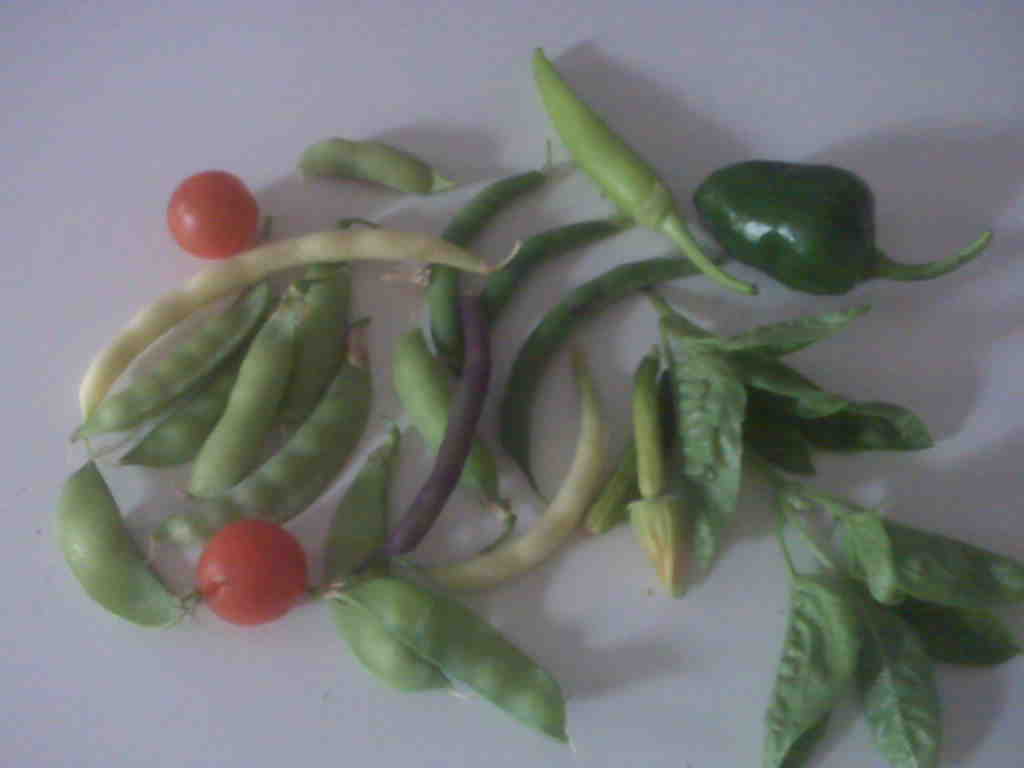
    Snowpeas, tri-color beans. Peppers. Cherry tomatoes, basil (blueberries and strawberries did not make it out of the garden).

    A student asked me the other day why I garden–was it to save money, he asked, was it for better tasting food?

    It does save money to grow food and food eaten straight out of the garden is a foodie’s exquisite pleasure, but those are not my primary motivations.

    I garden for the delight it brings through all of my senses and for the joy of knowing that the garden never questions nurturing. The more I give the garden, the more it gives back, without question or judgment.

    I garden for the sense of relationship with the deeper seasonal patterns. To experience at an intimate level the impact on health and thriving of variations in seasons, light, heat, and rain.

    With the drought and extreme heat in our area, the garden is struggling. Peppers are fruiting before having gotten tall and full. Cucumbers are yellowing and drying, though a couple have grown large enough to eat. There is a surfeit of kale, but the snow peas, which prefer cool weather, barely had time enough to grow enough to flower before it was too hot to thrive.

    Part of the reasons some recipes have many ingredients is because they are premised on there not being enough of any one thing to make a meal. I am getting a few servings of vegetables every day, but the blasting heat is preventing the kind of abundance for some things I might have in another year. The grapes, though, may be outrageous; they like this crazy heat.

    I want to be conscious of these challenges and serendipities. I want to know how I might need to change and adjust to thrive in a world that is ever more out of balance. I garden because it helps me be aware of crisis and challenge, but always and first providing extraordinary pleasure and beauty.

    Peace and light, E — Posted with WordPress for BlackBerry.

  • | | |

    What is “really” yoga?

    Gopi Krishna, in this book The Awakening of Kundalini, writes:  “Yoga exercises can also be directed toward worldly objectives.  There are exercises that are conducive to the health and efficiency of the mind, others that lead to psychic gifts, and still others that strengthen the will and improve the ability to deal with problems.  However, no single achievement of this kind — or even several of them taken together — is Yoga.”  He continues to state that “Yoga is a transhuman state of mind attained by means of the cumulative effect of all practices combined, carried on for years, and supplemented by grace.”  Other texts say enlightenment comes to some just by “grace” with no need for the yoga practices.  Others need various amounts and types of practices.

    Me, I have no idea what is a “transhuman state of mind” but I want for myself and those around me being healthier and stronger, with an improved ability to deal with problems.  (Imagine, for example, those gifts applied in the context of providing universal health care, while simultaneously educated and shifting our society to a healthier way of living).  I don’t think anyone can judge or determine whether one’s self or someone else is truly enlightened or can lead others to enlightenment (whatever that means).  But I am certain from my own experience that yoga helps me to be more grounded, more centered, more intentional, stronger, and healthier.  Thus served by steady practice, I am more content and find it easier to be kind.  I’ll take that for now.

Leave a Reply

Your email address will not be published. Required fields are marked *

This site uses Akismet to reduce spam. Learn how your comment data is processed.