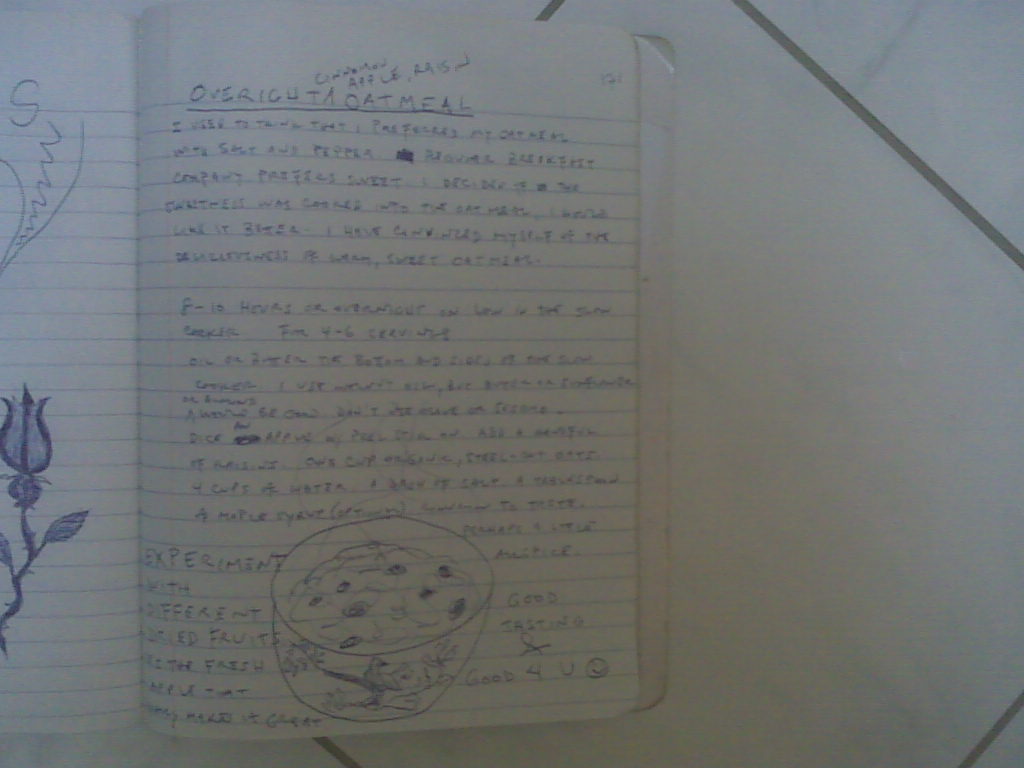
Overnight Oatmeal (Blackberry Version)
Peace and light, E — Posted with WordPress for BlackBerry.
Peace and light, E — Posted with WordPress for BlackBerry.
My favorite sutra in Patanjali’s Yoga Sutra’s is, II.16, “heyam dukham anagatam.” This translates roughly as “the pain that is yet to come can be avoided.” What does this have to do with a forecast of a hard freeze?
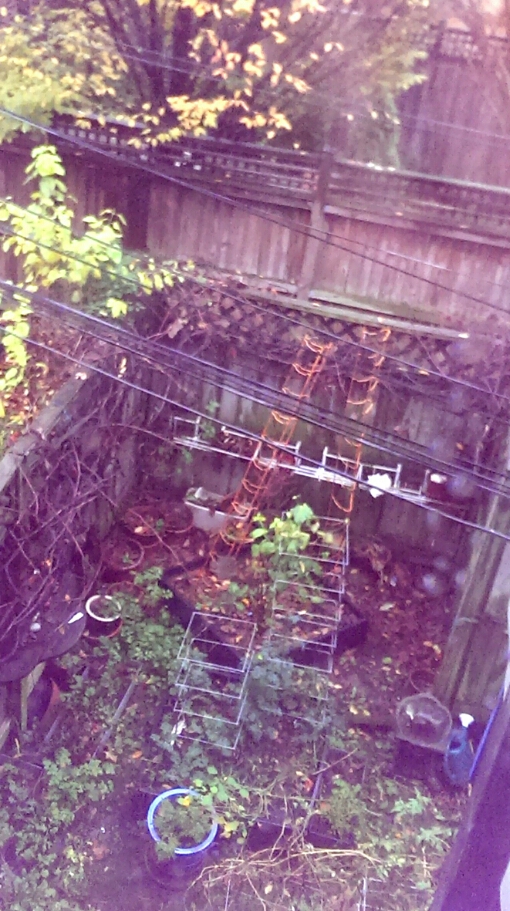
My chard, beets, and turnip greens are still flourishing. They can manage with a night or two in a row in the high 20sF, and that is all we have had so far. The forecast for later in the week, though, is for the first true cold snap since 1994 (you may remember that as the year when lots of people’s pipes froze). My winter garden (which does not have a cold frame due to lack of space — maybe I’ll get more creative next year, and I’ll try an experiement with plastic bags on Thursday night) cannot survive lows in the low teens highs in the twenties.
I could suffer today by bemoaning the coming cold, worrying about the garden, and remembering that I don’t like cold. That would be present suffering in anticipation of potential future suffering. I certainly can avoid that. I can also do what I did yesterday, which was harvest lots of the chard and most of the beets, put the beets into cold storage (vegetable bin in the refrigerator) and make pasta with sauteed garlic and chard. Between now and Wednesday night, I’ll harvest most of the remaining greens. I’ll make a big vegetable soup with the beets and the chard, maybe make chard pie or calzones (truly delicious), and eat the rest over the following days. I’ll feel grateful that in the bitter cold, I can be eating fresh garden greens. I’ll be even more grateful that I can just shop at the grocery store or the farmers’ market and don’t need to rely on my garden feeding me year round. I’ll also be happy for the hard frost. Part of the reason the aphids and the mosquitoes have been so bad is the absence of a hard frost in winter.
Some bitter cold in winter in a temperate zone is inevitable, as are sickness and death. We can avoid suffering by not just getting anxious and unhappy and suffering in the present, but not taking action to alleviate potential suffering. With preparation and practice, we can avoid some suffering. Just has preparing for winter in the garden can allow it to be productive for greater parts of the year, so too, with a steady practice of asana, pranayama, and meditation we can avoid some physical and emotional pain and suffering. Most important, with steady preparation (preparing for the potential for difficulties in the future is not the same as being anxious about it), when the inevitable comes, we will likely suffer less, at least in our hearts, if not in our bodies.
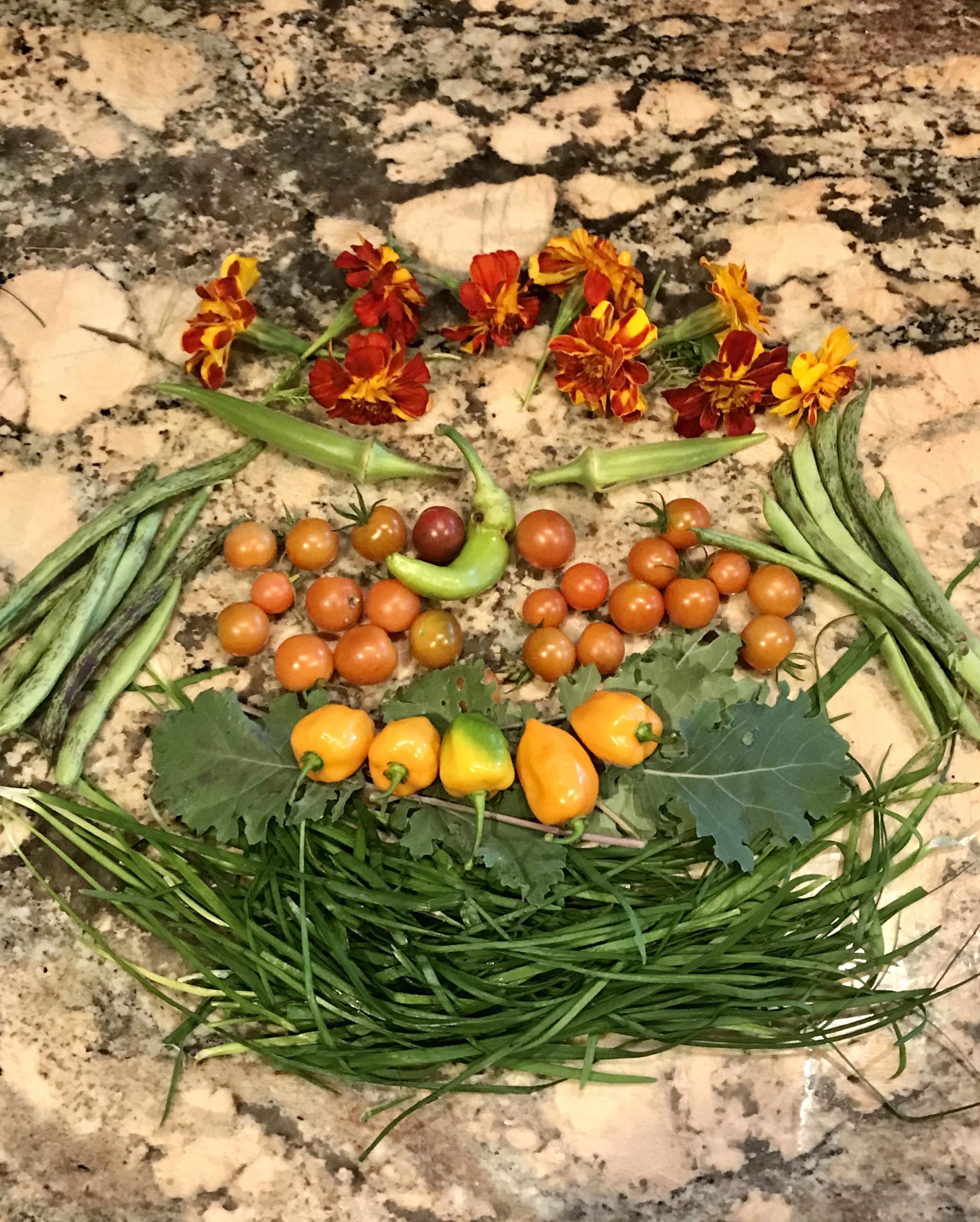
Arugula, chard, kale, garlic chives, celery, various perennial herbs
The Self in man and in the sun are one./ Those who understand this see through the world/ And go beyond the various sheaths/ Of being to realize the unity of life./ Those who realize that all life is one/ Are at home everywhere and see themselves / In all beings. They sing in wonder:/ ‘I am the food of life, I am, I am;/ I eat the food of life, I eat, I eat./ I link food and water, I link, I link./ I am the first-born in the universe;/ Older than the gods, I am immortal./ Who shares food with the hungry protects me;/ Who shares it not with them is consumed by me./ I am this world and I consume this world./ They who understand this understand life.’ Taittreya Upanishad, 10.5, trans. Eknath Eswaren.
As one who is immersed in the joy of growing, selecting, creating, and tasting food and studying and practicing yoga, it is no suprise that the Taittreya Upanishad (which Eknath Eswaren subtitles “From Food to Joy”) is one of my favorite readings.
The Taittreya Upanishad explains the five sheaths or koshas that make up the self — the food body, the energy body, the mind body, the intuitive body, and the bliss body. What we take in with our senses and what makes us flesh and blood can, with right observance and practice, lead us to a consciousness of self as joy and spirit embodied. This is the yoga of eating and of food.
For more details on the Taittreya Upanishad, please see Jon Janaka’s article, “I am the Food!”
Other sources:
Upanishads, trans. Patrick Olivelle (Oxford World Classics 1996)
The Upanishads, translated for the modern reader by Eknath Eswaren (Nilgiri Press 8th Printing 2000)
The Ten Principal Upanishads, put into English by Shree Purohit Swami and Wm. Butler Yeats (Faber and Faber, London, Reprinted 1952)