Similar Posts
Morning Light
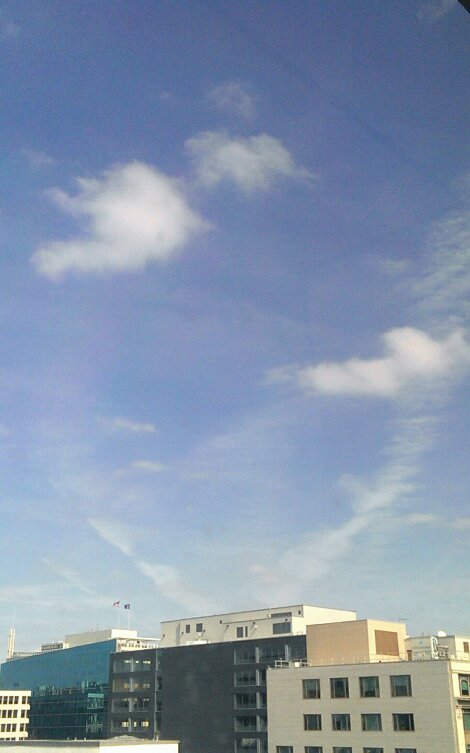
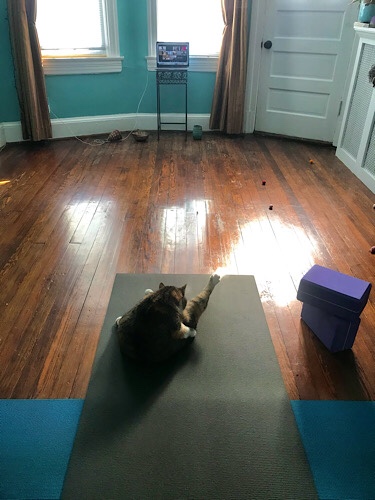
As the days get shorter, I am waking in the dark, and the light rises while I do my morning practice.

Signs Around Town (On Sufferance for How Long?)
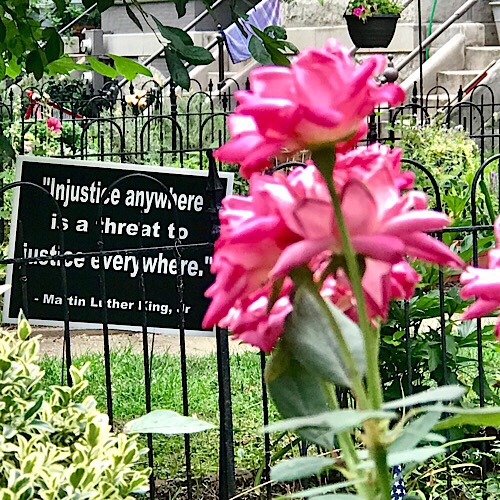
How long will they be allowed to stay without repercussion? I am holding all who are brave enough to be “occupying” in the light. I walked past McPherson Square on my way to a routine doctor’s appointment covered by health insurance. Shouldn’t everyone be able to get medical care for only a modest co-payment?
Below: photos of “Occupy DC” at McPherson Square on 10/27.
- Art and Culture | Asana, Pranayama, and Yoga Practice | Community and Family | Food for the Body | Food for the Mind (Yoga Philosophy, etc) | Gardening
Living Mindfully in a Heat Wave, Ahimsa, and “Opening to Grace”
Ahimsa, which is the first of the yamas in Patanjali’s Yoga Sutras, and thus is the first practice or principle of the eight-limbed path, is usually translated as non-violence or non-harming. Over my years of practice and study, I have read and heard many versions–some general, some personal beliefs–as to what it means to practice nonviolence as part of a path of yoga. As I watch the way people around me are behaving and reacting to the heat and drought, I thought about how, for me, the practice ahimsa is as much about seeking to be in alignment with the movements and shifts around us that we cannot change as about refraining from specific acts of violence (though that is obviously a basic element).
In terms of aligning with the world arounds us and the cycles of our own body-mind, when we are sensitive to what will best serve our own self while having the least impact on the environment, we are practicing ahimsa, in other words, “opening to grace.” How does practicing ahimsa by behaving mindfully incorporate many aspects of the Anusara first principle of opening to grace? Opening to grace, as a practice principle, invites us to be open, sensitive, spacious, and radically affirm what is so that we can expand, shift, and serve ourselves and others in the best way possible under the circumstance. To be open in this way, try not to rage at the heat–or whatever is your weather. Soften, listen, and mindfully discover how you can live at your fullest, kindest, and most generous with what you cannot change.
When the temperature soars above 95F for days in a row, it is an act of violence to rage against it or to consume outrageous amounts of fossil fuels to cool our businesses and homes enough to wear warm clothes, sleep under blankets, cook and eat hot foods, or do an athletic asana practice or workout (lest we feel that we are not fulfilling some externally motivated personal notion of fitness–having external notions of how we should look, act govern us without accepting the actual situation is its own form of violence against ourselves) that we would not do if we could not artificially cool our environment.
Perhaps I have no call to speak on this: my central air conditioning is on, though I’ve been keeping it between 78-82F and I have been moving, dressing, and eating in a way that honors the fact that those temperatures are as cool as it is going to be until the heat wave breaks. Some might argue that using any air conditioning or even an electric fan or a refrigerator is doing excessive harm to the environment. That may in fact be true, but asking for more than we can do just makes things seem impossible, and then we are less likely to make any shift at all.
Peace and light, E — Posted with WordPress for BlackBerry.
A Mini-Experiment (Meditation and Blood Pressure)
This morning I went for my bi-annual physical. The first thing that the doctor’s assistant did after having me stand on the scale (a blood-pressure elevating activity out of habit), was take my blood pressure. It was on the low end of normal, as usual for me.
In the middle of the exam, after having intimate discussions about tratment to alleviate suffering vs. treatment for longevity, and similar topics, my doctor took my blood pressure again. No surprise: it was higher than it had been when I irst walked into the exam room.
When we were just about done, my doctor said, “let’s see if we can lower that blood pressure. Close your eyes and relax.” “Relax” can be a hard command to obey. Instead, I went right to where I go in meditation, softening to my mantra. In less than a minute, my blood pressure was lower than it had been at the start of the exam. “A beauty of meditation,” I said. “Yes,” my doctor replied (who is a very traditional western medical practitioner, “I wish I could get all my patients with high blood pressure to meditate.”