| | |

How Do You React? (and Dharma)

How do you react when you see signs of neglect, disinterest, disregard for the health and well-being of the earth and other beings?  Do you get stuck in a sense of helplessness or rage? Do you think we’re all screwed anyway and decide no effort to make things better is worth it?  Are you moved to political action?  Are you moved to take better care of self, family, and friends, even if you think you cannot make much of a greater impact beyond your intimate circle? Can you remain engaged and still find joy, whatever the apparent immediate results and how hard the battle seems to be?

The Bhagavad Gita, says that to live a life of yoga, we must do the last of these.  The first teaching from the Bhagavad Gita on this point is that we must live in accordance with our  dharma (duty).  The second teaching, and more important for having peace of mind in a life of duty, is that of “actionless action.”  The true yoga is to live a life of action in accordance with dharma, but without attachment to the outcome (i.e., live in an orderly way, accepting the tendency of the universe to be chaotic). 

Dharma in the Bhagavad Gita, of course, contemplated rigid roles in terms of livelihood and place in society.  In the paradigm of citizenship in a democracy that does not so narrowly circumscribe one’s livelihood or place in society, I wcould argue that it is all of our dharma to participate as a citizen, voting, speaking out for our beliefs, and otherwise using the freedom we have to live a life that best supports the twins of individual and common good, including not just human good, but the whole ecology in which we exist.  The actionless action part is to keep seeking (without despairing) to make things more in alignment even if the forces against healing, nurture, and alignment seem to conspire against positive results that we will see or actualize ourselves.

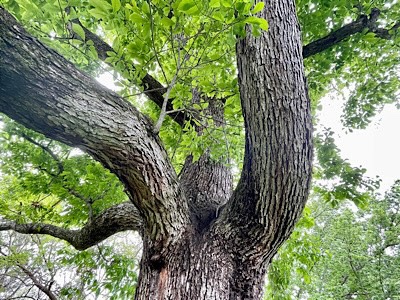
Are you registered to vote?  Have you watered your trees?  Casey Trees reminds us that this week in DC is dry; trees need about 25 gallons of water or 1 1/2 inches.

Similar Posts

  • | |

    The Fisherman and His Nets

    dorothy

    Earlier this week, I took a wonderful class with my friend J, who is an Anusara teacher based in NYC.  She started class telling a story of a fisherman.  The fisherman had worked hard and long during the spring, summer, and fall and was looking forward to a rest during the winter months.  He left his boat and went ashore, looking for shelter.  He came upon a brightly lit house and was invited in by a friendly host.  He was given a delicious meal and then brought to a beautiful bedroom with a fabulously made, soft bed with exquisitely scented linens.  He got into the bed, but tossed and turned and could not sleep.  Agitated by his inability to sleep, he left the house, went back to his boat, wrapped himself in his fishy-smelling nets and promptly fell sound asleep.

    J interpreted the story as saying that our familiar patterns bind us and keep us from discovering and receiving true beauty and bliss.  This interpretation resonated with the students; one called out in a conversation about the quantity of nets we have, that she could alphabetize hers, and we all laughed.  I heard something different in the story, though perhaps it was because I had seen part of The Wizard of Oz when channel-surfing in my hotel room the night before.  What I heard was that when we accept our work and our place, we find a place of true rest.  When the fisherman realized that his place was on his boat — at home with his work, instead of seeking ethereal bliss — then he found peace and true rest (“there’s no place like home, there’s no place like home…”)

    What is missing from the movie version of The Wizard of Oz, though, is that in later books, Dorothy goes back to the land of Oz, bringing her family and work (albeit that of a child) with her.  She, in effect, integrates the importance of prosaic home and work life with being in a land of enchantment.  In that, both interpretations of the story of the fisherman are partly true.  We need not to let our old habits bind us, but we also need not to cast off work, home, and community as things that interfere with our discovering bliss.  Instead, we need to find enchantment in our very being, as we live and work and relate in this world.

  • | | |

    Probably a Cooper’s Hawk

    “Wow!” exclaimed the well-dressed woman who was walking towards the Senate office buildings as I was walking in the opposite direction to the DOL through the park on the North side of the Capitol. We had both paused absolutely still to appreciate the drama of the moment.

    A raptor flew in and landed on one of the high tree branches. There were a few warning chirps and calls and then everything froze into stillness and silence. After a few minutes the bird flew off, and gradually the squirrels, sparrows, starlings, etc resumed their usual morning activities.

    “Did you notice how every thing became still?” I replied.

    “Yes,” said my companion in the moment of appreciation and observation. “It hardly seemed real.”

    We then moved on to go about our business, becoming conscious again of the noise of the city as the small animals and birds went back to their usual activities.

    I looked it up when I got to work. It was most likely an immature Cooper’s hawk.

    I did not even think to photograph the moment lest I disturb it. These are the trees after the fact.

    Peace and light, E — Posted with WordPress for BlackBerry.

Leave a Reply

Your email address will not be published. Required fields are marked *

This site uses Akismet to reduce spam. Learn how your comment data is processed.