When I was on the bus to go to Meeting for Worship, police officers boarded the bus and came up to young couple with an infant who had been sitting quietly and minding their own business. The police said they just wanted to talk and they also insisted they get off the bus because the police weren’t going to be holding up the bus. Even though the police wouldn’t answer why they were stopping them, the family got off the bus.
I managed to have the presence of mind to record the interaction, being obvious and also quietly in my seat. I held the phone horizontally, recorded the police, not those under scrutiny, etc.
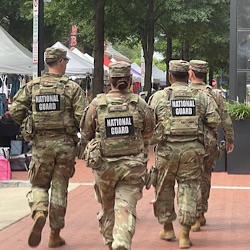
When the bus was moving towards the next stop, I saw National Guard walking briskly in the direction of where the police had been.
The challenge is how to be aware and alert, to be responsive, to help in the fight, and also remain lovingly present, to hold all present and impacted in the light.
I saw other clutches of National Guards throughout the residential parts of the city. I choose not to find my peace of mind by becoming inured to their ubiquitous presence.
One of the offerings in John Friend’s Anusara Teacher Training Manual, is the “four gates of speech,” which I believe comes from Buddhist practice. The four gates are:
1. Is it truthful?
2. Is it necessary to say?
3. Is it the appropriate time?
4. Is it a kind thing to say?
It is easy to see this application in terms of speaking with others, though not always easy to practice, especially in a group setting where the culture is to condemn and criticize.
A more subtle practice of the four gates is how we talk to and about ourselves. I am someone who was raised to have a very strong internal judging voice. Although with the steady practice of yoga affirmation, my tendency for self-judgment has eased, the propensity reasserts itself when I am stressed. I have taken to asking myself, when I hear the judging voice, does it pass the four gates of speech? I find it a challenging practice, but a necessary one. When we honor ourselves (we can honor ourselves and our own light and still know there are ways we would benefit from expanding or shifting), we will more easily honor, recognize, and affirm the light in others.
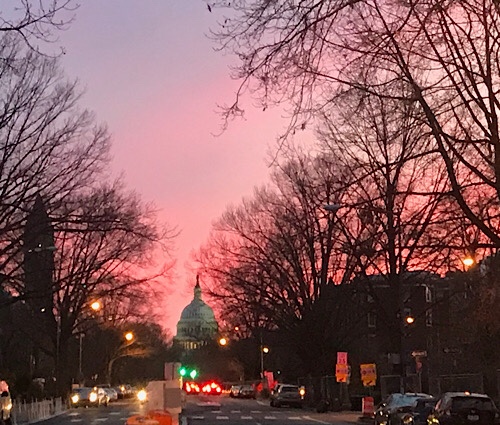
I was grateful to be able to walk to my comfortable home with plenty of food and to notice the beauty, but still engage in discussion and action to address the current situation. I choose as my role models those who inspire me to think and work and engage more fully. What are the responsibilities that come with privilege–as much as one has (at this point I have more than most,whatever it took to be where I am)?
For those students who live within a few blocks, have power, and are not needed for such emergency assistance that can be provided before the trains are running and the roads reopened, what better than to come out and practice yoga as usual? (Or if the storm has made it impossible to get out, it’s a great time for your home practice).
The yoga practices are such a healthy way to channel the energy from having been cooped up by the storm and to revive and enhance one’s flexibility, adaptability, balance, and strength. It has been my experience that steady practice invites us to be ever more capable to address what confronts and engages us on our path (whether we like it or not). Sending loving energy to all who have been challenged hard by Sandy’s path or otherwise.