|

Over Under

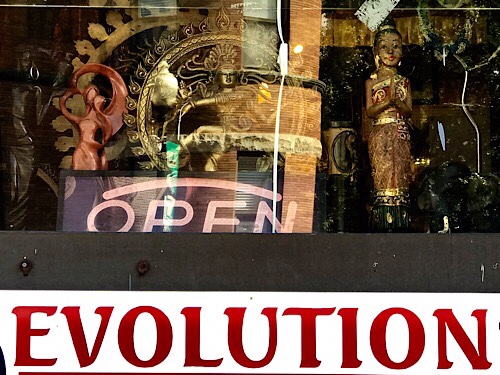
Uma, the goddess, top of the tattvas.

Peace and light, E — Posted with WordPress for BlackBerry.

Similar Posts

  • | | | |

    Bare Bones of the Trees (and Pratyahara)

    One of the things that I appreciate most about winter is being able to see the bare articulation of the shape of the tree in the absence of its leaves. A dormant tree looks very different from a leafless, lifeless tree. The dormant tree still has a vibrancy to it.

    As I enjoyed the beauty of the trees in Stanton Park this morning on my walk to work, I thought about pratyahara (withdrawal of or from the senses), which is the fifth step of Patanjali”s eight-limbed path of yoga and the bridge between life and physical practice (the first four limbs consist of ethical observances and restraints, asana, and breathing practices) and meditation. I have been led to contemplate the practice and meaning of pratyahara since the last meditation retreat I attended.

    From a renunciate perspective, pratyahara entails withdrawing from that which stimulates our senses. A renunciate would simplify and restrict what he or she takes into his or her system to free the mind from stimulation and make it easier to go into a space of meditation.

    Being careful to eat lightly, avoiding the stimulation of electronic entertainment, finding a quiet place to sit, and shutting our eyes before we begin meditating is part of the practice of pratyahara that all of us who practice meditation do as a matter of course.

    From a tantric perspective, I think pratyahara fits into our practice a little differently than for someone seeking to be on a reunciate path. We may definitely choose to minimize undue or excessive stimulation because certain types or amounts of stimulation feel out of alignment with our practices. For me, more than a certain amount of sense stimulation and certain types of stimulation can numb my celebration of and experience the spirit. Refining what I take into my system so I feel better able to live fully and celebrate and see the play of consciousness is different than renouncing objects that stimulate the senses or sense impressions themselves, as being less real than spirit. It is not renouncing things as unreal; it is picking and refining what to experience to better recognize and remember spirit. For the great siddhas, withdrawal from stimulation would not be necessary because they do not lose sight of spirit by either the cravings of the senses or being overwhelmed by reactions to stimulation of the senses.

    The trees seemed to me this morning to help elucidate this principle. The trees aren’t acting out of ego or greed or yearning to find happiness from the outside because of an emptiness on the inside. They are always open to the light and the rain. In winter, when they are dormant, they are not reaching for the light and rain or hungering for spring. They are there in all of their beauty open to receive nourishment when it comes. In spring, when the leaves start to bud and open, it is because of the light and the rain, but the essence of being a tree does not change or get distorted by going inward and resting or by opening to burgeoning growth.

    When we can simply open to all that is around us as spirit (beyond my capacities except at the rarest of times), then we can be open to the fullness of what stimulates the senses and still be practicing pratyahara. As long as we are swayed from the recognition and delight of spirit by stimulation of the senses, then we need to practice withdrawing on a grosser level to help us find the space of still being where we can be in the world of the senses without being tangled up and bound by it as such.

  • |

    Guru Purnima (without a “guru”)

    A yoga teacher acquaintance once said rather dogmatically to me that it was not possible to be a true yoga teacher unless one had a guru.  He meant having a guru in the traditional sense — being devoted to a particular person as the embodiment of the divine and of the true teachings.  I did not engage on the issue, thinking (perhaps unfairly) that he would not listen to another point of view.

    I do not have a guru in the technical sense.  It would be unlikely.  I was raised attending unprogrammed meetings of the Society of Friends (Quakers), where services are premised on the idea that there should be no preacher or minister because the light of the spirit shines equally in all and that each person is equally able to connect through his or her own faith and practice to the spirit.  My first major exposure to the teachings of yoga was through the writings of J. Krishnamurti, which a teacher in an alternative program in high school I attended gave us to read, along with the classic yoga texts.  Krishnamurti believed that all change comes from within and eschewed devotion to a guru.

    Although I do not have a particular guru to whom I give my devotion (bhakti), I strive to honor and recognize that our true teacher is the light and spirit that is within all beings.  The first line of the Anusara invocation — om namah shivaya gurave — resounds with truth for me.

    On this guru purnima, the full moon of July, I honor the teachings that have so shifted my life, my teachers, especially John Friend and Suzie Hurley, and all of my students and friends, who shine with light always, and who inspire me to try each day to live more aligned with the ideals of yoga.

Leave a Reply

Your email address will not be published. Required fields are marked *

This site uses Akismet to reduce spam. Learn how your comment data is processed.