Similar Posts

  • |

    “Dry Clean Only” (Don’t Believe Everything You Read)

    As I was doing my laundry yesterday, most of which I line-dried, I thought about the fact that I have not been to the dry cleaner in nearly a decade. This is one of the small things I have chosen in order to be a little kinder to the environment.

    Some of my clothes, especially things I bought several years ago, say “dry clean only.”  This includes knits made of wool, tencel, modal, or rayon (all of which are natural fibers) and linen and silk unconstructed clothing.  All of these do fine with hand washing (or on the gentle cycle in the washing machine) and being hung up to dry (this also applies to cotton, button-down shirts).   Of course, if it doesn’t say to dry clean then you definitely don’t need to dry clean.

    Always believed the label?  How was clothing made of natural fibers cleaned before there was such a thing as a dry cleaner?  Think they look better or it is easier to get them dry cleaned?  Think about the solvents, the plastic, the energy for the cleaning method, and whether you drive to the dry cleaners.  Then make a decision.

    Most things do not need to be cleaned by use of poisonous solvents (just because a solvent is “organic” or “natural” doesn’t mean it is good for the environment) and then wrapped in non-recyclable plastic to take home (many dry cleaners will take back the hangers, but will say they need to use the plastic wrap because their premises are too dusty for your clothes to stay clean outside the plastic wrapper).

    So look for clothes that say “gentle wash, line dry” instead of “dry clean only.”  If it says “dry clean only” think about whether it really applies.  It will not apply for a wool sweater, most knits, or unlined clothes.  A business suit — yes, it won’t keep its shape unless you dry clean.  Do you really need to wear a business suit?  Will a choice not to wear a suit impact whether some people think you are truly “professional”?  Possibly.  If you decide you need to wear a suit regularly, how many times can you wear it before taking it to the dry cleaners?

    PS.  Don’t experiment with things that are new and expensive.  Try it on older clothes and discover whether you need to believe everything you read.

  • | | | | | |

    Furlough Week Two — Sutras

    First too hot, now cool.

    It wasn’t until the weather cooled and the reality of a second week of work not being done that needs to be done to meet deadlines that the impulse arose to make the first batch of homemade granola of the season.  This batch could be called maple nut granola with raisins.

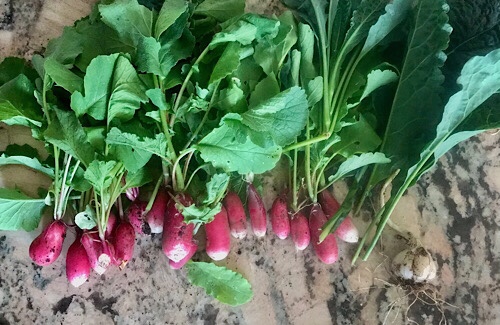
    Harvested last of the sweet banana peppers and a fire engine red cayenne pepper.  Also picked as a baby one last eggplant before pulling the plant to make way for tat soi.

    Most of the tomatoes I found on the ground still unripe.  With a generous portion of red wine and nice herbs, and the traditional way of cooking them for hours and then running through a food mill, and then reducing until reaching the desired thickness, it won’t matter that the tomatoes ripened on the counter.

    Assorted apples from the farmer’s market.  Dried fruit is different when it goes into the dehydrator within a couple of days of having been picked and early in the season when the apples are best.  An upside of being required to stay around home is that I have been able to experiment with the dehydrator that was a most generous birthday gift.

    There’s a bunch of difficult stuff going on, but there is no need to write about it anywhere except possibly in my journal, for much of it.  And as for the shutdown and its impact on real people around the globe (and all that interconnectedness stuff), I prefer today to write about granola and stuff from the garden.

    Anyway, I’m thinking I would just be preaching to the choir if I wrote another blog post about the importance of trying to keep up and understand as much as possible, speaking with others to shape your understanding and your voice, being in contact with your elected officials and signing petitions, and reaching out to friends and family open to such discussions to invite them to be engaged.

    It is times like these when I think of Patanjali’s sutra:  heyam duhkham anagatam (the pain that has yet to come can be avoided.)  I have contemplated this sutra much over a long period.  It is a good one for when I am reaching into the yoga teachings for insight into how I might respond more optimally under the circumstances at hand, especially that which is entirely out of my control.

    furlough 1a furlough 1b furlough 1c furlough 1d

Leave a Reply

Your email address will not be published. Required fields are marked *

This site uses Akismet to reduce spam. Learn how your comment data is processed.