Found Objects Around Town

Peace and light, E — Posted with WordPress for BlackBerry.
Peace and light, E — Posted with WordPress for BlackBerry.
It is hard to believe that having arrived home only two weeks ago from my trip to India that I have already gone on and returned home from another trip. As I looked out the train window at the landscape that still holds my interest though I have seen it hundreds of time, but yet is restful in its very familiarity, I thought about how strange and wondrous it would seem to one newly visiting from a place like Tamil Nadu, especially the rural areas.
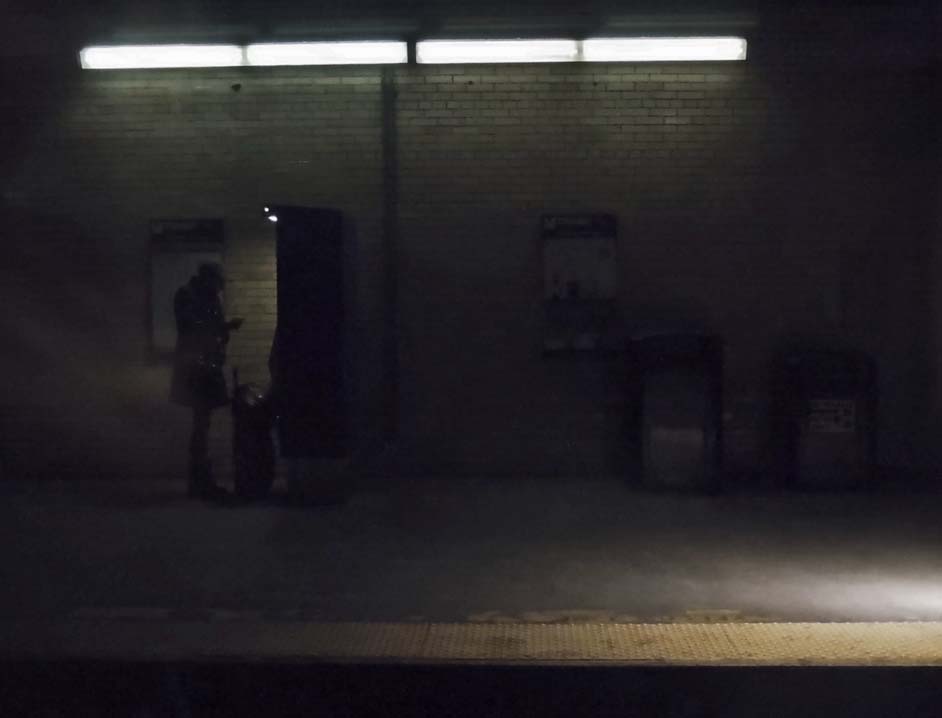
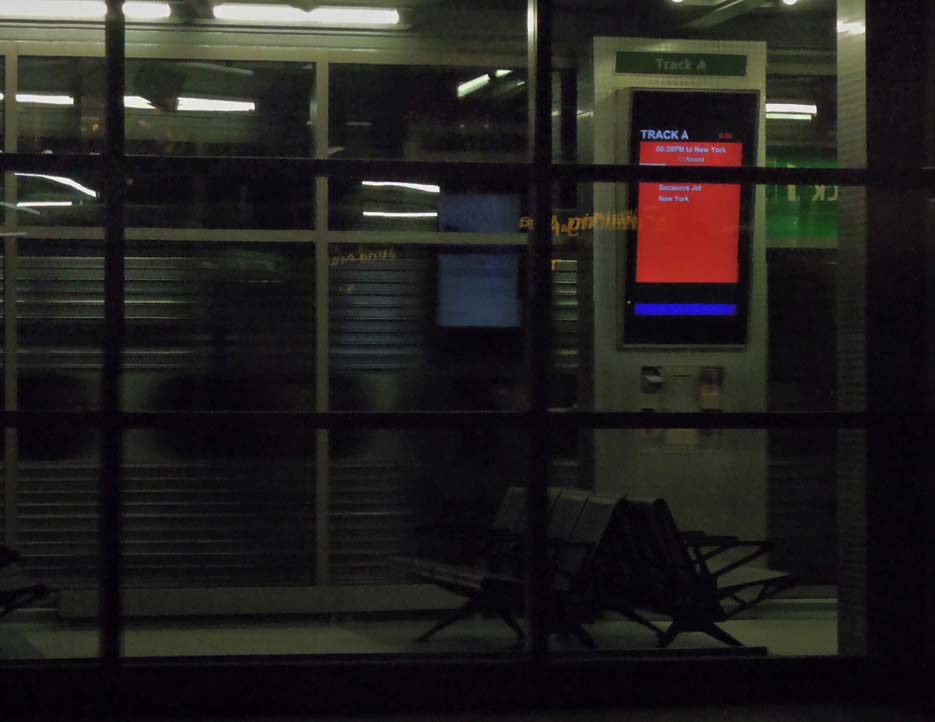

When I was waiting for the metro to go to Willow Street Yoga this Saturday morning to offer a free gentle/therapeutics class (new session starts for the class next Saturday, January 15th–all welcome), I heard a very disturbing announcement on Metro. I only take Metro once or twice a week. I am pretty certain I would have noticed it if I had heard it before; in rush hour, of course, it is hard to hear the announcements when the platforms are full. What I heard was this: “Metro police have advised that all passengers are subject to random searches of their carry ons.” A reasonable person might want to know what is a “carry on” for these purposes. My first question to myself was “don’t random searches of this type violate the Constitution?” (Yes, the American Civil Liberties Union is actively engaged in the issue).
I find random searches just for boarding the metro with a carry on an unfortunately not particularly shocking example of how far we have allowed the “war on terror” to be waged against all of us. Perhaps there are readers of this blog who are not shocked or perhaps believe that these searches are warranted; I am open to listening to why. I know that it was not front page news, and my friends have not been talking about it. This was just another one of those awful things we have started taking for granted, which is something that I hope is getting progressively harder to do.
My biggest question for myself was what I would do if the police asked to search my handbag. The odds are slim to none that “random” would in practice include a reasonably well-dressed, clean, small, middle-aged, middle class, fairly evidently American-born, white woman. But what if random was really random and I happened to be in the wrong place at the wrong time? Would I refuse to let my bag be searched on principle? Would I be willing to lose my job and possibly go to jail for my conviction that such a practice misses the mark completely for its intended purposes and tears at the very fabric of a free society and our individual liberties? I find that I do not know the answer. Partly it is attachment to my own security. Partly it is that I do not know whether it would be better just to allow my bag to be searched and not engender conflict than to engage in conflict that will certainly harm me, severely limit my ability to give financial support for important fights and causes, and potentially could harm others around me, even if ultimately, with the help of many I am sure, I were to be a participant in reason prevailing and the practice ceasing.
In thinking about how unsure I was of my ability to act if I were to be put to the test, I was reminded of the situation at the beginning of the Bhagavad Gita, where Arjuna is paralyzed by inability to act in the face of the hideous spector of violent death and destruction that would result from going to battle even to rectify an injustice. Arjuna looks out on the battlefield where battle is enjoined because of the injustices that have been done (we’ll leave it for another day as to whether the violations of law in the Mahabharata are ones that a modern thinker might agree should give rise to the epic battle in the Bhagavad Gita.) Krishna explains to Arjuna that it is his dharma to go to battle; he is a warrior and these wrongs must be rectified. The general day to day principle that governs the life of a yogi — ahimsa or non-harming — is trumped by the greater need to rectify the societal injustice. Arjuna must join in battle because leaving the injustice uncorrected will in result in greater harm to the order of society, even the cosmological order itself. See Stephen Phillips, “Yoga, Karma, and Rebirth” (discussing the interrelationship between the individual practice of ahimsa and the need for cosmological order in Indian philosophy).
I am not likely to be put to the test here, but that is part of the evil of the practice. What can I do? What should I be doing in the face of a direction in society that gives rise to policies like these and the gunning in Arizona yesterday? It takes great discrimination (viveka), more perhaps than I have, to know how and when to act. I do know that it is not right for me as a citizen or a yogi to stand aside. I offer this very public statement of my beliefs and I gave a generous donation to the ACLU yesterday. I am sure that is not enough, but it is a start. As our society moves in the direction it is moving, more and more of us must contemplate, evaluate, and begin to expand how we act and participate to see a world where ahimsa is not just personal, but all persons and beings have the possibility of being free from suffering.
“Liberty” is again encased in scaffolding, though it hasn’t been that long since she was taken down for a good cleaning. Seeing her thus supported while simultaneously blocked led me to think about the use of yoga props.
I am a big fan of using props to discover places one thought out of reach, either because an injury is limiting range of movement or because intelligent or inspired use of a prop can teach where the next step could be in practice.
Liberty’s scaffolding might be necessary for structural repairs or cleaning, but it is obscuring the view–her view out and our view in. We wouldn’t want her bound and stuck unless it was truly necessary for her full beauty and integrity to be maintained and revealed.
So, too, with yoga props. As beneficial as they can be, we do not want to rely on them automatically without seeing whether we can open to and discover the full flourishing of ourselves in a pose without them by being open, sensitive, and discriminating about our physical boundaries; applying the alignment principles to the fullness of our knowledge; and using just the right amount of effort.
By all means use props, but use them to find and witness new freedom (ultimately, svatantriya) not to bind or obscure it.

Peace and light, E — Posted with WordPress for BlackBerry.