| |

Under My Desk at the Office

There are three important things going on under my desk:
(1) my feet are planted firmly on the floor with the inner edges of my feet parallel. This is the foundation of a good, comfortably upright posture where my low back, shoulders, and neck are in alignment and not overworking; my inner organs are in the right place for optimal functioning; and my lungs and diaphragm are situated for full, easy breathing, which helps me be healthier and more alert.
(2) the only shoes for the day have flexible, supportive soles and leave my toes free to work–whether I am walking or sitting. I do not change into narrow-toed and/or high-heeled shoes to look “professional” or fashionable. I think if we try hard enough, we could make shoes that are good for us be in style. Think about how much we would reduce health care spending and lost work time (for foot, knee, and back surgeries and treatments), if we all wore shoes that fit and did not alter our posture in an unhealthy way. Eventually, foot binding when out of fashion in China, but we still require women (mostly) to harm themselves with their footwear to fit in.
(3) I have two different-sized rubber balls to do foot exercises. Feels great, helps me stay grounded, and is a nice way to take a break.

Come to one of my yoga classes to get tips on great exercises for the feet you can do at your desk or just about any where.

Peace and light, E — Posted with WordPress for BlackBerry.


Similar Posts

  • | | | | |

    Sunchokes (and Anusara “first principle”) (a bit out of date, but not really)

    I realize that this blog entry was in my drafts page; I never hit the publish button.  As I ponder the few intervening weeks of snow (in some ways it feels as if time just stopped, except for the work that piled up and the lengthening of the light of day), I treat this as a reminder to myself to come back to “first principle” to respond with the most light — even in this unusually harsh winter:

    On my way to Friends Meeting yesterday, I stopped at the Dupont Circle Fresh Farm Market yesterday to buy whatever was fresh.  When I got in line with a daikon radish, a bunch of turnips, and a couple of leeks, I noticed the way the woman in front of me in line was holding her selection:  sunchokes.  Her hands were held as if she had just received prasad — the offering sometimes made after a puja so that the fruits of worship may actually be tasted and injested, incorporated with our senses and our whole bodies into our being.  “Your hands and those sunchokes are so beautiful,” I said, “may I take a picture and use it for my blog?”  “Sure,” she replied, “and shifted her hands a little so that it would be easier for me to frame the picture.”  We talked while we waited in line about potential ways to cook sunchokes and how happy we were that the farmers (these particular farmers’ must be incredibly good at working with cold frames) were out all year.

    Seeing this offering of the earth itself, the farmers who tended the earth and grew the vegetables, the workers who made and repaired the vehicles that enabled the food to be brought into the city, the city and neighborhood for allowing the market to block off a street, the shoppers for supporting it, brought me back to my contemplations this week of what “first principle” means to me.  I mentioned in an earlier post that my focus for winter classes would be Anusara sequencing principles.  No matter what else we are doing or focusing on, it always starts with “first principle.”  The “first principle” is what we call in Anusara “opening to grace.”  For me, a large part of “opening to grace” is a recognition that all the nourishment we receive is a gift.  When we practice such a recognition, then we practice receptivity, openness, gratitude, courtesy, respect, delicacy, and reciprocal desire to serve and make offering.  How could one mindfully receive nourishment such as this fresh, beautiful food on a bitterly cold winter day, and not want to celebrate it by giving thanks, nurturing the earth, supporting the farmers and the market, learning how to prepare it as tasty and healthful as possible, and share it and other things with those around us?

    gift

  • | | | |

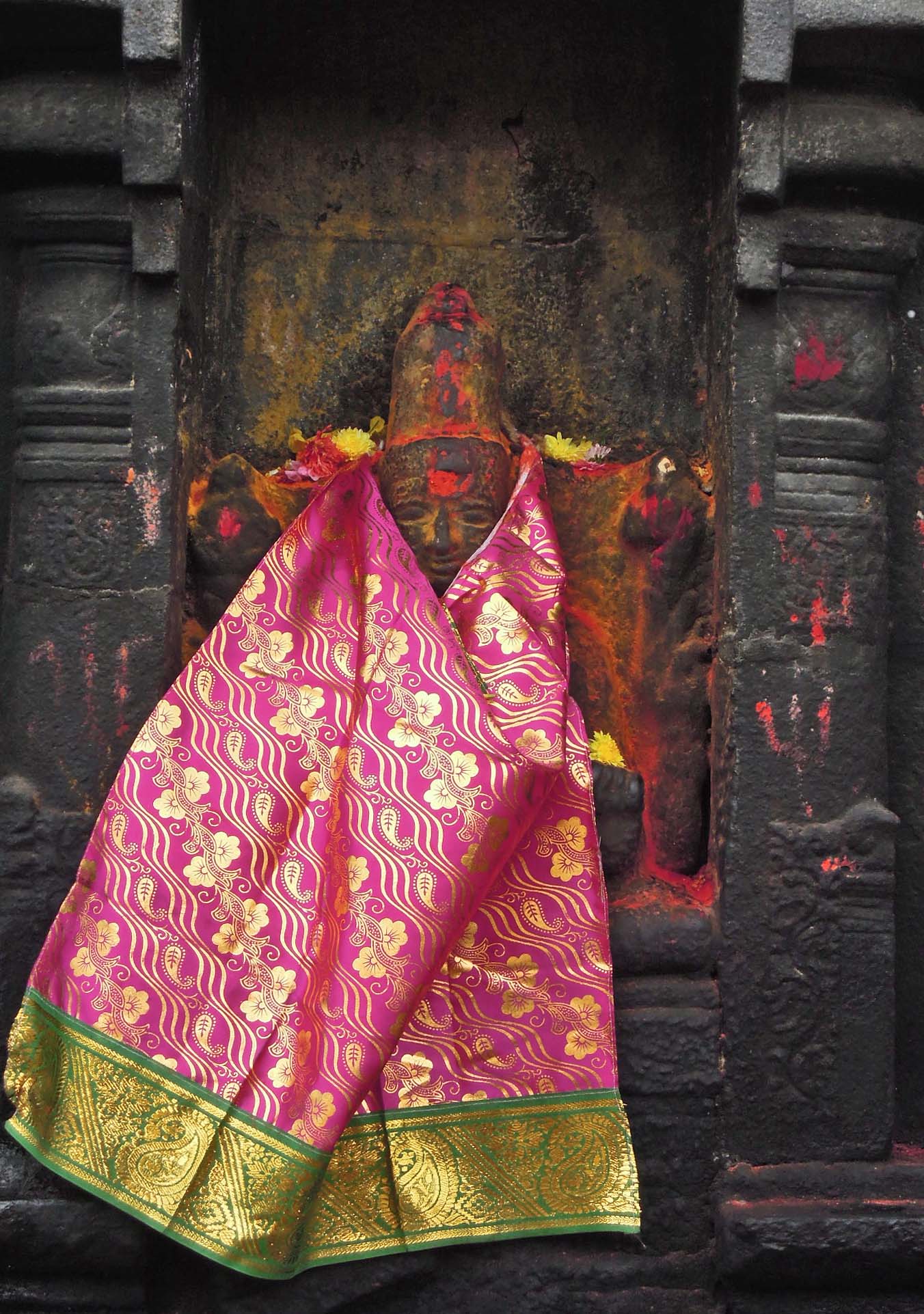
    Naga Vaishnava Rupini

    nagavaishnavarupini

    Goddess of the unfolding of our deepest desires (of the subconscious).  So I was told.  At the Tillai Kali Temple outside of Chidambaram.

    After hours of document drafting and emails and phone conferences today (with the pleasurable interlude of a walk to Eastern Market for celery, Russian pumpernickel, and a ripe avocado), I found myself wanting to remind myself that I have been some times some where other.

  • | |

    Spring Cleaning (and Path of Sadhana)

    For the past couple of weeks, I have been spending as much time as possible in the garden.  When it is too rainy or cold to be in the garden, I have been doing indoor spring cleaning.  As the days get noticeably brighter and longer, it is delightful to see the new growth in the garden and to polish my treasures and make room to use and enjoy what I have.  I’ve been noticing how the first major activities in the garden make a mess.  Inside, activities such as cleaning out the refrigerator and the closets also makes things seem messier before they they get cleaner.  I’ve persisted, though, and now the garden is teeming with visible new life, unencumbered by the detritus of dead growth on the perennials or spent annuals from last year.  With things I do not need given away or repurposed and things clean and repaired, I can more easily use and appreciate what I have in the house.  It seemed like quite a mess for a while, though, when I was taking things off of shelves and out of drawers and closets in preparation for cleaning.

    There can be phases in our sadhana –both asana practice and meditation and related practices — where all the practice seems to be doing is bringing up old stuff.  It seems like we are more physically or emotionally challenged than we would have been if we weren’t practicing. The thought may cross our mind that we would be happier just going to the movies and going on an eating tour of Italy.

    Although sometimes strong reactions can mean that a practice is not right for us (at a certain point in time or not at all — similar to a reaction to food), it can also mean that the practice is doing the equivalent of spring cleaning.  Part of sadhana is learning how to react in a more optimal way to what manifests and arises from our practice.  When a host of old memories or emotions arise or we press up against our limits by digging in deep physically to find where and how to rearrange our bones, muscles, sinews, and energy channels to clear an old injury, we have an opportunity to clear out and let go to make room for new growth.  We don’t have to shove the stuff back into our mind-body closet or leave it where it obstructs new growth.  The old patterns and memories come up in practice so we can either release them or change our relationship to them so they can become something that serves instead of weighing us down.

    When I get into one of those messy spots, I remind myself how good I feel when I’ve done my spring cleaning, and I try to keep going forward, doing the best I can with the teachings I’ve been given.  I admit that it is easier to persist because I love the actual activity of the practices (though the ones I need to do most can be the ones that are not my favorite, but that’s a whole other train of thought).

Leave a Reply

Your email address will not be published. Required fields are marked *

This site uses Akismet to reduce spam. Learn how your comment data is processed.