| | | |

February News–Bring on the Light (Web Version of E-Newsletter)

Dear Friends,

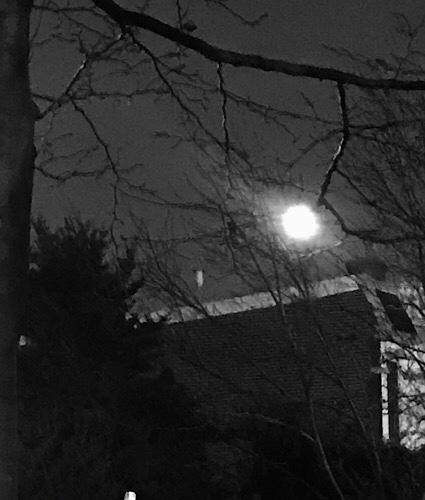
Brrr.  It’s cold out there.  And if it is seeming colder than usual, you are right.  There have only been five winters on record with fewer days above 50F in Washington, DC.  Perhaps, like me, you have noticed that you are feeling just a tad sensitive or edgy or maybe a little blue.  I recognize the symptoms; in my distant past, a therapist suggested that I might have “seasonal affective disorder.”  My prescription for myself when winter has me feeling down?  Do more yoga, keeping a focused intention on cultivating the light of inner awareness.

The form of meditation I practice is intended to allow the practitioner to rest in the light of inner awareness.  One of the aspects of the Anusara principle of “opening to grace” for me is to open to the light in myself and others.  On a more physical level, backbends will open up your heart and make room for the light; core work will warm you up by stoking the agni, the inner fire; forward bends will help you go deep inside to find your own light.  There is a light-filled practice for every day of the week, every time of day, and every mood you are in.

Avoid the temptation to huddle inside, eating too many carbs and hiding away.  When the sidewalks are passable, bundle up and take a long walk.  When you come back inside, do a good therapeutic and restorative practice–it’s as good as hot chocolate (and no one said you couldn’t have the hot chocolate, too).  Invite friends over for a potluck.  Cook bean soups.  Have hot cereal for breakfast and perhaps for dinner.  Balance the warm food with the freshest of fresh food by growing sprouts on the kitchen counter.

Want to light up your yoga fire, sun, inner light with company?  Join me and your friends and neighbors at William Penn House classes on Tuesdays at 6:30.  Need a little R&R or found you have tweaked something shoveling or walking on the ice and snow?  Drop ins are always welcome at the gentle and therapeutics class at Willow Street, Takoma Park, Saturdays at noon.  Give yourself something to look forward to by signing up in advance for the second “Relaxing Into Optimal Alignment with Anusara Restoratives” workshop at Willow Street on Saturday, February 26th.

And plan for Spring with “Yoga for Gardeners,” the weekend of the Spring Equinox–yes, it is only weeks away.  As has been my practice in previous years, my profits will go to support the Youth Garden at the National Arboretum.

Looking forward to sharing, expanding, and delighting in the light with you soon.
Peace and light,

Elizabeth

Similar Posts

  • | | | | |

    A Moment of Insight (and suddha vidya)

    A rather conservative co-worker, who was one of the people who would have to go grocery shopping last night lest the family be without perishable food for a few days, was talking to me about the impending snowstorm (including me advising him of the one forecast for next Tuesday/Wednesday).  “It shows,” he said, “how easily our infrastructure and food supply can be disrupted.”  I gave it a little pause, and then replied, “this is why I talk about gardening in our own yards and switching away from agribusiness to a more sustainable and self-sustaining way of living and seek to shift myself, though it is difficult.”  He said, “hmmm,” letting the idea stick in his mind, but not wanting to carry the discussion further.  I know him well enough to have dropped it for the time, but also know he will think about it and perhaps over the years, for his beloved daughters or out of perceived necessity, start making small shifts.

    In yoga practice, the concept of suddha vidya — illuminative wisdom — is both revealed and practiced.  When we start practicing or even before, we may have occasional and early insights into fundamental truths of being, but without steady practice and contemplation they will be fleeting and not shift our way of living.  If we practice and study continuously, though, our insight will become steadier, more consistent, and will start to illuminate all states of our being on and off the mat.  The more I practice, the more it is illuminated for me the connection of all beings and my need to live in a way that is more open, tolerant, loving, and aligned with the complex web of our interconnection.  My co-worker’s insight might not have been “yoga,” but it was indeed a moment of illuminative wisdom in its recognition of a misalignment of society that tears at the fabric of our being.

  • | |

    Yoga for Householders

    Paul Muller-Ortega, who teaches philosophy and meditation from similar roots to those that inform Anusara yoga, spoke yesterday of the differences between the path of the renunciate and the path of the householder.  He strongly stated that neither path was better.  What he suggested, though, was that a householder will better flourish practicing yoga designed for the householder rather than attempting to practice renunciate techniques, while still staying in the householder path.

    What does this mean?  I think it means that we become unhappy and conflicted if we try attempt the practices of the path of complete non-attachment and transcendence of body and mind while we are still very much staying in society and responsible for family, work, and citizenship.  The tantric, householder path, including that of the Shaivite tradition of Kashmir and Abhinavagupta, offers practices that enable one to live liberated in society, instead of suggesting that the only way to true liberation is to reject and transcend work, family, and community.  In yoga terms, the householder path is one that realizes moksha (liberation), through ardha (physical and material well-being), kama (love/relationship), and dharma (right work/path) rather than by transcending them.

    Taking the householder path does not mean just indulging.  It still requires sensitivity, dedication, discrimination, and alignment.  I think it may be even harder than renunciation.  I know it is easier for me to just stay alone and practice, for example, than to bring yoga off my mat to how I work, consume, relate to others, and participate in society.  The householder path, though, is the one for me.

Leave a Reply

Your email address will not be published. Required fields are marked *

This site uses Akismet to reduce spam. Learn how your comment data is processed.