| |

Robin Redbreasts (and the importance of sequencing in time and space)

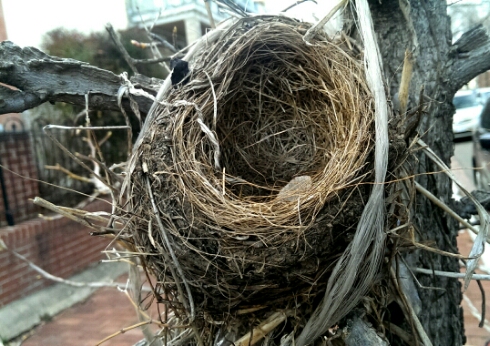
I am working from home today.  I looked out of my window and saw a flurry of birds going from one roof to another.  There were the usual starlings, but among them were five robin redbreasts.  They definitely do not belong here this time of year.  Instead of getting the usual song in my heart from the first sighting of the robin redbreast of spring, I am filled with concern.  What are they doing here?  Will they survive?  How can they get worms out of the frozen ground?  Have they been confused by the warming pattern over the last several years?

I know that the robins are out of place here this time of year from a combination of learning and observing over the years what is supposed to be their season in this part of the world.  So too with many things that at one time a place, a practice, a relationship will serve and another will take us away from what is optimal.  As with yoga practice, we learn for ourselves and what is around us, what is optimal when and where, by a combination of study and practice.

There were also a few gulls. We see those around town sometimes because of the tidal basin, but not usually here in my back alley.  Is there some kind of special bird conference going on that I was privileged to witness?
Similar Posts

  • | | |

    Changing the Paradigm to Find a New Way (and “Opening to Grace”)

    A student and friend sent me a link to an article posted by the Center for Consumer Freedom alerting consumers that excessive levels of heavy metals have been found in the reusable bags being sold by some of the big box retailers and supermarket chains.  The analyst reached the conclusion that consumers should be allowed to use disposable plastic or paper bags [environmental consequences ignored] so that they are not forced into the untenable position of having to use bags that are manufactured with unacceptable levels of toxic ingredients.

    It is fantastic that the folks at CCF advised people of the potential hazards associated with the manufacture and use of certain types of reusable bags.  What I do not follow is the absolutism of the “either or” choice presented:   poisonous bags (forced on you by environmentalists) or disposable plastic or paper bags (with all the attendant hazards to the environment).  Why does the bag you use have to come from the grocery store?  The types of retailers identified might have seized another retail and advertising opportunity to make cheap, hazardous reusable bags in nations with cheap (i.e. inadequately paid and treated) workers in countries with lax environmental and consumer safety standards.  But this is just another example of how corporations prosper at the expense of the health of the planet, as if the worth of the stock of corporations — the part that is separate from the world in which the corporation operates — in itself is the highest good (that’s a discussion for another day).

    I write about this article because it seems to me to be a perfect example of how staying within paradigms, choices, and societal constructs presented can keep us in the kind of ignorance (avidya) that prevents us from being in alignment, from seeing the good, and from responding in the highest.  I am sure you, as can I, can think of far too many other examples of how if we stay with the question as it is framed, can prevent us from finding a peaceful, loving, healthful solution.  The choice here is not bad for the environment and your kids (or pets) reusable bags or bad for the environment disposable bags.  The choice is between bad for the environment bags and reusable bags that made by you or someone you trust not to use poisonous materials.

    I have been carrying my own bags on a progressively more consistent basis since I was inspired to invite people to participate in Earth Day when I was in junior high and high school in the 1970s.  The photo shows some of my favorite carry bags.  From left to right:  (1) the day pack I bought in 1984 to carry my law school books, which were very heavy; it cost maybe $20 and it is still going strong; (2) cute organic cotton bag with “make love, not war, haight-ashbury 1968” silkscreened on it; I get complimented on it whenever I use it, especially when I turn down super cool disposable bags at fashionable stores in NYC (“no thank you; I have my own bag”); freebie canvas bag from Barney’s Coop; cannot be sure that it was made with union labor, but am pretty sure it isn’t one of those toxic bags described in the article.

    Next time you are struggling with what seems like an choice between Scylla and Charybdis, invite yourself to soften, to open to the bigger picture, to open your heart and mind as wide as the widest space of meditation, and ask whether you are asking the right question.

  • | | | | |

    Observing Another Storm Pass without Raining (and a moment of truth)

    The third front in a row.  It is starting to be a long while not to rain in the summer.  It is a tough gardening year:  extreme drought conditions all winter, overly cool and wet spring, now no rain again.

    Watching how the erratic weather patterns are impacting my garden, I am reminded that I am not a purist about gardening or food or my impact on the earth.   As much as I enjoy tending my garden and eating its fruits, there is no hesitation in my mind that if my garden does not produce, I will buy more food at the farmers’ market.  If the pickings are slim at the farmers’ market because of local conditions, I am in no doubt that I will buy food from whatever source, even if I try to make sure it is first local, then humanely picked, then organic.

    When I write about gardening and eating and yoga, I am sharing what I enjoy, what makes me feel healthy.  I do not think of myself as trying to set an example.  In some senses, my yoga practice is similarly about what works for me personally and no more.  The yoga teachings are fairly clear that the design and purpose of aligning with the subtle energies, including living in a more peaceful, less destructive way, is for the enlightenment of the individual practitioner and not for “making the world a better place.”  If by seeking to live in a healthier, more aligned, more peaceful and compassionate way ourselves also brings more global benefits, that is a bonus.

    Looking at our lives from this perspective could cause discouragement.  I hear this question all the time:  “why should I change what I am doing [consuming/eating/driving]?  My behavior is not going to change the world when there are all of those billions not changing.”  In some senses, looking at shifting our behavior from a completely selfish perspective makes it more accessible and meaningful.  If we see our choices having the possibility of making ourselves healthier, happier, and more at peace with ourselves and the world around us, why would we not want to try to live more consciously?

  • |

    Yoga for Gardeners Workshop — Call for Questions

    Next Saturday, March 14th, 2:30-5pm, is the Yoga for Gardeners Workshop at Willow Street Yoga Center’s Takoma Park Studio.  A portion of the proceeds will go to the benefit of the Youth Garden at the National Arboretum.  It will be a most enjoyable way to prepare for the gardening season, especially after having been inspired by this weekend’s incredibly spring-like weather.   Advance registration is appreciated, though not required, and all levels of yogins and gardeners welcome.

    You can come just open to what will be offered — I’ve got lots to share — but if you have specific questions about how to use yoga alignment while gardening, how to address various challenges of embodiment in the garden, or even yoga philosophy or other gardening/yoga topics, please feel free to send them to me as a comment to this entry or by separate email.  I may not be able to get to every question right away, but I will try to address common questions in the workshop and here on the blog and am also always available after class to discuss individual questions.

Leave a Reply

Your email address will not be published. Required fields are marked *

This site uses Akismet to reduce spam. Learn how your comment data is processed.