We also did some yoga (Tucson picture)

In the middle of another
11-hour work day, not
Counting the time to
commute, the commute
Being the round trip walk
From home during which I
have been practicing japa–
Maha mrtyunjaya mantra–
For dear spirits recently
No longer in this body.
In between the work,
Between those walks,
I stopped. I stopped
and smelled the roses.
Thus refreshed by visual
Beauty and warm sun
And intoxicating scent,
I had the energy to begin
Again–to continue,
To work well.
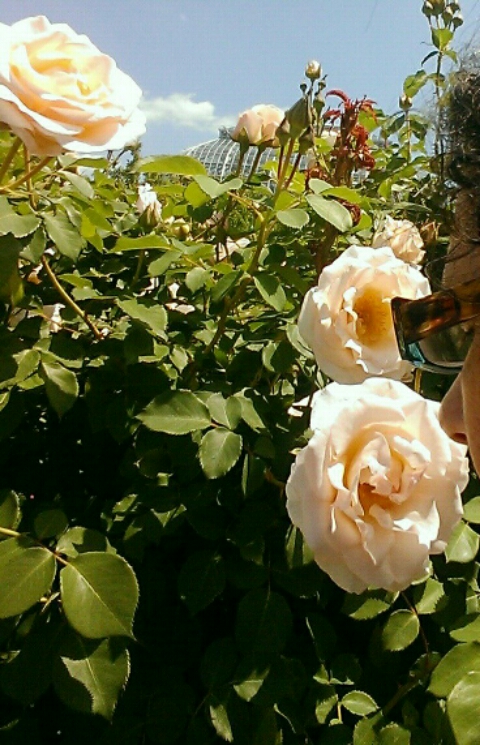
Whatever the season, I notice the beauty on my walk to work. I see what remains the same and what changes. I invite the sweetness I feel arising spontaneously from my daily walks though the neighborhood, which, familiar as they are, still feel like vision quests, to come into how I experience the rest of my encounters with the world.

Peace and light, E — Posted with WordPress for BlackBerry.
Om shanti, shanti, shanti.
A neighbor who lives in the top floor of the building across the street, and thus has a spectacular view of the maples in front of my house writes:
“The buds on your tree are more numerous than yesterday, and more visibly that color that Joni Mitchell sang about: “just a little green, like the color when the spring is born...” And we’re getting a good, soaking rain. Happy Spring!”
I have heard the song so many times, I do not need to look it up, except to share both with those for whom it is not part of an intimate map of a long ago period and with those for whom it is and who will have, by just seeing the words (and even more so by listening), some upsurge of memories and a revelation of the miraculous play of consciousness.
It is mysterious that such wishes are seasonal. Do we not need love, peace, and comfort all year round? Should we not do our best to offer, share, and cultivate them all year round?

Peace and light, E — Posted with WordPress for BlackBerry.