Tomato Blight (and the web of life)
One of the conjectured reasons for the amazingly quick spread of tomato blight in the northeast this year (besides the crazy weather) is the upsurge in home gardeners. It is wonderful that so many people are growing their own tomatoes. If they buy the plants from a “big box” retailer — a retailer that gives less care and attention to the quality and health of the plants and more to easy shipping and cheap prices — then the new plants entering the eco-system are more likely harbingers of disease.
When we do anything, we have to be conscious of how it fits in with the world as a whole. From seed to meal, how we get our food impacts ourselves and our health. I am lucky so far with my tomato plants. I bought seedlings from local, organic farmers. I am checking them every few days for signs of blight. My harvest has been delicious and abundent.
In reading about the blight, I am painfully reminded that what we eat impacts the earth, the animal and plant life that was displaced for the growth of food, the humans that labored to bring it to our table. What we choose to eat, over our life, can dramatically shift our life physically, energetically, and emotionally.
Don’t forego homegrown tomatoes and other easy to grow urban foodstuff, but be careful about where you buy it, how you tend it, and understand that you have entered into the agricultural network.
As Chief Seattle did NOT say, “man does not weave this web of life. We are but one thread within it. Whatever we do to the web, we do to ourselves.”

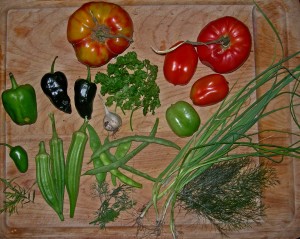 Could not resist the french name. More fun than summer local vegetable stew. An alternative name could be: how to make three okra and six beans into dinner for two. Or maybe four. When I was out in the garden this morning, I simply picked what needed to be picked. Featured here: three okra, six beans, one jalapeno, two ancho chiles (one partly dried on the plant), two large tomatoes (both of which are only partly viable), two ripe and one green (fell off while I was picking the ripe ones) roma tomatoes, one very small garlic clove, baby leeks, garlic chives, tarragon, parsley, dill, and herb fennel. Serve over quinoa, couscous, rice, or pasta, and it is easily a meal for two. Add some red beans or other dried beans, and it could be dinner for four.