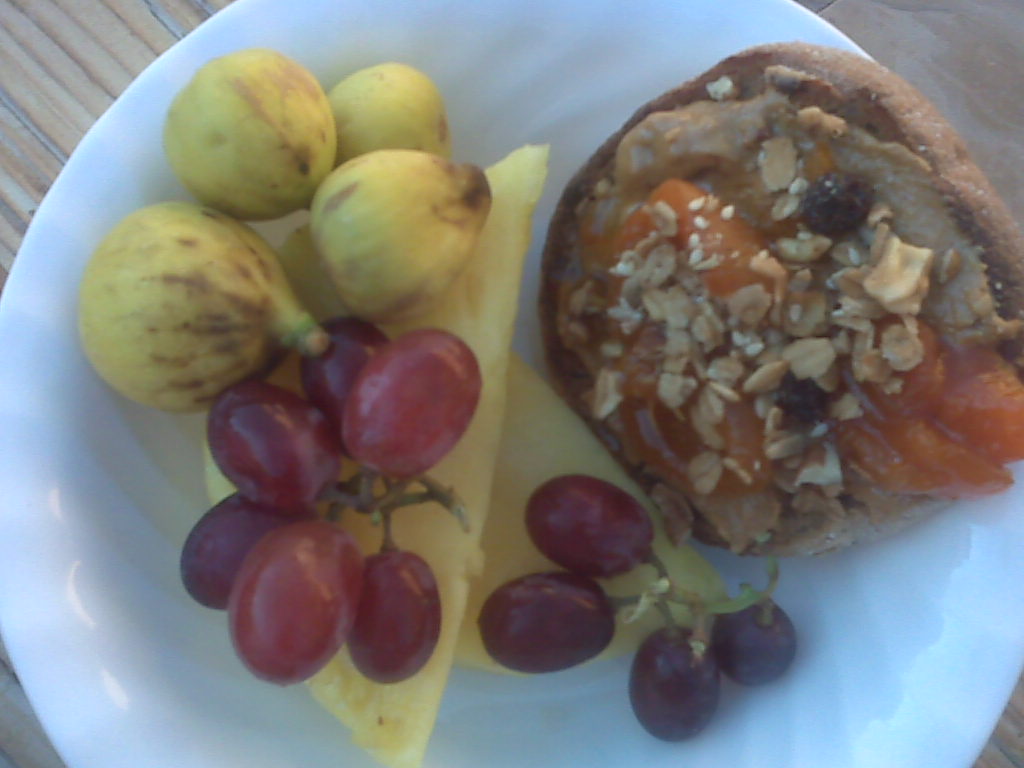
Breakfast for Meditating
The figs are fresh-picked on the property: the apricot preserves are made from fruit picked on site. Yum.
Peace and light, E — Posted with WordPress for BlackBerry.
The figs are fresh-picked on the property: the apricot preserves are made from fruit picked on site. Yum.
Peace and light, E — Posted with WordPress for BlackBerry.
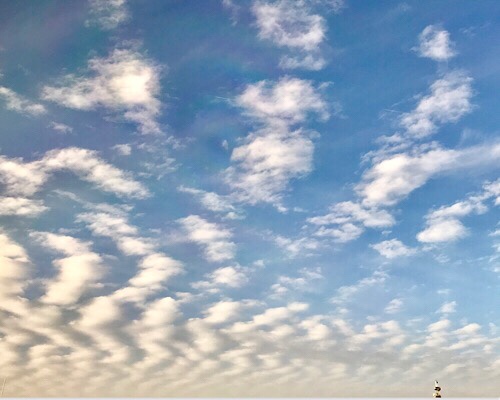
Precious are the mornings when the light is soft
And the air is gentle–for those who consciously clothe themselves
With respect for the intermarriage between
Their body and the day–and when the play of shapes and colors
In the sky and upraised trees dances visions
Of the vast creativity of Being. No doubts arising
Until one reads the news and, once again,
Must reconcile in heart and mind what is there with
The teachings that all is one and full of joy.

Peace and light, E — Posted with WordPress for BlackBerry.
Last weekend, I went with a friend to see The Steins Collect at the Metropolitan Museum. I made a special effort to see the exhibit because of the incredible impact on art and culture that the Steins had by virtue of their collecting. Many of the paintings in the exhibit were familiar; I’d seen them before either at the Met for those from its own collection, at other museums, or in books. Some, which have ended up in other private collections or in the collections of museums that I have not visited, were completely new to me.
Among the paintings in the exhibit is Picasso’s Boy Leading a Horse (which, as you can see from the link, the MOMA website currently indicates as “not on view”). I’ve seen the painting many times before at MOMA. The shift of location and context shook up my perceptions of the painting, and I indicated that to my friend. Another woman who was looking at the painting too engaged in the conversation. “It seems wrong here,” she said. “It’s a different view,” I replied. “It is disconcerting, but seeing it in different light, context, and company is enabling me to see new things in the painting and to find a more enhanced appreciation.”
I have been thinking this week, and talking about it in my classes, how a change of context can bring us new vision. How often, when things just keep going in a set pattern, do they collect dust and cobwebs (literally or figuratively)? I asked my therapeutic students whether they had preconceived notions about various challenges of embodiment, especially the chonic ones. Do you see them as part of your identity, something that causes you pain instead of giving you the joy of movement? What if you embraced being ever more conscious of alignment instead of being conscious of pain and limitation (and learning better and sooner when you cannot get out of injury without outside help)?
What of it? What of the change of perspective? After all, things get rearranged for us and the dissolution can be gradual or violent or something of both and be something of greater or lesser magnitude. Times of flux and dissoluti9on are the perpect time for questioning, for new vision, for discovering new ways to experience what had become too familiar, for seeing how one might wish to shift one’s own perspective for the good, to know and take responsibility for one’s own place and piece of this relationship to whatever it is that is shifting, dispersing, or dissolving., to seek to become unbound from the habitual binds of whatever invisible clothing we might be wearing.
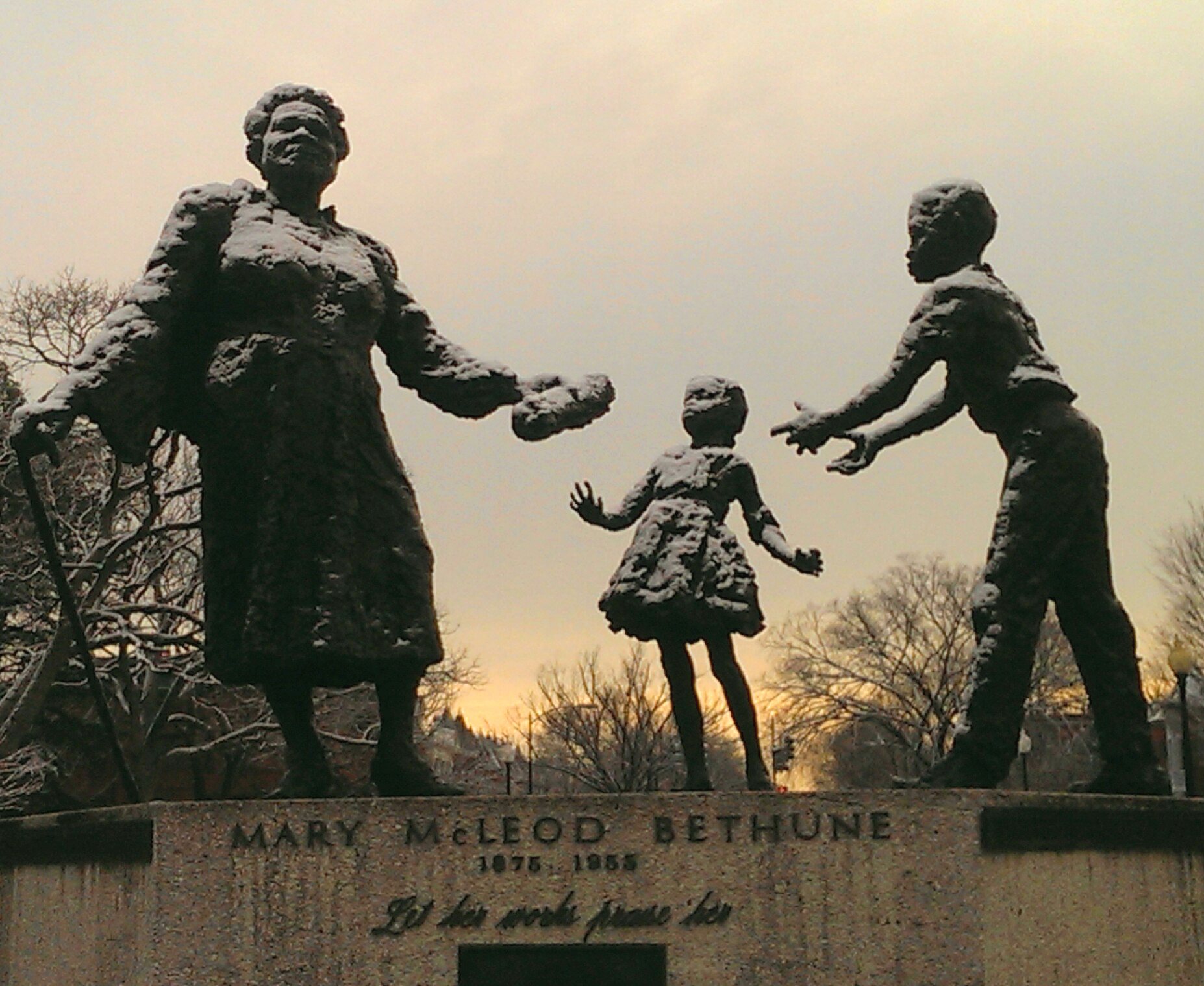
Around the base of this statue, it says this as one walks clockwise from the front right. And when done circumnavigating, and facing the same direction in the direction the statue of Mary McLeod Bethune, one can see down East Capitol Street to the Capitol Dome:
“I leave you love. I leave you hope. I leave you the challenge of developing confidence in one another. I leave you a thirst for education. I leave you a respect for the use of power. I leave you faith. I leave you racial dignity. I also leave you a desire to live harmoniously with your fellow man. I leave you finally a responsibility to our young people.”