Invitation to Mindfulness?
In Anusara yoga, one of the ways the first principle of “opening to grace” can be experienced and practiced is as a radical expansion of the capacity to receive and appreciate the very wonder of being. During my visit to India with Professor Douglas Brooks, I found myself repeatedly thinking of the concept of radical expansion and also the preamble to the Isha Upanishad (long a favorite of mine; Shantala on their first CD, Love Window, have done an exquisite rendition), which can be roughly translated as saying that adding fullness to fullness is itself fullness (fullness can also be translated here as perfection).
What I believe this is saying that being itself is infinitely full; thus, we cannot make it more infinite by adding to it. Human consciousness of the infinitude of being, though, is limited by the filters of space and time. One of the key reasons to practice yoga (including meditation) is to expand both our capacity to appreciate the fullness and to receive its full wonder by uniting our own consciousness with the infinitude. When we can appreciate ever more the wonder of our being, we will naturally be more joyous, and I believe, led to be more compassionate and generous with ourselves and others.
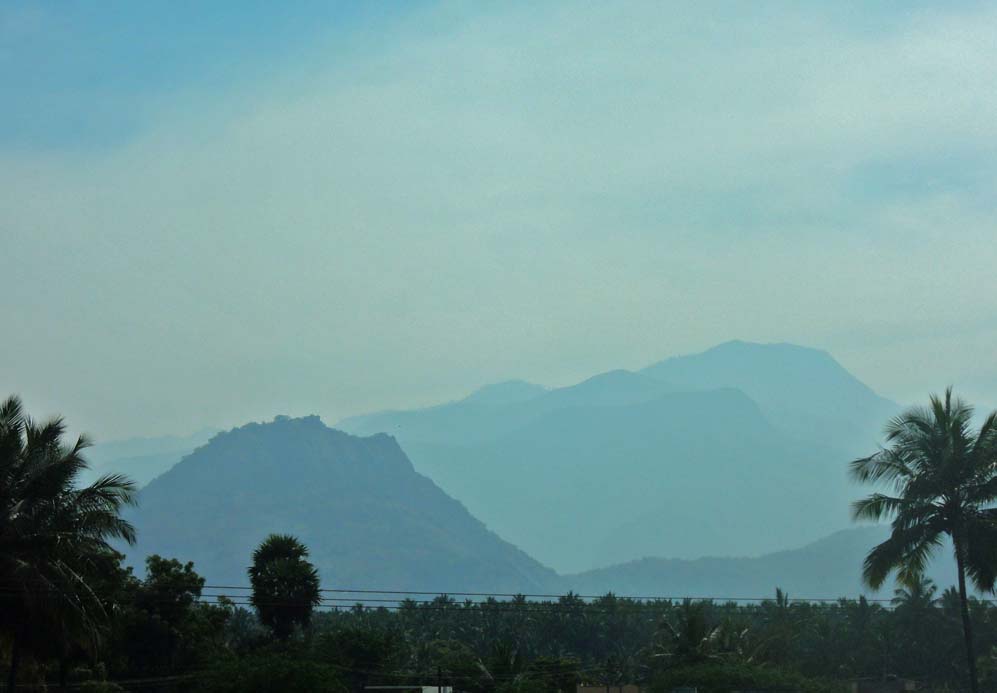
Day after day on the India pilgrimage, just when I thought my heart and mind were already full to bursting, there were yet more experiences of the beauty and extraordinariness of life and creativity and nature. I found myself chanting the Isha Upanishad—purnamadah, purnamidam, puranata purnamudatacyate. Fullness and fullness is fullness. “Let me expand still more to appreciate to its utmost yet more beauty,” I thought to myself again and again. Though I already thought I’d developed a fairly full understanding of the concept through study and practice, I thought, “this is what John Friend means when he is talking about radical expansion.” I look forward to studying and practicing to experience and share ever more beauty.

To be able to be most fully present when being active, it is crucial to pause, to be quiet and still, to nap, to allow enough time for a good night’s sleep.
Resting and being quiet does not just mean practicing meditation, pranayama, and asana while otherwise speeding about and constantly multitasking. The practices are a wonderful way to bring more delight, acceptance, flexibility, awareness, and understanding to everything we do, and make more manageable an overstretched life style.
At some point in our practices, though, we realize that in order to get the most out of the practices and to be able to live what we get from the yoga, we need to be well-rested and consume with all of our senses and eat what best nourishes our body and mind.

Peace and light, E — Posted with WordPress for BlackBerry.
At the Yoga for Gardeners Workshop, I will be ordering the workshop into (1) yoga to prepare for a session in the garden; (2) yoga pauses to do intermittently while gardening; and (3) yoga post-gardening. I’m off to enjoy the bright sunny day, to volunteer at The Lantern, and to take care of a neighbor’s cat, but I’m really enjoying getting ready for the workshop.
Feel free to send me question, as a comment to this post, and I will do my best to incorporate what you want to know into the workshop and/or the blog.
Please remember that I will be giving a portion of my profits to support the Youth Garden at the National Arboretum. Even if you cannot come next Saturday, do please consider supporting one of your local, teaching gardens.