State of the Garden (and the Beginnings of Dinner)
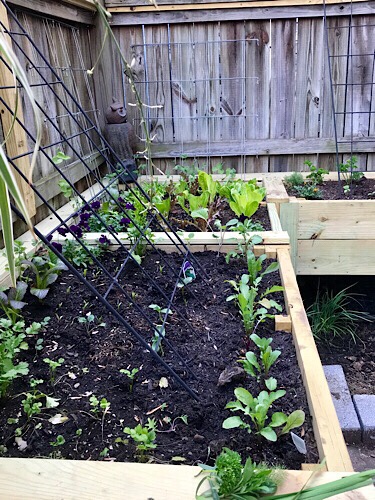
Yesterday morning, when I was starting to pack to leave for Oregon today, the most critical elements for getting ready (after making sure I had my wallet, camera, and some yoga clothes in a suitcase) were to water the garden well, pull some weeds, pick ripe vegetables, and cook.
I’d given away some produce a couple of days ago, but still had eggplants, peppers, tomatoes from the garden and half an onion from something I had cooked earlier in the week.
I cut everything in half, slathered it in olive oil, sprinkled the vegetables with coarsely ground pepper Himalayan pink salt and put it into the toaster/convection oven (my favorite kitchen appliance). The vegetables roasted while I was doing other chores. Now, on my return, I will be able pull from the freezer ingredients for a wonderful pasta sauce.
As much as I am looking forward to a week of yoga and exploration, I’ll be delighted to come back to garden and my own kitchen. It is almost time to start planting greens, beets, and turnips for fall.
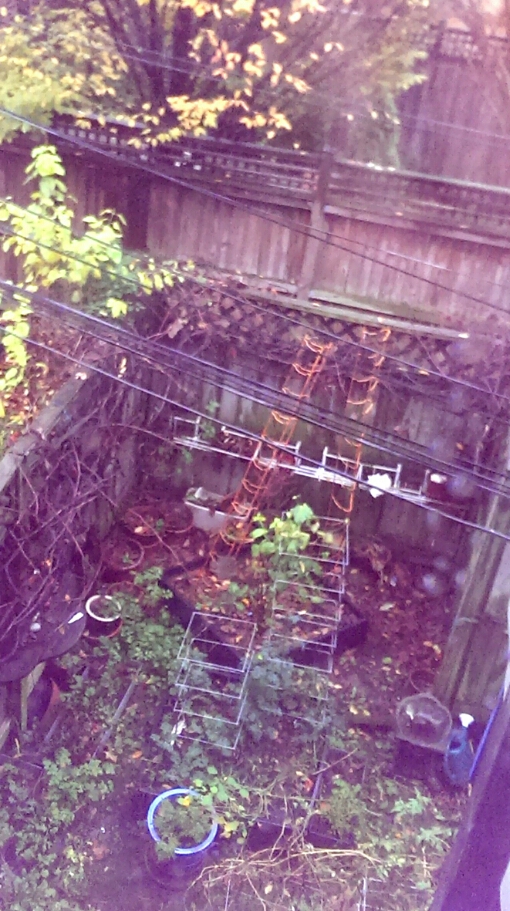
Arugula, chard, kale, garlic chives, celery, various perennial herbs
One of the conjectured reasons for the amazingly quick spread of tomato blight in the northeast this year (besides the crazy weather) is the upsurge in home gardeners. It is wonderful that so many people are growing their own tomatoes. If they buy the plants from a “big box” retailer — a retailer that gives less care and attention to the quality and health of the plants and more to easy shipping and cheap prices — then the new plants entering the eco-system are more likely harbingers of disease.
When we do anything, we have to be conscious of how it fits in with the world as a whole. From seed to meal, how we get our food impacts ourselves and our health. I am lucky so far with my tomato plants. I bought seedlings from local, organic farmers. I am checking them every few days for signs of blight. My harvest has been delicious and abundent.
In reading about the blight, I am painfully reminded that what we eat impacts the earth, the animal and plant life that was displaced for the growth of food, the humans that labored to bring it to our table. What we choose to eat, over our life, can dramatically shift our life physically, energetically, and emotionally.
Don’t forego homegrown tomatoes and other easy to grow urban foodstuff, but be careful about where you buy it, how you tend it, and understand that you have entered into the agricultural network.
As Chief Seattle did NOT say, “man does not weave this web of life. We are but one thread within it. Whatever we do to the web, we do to ourselves.”
I had intended merely to get some lemongrass for tea. Jai Lakshmi.

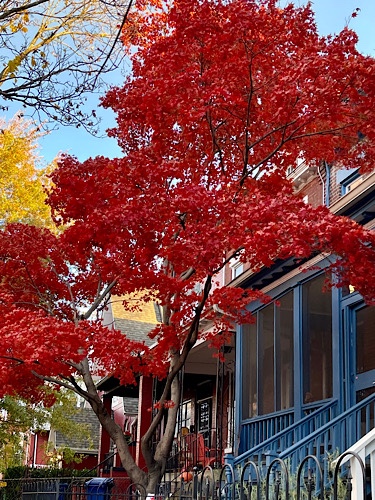
I don’t talk much about my front garden because it is not as exciting for me as the back garden with its edibles and herbs. I give a sincere effort to make the front garden beautiful and welcoming since it is my interface with the neighborhood and all who walk past my house. The front is very shady and two maple trees block the rain and drink most of the water that gets past the leaves, so it has taken some effort to find plants that thrive. Much of what is in my garden comes from other gardening friends. Plants that come from friends near-by are likely to do well moved down the street. As my garden has matured, it has needed divisions, thus giving me an opportunity to share, in turn, with younger friends and neighbors. It thus nourishes in important ways, though it offers nothing to eat.