Signs Around Town
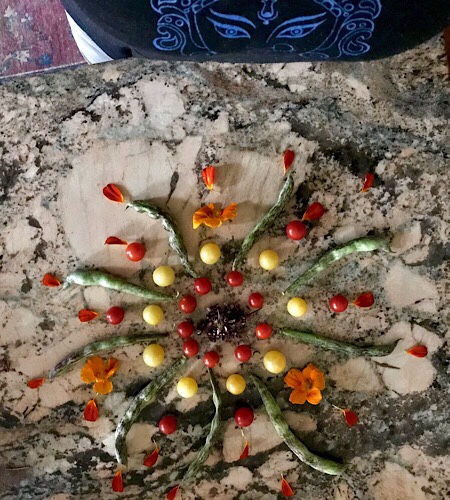
In recognition of Durga Ashtami.
Ayyappa is the half-brother of Ganesha and Subramanyam. Ganesha and Subramanyam’s mother is Siva’s wife Parvati. Ayyappa’s mother is Siva’s brother Vishnu while he was the woman Mohini. Even in the glossed over versions that don’t get into what a modern reader might think of Ayyappa’s mother, he is the extra and unwanted child of the family, although he is needed to save the world from evil. Ayyappa is the character in the story who represents those who have ever been or felt unwanted or third-wheel or lost or excluded or is somehow missing in society or in relationship, but is still inherently worthy and divine and essential to the functioning of society, even though he is cast out into the wilds of the forest.
Being the god of such, at the festivals at a major temple in Kerala on the pilgrimage route, all castes are welcomed. No need to be a Brahmin.
But only prepubescent girls and elderly, post-menopausal women are permitted; women who have the capacity to conceive are forbidden. Those connecting with the god of the unwanted, the extra, the missing, the cast out, themselves deliberately exclude from access to this god others they make even less privileged. Even for the men of the lowest caste, the step-brothers, the bastards, and the otherwise unwelcome and unrecognized for their intrinsic worth, by the exclusion of all women of child-bearing age/capacity, Ayyappa’s pilgrims get to experience the sense of inclusion and privilege in society of the more powerful and glorified and popular brothers who have never been themselves cast out.
Could this by design? Is it that one cannot really understand what it means to be excluded unless one also experiences the power of being able to exclude in turn? If yes, how easy to pick, in a patriarchal culture, women of child-bearing age as the outcast and denied. (Do they ask any woman who shows up whether she still bleeds? If a woman has stopped bleeding, but doesn’t look “elderly,” does the prohibition still apply?).
I have personally experienced far too many things that have been partly or completely closed off to me, overtly or invidiously, because I am a woman or not of a particular social or religious background, and much where it was worth risking ease to challenge the status quo.
As for an Ayyappa pilgrimage, I’ve seen photos of half a million escstatic and determined male worshippers surging towards the temple for festival (looks something like returning to the tube station after seeing the Rolling Stones at Wembley Stadium in 1982 or the infield on a muddy day at the Preakness only more testosterone than that), and what first came to mind was not, wow, I really want to join that party. Rather, I asked myself where do they urinate and defecate.
I personally cheerfully leave this one to the men (and my more intrepid and determined sisters), even if it makes some of them feel special in part because they have excluded a whole class of people from being able to formally worship. I’d much rather spend time with Kali. Thank you very much.
Maybe I’d go stand outside Sabarimala in off season, when the temple is closed. I’d take a photograph and contemplate what the idea of Ayyappa–god of the unwanted, the unwelcome, the third wheel, the excluded, the extra, the cast out from the benefits but saddled with the hardest task–means to me–both as one who has experienced the pain of exclusion and one who has excluded others (as most all of us do even when we try not to), and how it can inform me to relate to others with more grace and compassion.
After eating homemade popsicles. This week’s variation: lemon, lime, with white nectarine. The liquid was an chilled tisane with herbs from the garden; the sweetener, local honey. The farmers at the market were packing to go home. Tomatoes and peaches only $1 a pound. Tonight–cucumber and tomato salad with the second cucumber of the year from my own garden. The salad to accompany whole wheat pasta tossed with garden greens, herb pesto (basil, parsley, arugula; garlic in the pesto from a friend’s garden), and white beans. Later in the week when it gets cooler, slow-cooked tomato sauce and white peaches poached in wine (perhaps turned into popsicles).
Thanks to my friend Dan Harper for sharing this quote from Alice Walker, along with his own cogent thoughts This morning, when I was thinking about how to address some of my current challenges, I decided it was important for me to remember that one of the reasons I keep my job is to be able to cultivate generosity. I went on-line and became a monthly, rather than an occasional donor, to “So Others Might Eat.” I stayed with the emotion of how it feels as a small, middle-aged woman to walk, as I do a few times a week, past a homeless shelter on the way out of the office towards home. I thought about what it would be like to be homeless and food insecure, especially in the unseasonable months. I thought about how hard it is to be so many humans so crowded together.
I thought about how helpful the yoga and meditation practices have been for me to be present in the tangle of society. Though after tonight’s class at Willow Street Yoga, I will be teaching only one public class (the William Penn House class on Tuesday nights), I will be writing and practicing and studying and exploring. One of the many intertwined threads leading me to limit my public teaching is to give me more time and space to pursue other creative outlets, even as I continue to deepen my explorations of the yoga and other practices and teachings.