State of the Garden
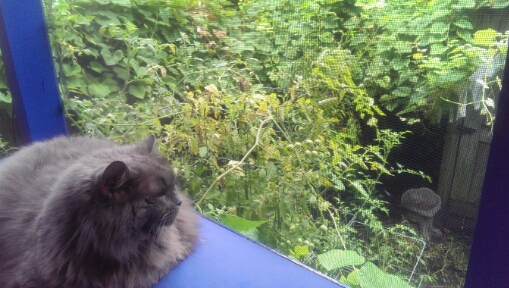
Rainy independence day morning. I think about what it means to be free, as an individual and as part of the collective.
Rainy independence day morning. I think about what it means to be free, as an individual and as part of the collective.
Yesterday, the first of the year, I pulled off the shelf and opened at random Anne Lamott’s “Bird by Bird.” I’d found it used some time ago and was interested, but other things got ahead of it on my reading pile. The page to which I opened seems highly topical for what is coming this year:
For instance, I used to think that paired opposites were a given, that love was the opposite of hate, right the opposite of wrong. But now I think we sometimes buy into these concepts because it is so much easier to embrace absolutes than to suffer reality. I don’t think anything is the opposite of love. Reality is unforgivingly complex.
May we find enough love to suffer well the complexities to come this year. For me, I know that deepening and recommitting to my practice will help me find what more I can offer.
We all (or at least most of those who would be reading this blog) have heard the Buddhist-inspired saying: before enlightenment, the laundry. After enlightenment, the laundry. The question is whether after the moments of enlightenment can we infuse doing the laundry with more joy, acceptance, and peace. A young adult acquaintance asked me the other day whether I was readjusting ok. I did not know to what he was referring, and he had to explain that he was asking how I was doing on my return from my India trip. “It was just a vacation–albeit an extraordinary one,” I replied. “Life continues.”
“The good experiences just slip away like dry sand through my fingers,” he made a motion of letting something slip away.
“When you practice and when you get older, it will be easier to bring the temporary, good experiences into your life without feeling they are lost when you have moved onto the next thing,” I said with hope that would actually be true for him, he seemed so bereft.
The yoga teaches us neither to be out searching for the highs nor actively avoiding the lows; the dance of grasping and avoiding is what makes us suffer. That does not mean that the highs, the times of wild abandoned joy, the experiences of utter fulfillment, of exquisite understanding are of no value. What brings joy is a thing of wonder and an opportunity to deepen our ability to love and be generous. They are only a problem if we ruin our time by vainly clinging to or trying to repeat the sensation. As our practice (and our understanding of a life well-lived and loved) matures, we understand that there is no readjusting in the return to the day to day. We welcome what we have had, try to remember what we have learned, including how much joy and delight we are able to drink in, and approach each day as another opportunity to seek and share connection.

I went to see Julie and Julia because I, like most other Americans of a certain age who like food, have a history with Julia Child. Seeing the movie brought back an episode from junior high school. By seventh grade, I was pretty competent cooking, cleaning, babysitting, and doing needlework. Being a feminist in training, I wanted to take shop. Mr. Murphy, my ancient (OK who knows how old he was, but he was gray and bald and had leathery skin, so he was likely over 50 at the time) guidance counselor refused: “shop is for boys; home economics is for girls.” I expected my mother to back me up, but for some reason she did not.
I had no interest in making rice crispy treats, which was not the kind of thing we cooked at home and was the kind of thing they taught in home economics. Part way through the year, when we were told to cook a whole dinner at home and then bring in a report, I decided to cook from Julia Child. I am sure the meal was perfectly delightful, but the motive on my part was not to make a delicious dinner for the family, but to show my guidance counselor and parents that I should have been allowed to learn something that I did not know how to do and could not learn from a book (woodworking and other “shop” skills).
I enjoyed the movie (it’s a pleasant couple of hours and Meryl Streep is wonderful), but the interesting after thought for me was the difference in the happiness of an individual depending on motivation in life choices. Is something done for joy (with recognition being delightful, but somewhat incidental) or is it being done because one needs recognition and then feels satisfied on getting it? From a yoga perspective, is it “actionless action” (see Bhagavad Gita) or is it acting out of a need to fulfill the ego, which inevitably binds one in the fierce dichotomy and inner tug or war of the opposites of longing and gratification, pain and pleasure?
Not just rubber surfaces, but muscles, bones, and ligaments. Please don’t wear heels or if you feel you must, then only while sitting, reclining, or attending costume parties. By choosing not to wear high heels, You will stave off not only much pain and suffering, but also potential surgeries and their attendant environmental, social, and personal financial costs.

Peace and light, E — Posted with WordPress for BlackBerry.