|

Shrishti-Sthiti-Samhara?

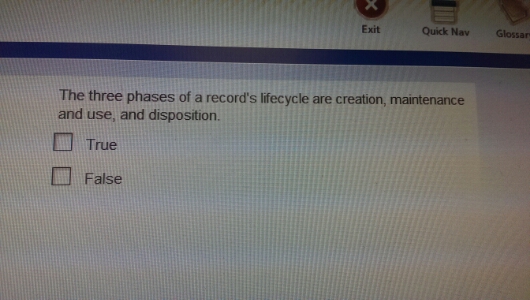
It was an unexpected delight to get a yoga philosophy lesson as part of the mandatory “Records Management for Everyone” course.
The five acts of Siva are creation, maintenance,  withdrawal, concealment, and revelation.

The lesson had the first three covered.  Missing from the lesson, though, were concealment and revelation. Perhaps those were thought of as less apt to records management.

image

Similar Posts

  • | | |

    Altars Around Town

    These devotional candles were on the fence enclosing a neighbor’s garden. I appreciate the sentiment, and am grateful and have financially supported both.

    I am also moved to ask why it is we put people on pedestals. Could it also be in part a way of letting oneself off the hook for doing what is in our capabilities because only the contributions of those who are more than human have real meaning?

    Saint Stacey—Blessed Sister of Truth to Power Saint AOC— Patron Saint of Bullshit Intolerance

  • | | |

    My Own Personal Cloud (and the Malas)

    Last night another storm front passed us by with only a trace of rain, leaving us deeper in drought.  The wind picked up, the temperature dropped, and the clouds scattered, leaving the sky scrubbed bright blue and the air fresh.  Though this morning on my walk to work there was hardly a cloud in the sky, a rather menacing gray cloud hovered directly over the building where I work.  Observing this odd cloud led me to ponder about how I often feel that I have my own personal cloud–everyone else has purpose in their lives and is worthy of love, but not me (this is a bit of an exaggeration, but you get the idea).

    The reality is that all of us get such feelings to a greater or lesser degree some of the time.  It can be a helpful step in clearing away feelings of unworthiness to remember that it is part of the human condition.  The tantric yogis say that there are three cloaks or malas (anava mala, mayiya mala, and karma mala) that result from the manifestation of diversity from the pure universal out of its own play.  The sense of unworthiness we sometimes feel (anava mala) comes from forgetting that we are spirit, and anava mala– in whatever form it appears to manifest–is just because of the loneliness of not remembering our true self.  When we experience or create conflict or unhappiness out of the illusion (maya) that separateness and distinction are the only state of all that is real then we are in thrall to mayiya mala.  When we think we are completely in charge and responsible for everything we do and how it impacts the world, that is karma mala at work.

    We practice to pierce through the clouding of our individual consciousness by the malas.  By inviting ourselves to open to the luminous space of consciousness and to surrender to the very fullness of our being, we reduce the impact of the malas on how we conduct our lives.  Our practice helps us to remember our worthiness so that we can be happier and freer and do our work and engage in our relationships with more love and light.  It helps us remember the light in each being so we are naturally drawn to respond with more compassion and friendliness to everything on the planet.  The grace of dissolving  kriya mala is that when it is not obscuring our vision, we can engage fully on our path, but still accept that we are ultimately not in charge and do not know what the universe truly has in store.

  • |

    Novelization of the Mahabharata

    I found used a novelization of the Mahabharata a couple of weeks ago, which I am now reading.  I’ve read other versions put into English prose, all of which have some stamp of the presenter (author?).  The version I am reading brings to the fore that those who are deserving of the love of people and who are blessed by the divine are physically beautiful, wealthy, and possess great military prowess.  Righteousness includes unquestionably obeying the orders of rulers and parents and accepting your station in life as the determination of God.

    The book jacket proclaims the Mahabharata “the greatest spiritual epic of all time.”  I agree that it is a great epic and a rather amazing one.  Some of the precepts, like all presented in great writings that have lasted over the centuries are worthy of contemplation for one’s own life (I am all for recognizing guests as divine visitors and treating them with due regard, for example), as well as for understanding the society in which the work was created.  But any work that mostly reflects the societal mores of the time in which it was written and is designed to perpetuate the powers that be is perhaps best read as fiction.  Saying this does not mean I do not recognize the good of some of the teachings interwoven into the fairy tales, but rather that I think it must also be understood in the confines of its context, lest we perpetuate societal evils that no longer serve.  (This, of course, has Western parallels.)

One Comment

Leave a Reply

Your email address will not be published. Required fields are marked *

This site uses Akismet to reduce spam. Learn how your comment data is processed.