Acts of Siva?


Peace and light, E — Posted with WordPress for BlackBerry.
I am not a devotee, but I am enjoying the beauty and welcome of it and sharing the practices that resonate with my spirit. This spider (over my bed) however, is moved to stay close.

Last night I went to see the National Theater UK’s simulcast (tape-delayed) of Helen Mirren performing in Ted Hughes’ translation of Racine’s Phedre at the Shakespeare Theater. The tragedy of Phedre is misinformation, misguided helpers, and passion that has gone beyond sweet engagement to maddened attachment.
A stage production is intimate and designed for the small audience of those present in the theater. When it is merely filmed (instead of being turned into a movie), it sometimes feels forced because it is watching a film of a stage production, instead of being invited in as one is when one is either at the stage production or the filming is done as a movie, which is designed to include the viewer in a manner for the film.
What was hard about watching the filming of the stage production, was being forced to have the camera’s and director’s perspective; there was no ability to turn my head and shift which part of the stage to give my attention. At the same time, I felt appreciative of the miraculous offerings of technology: the filming made something that is usually limited to those who can afford theater of that extraordinary quality and who are able to be in a certain place at a certain time available to tens of thousands around the globe, including me and my friend. In that way, the filming both took away the intimacy of being physically present, but simultaneously created a unifying experience for a much bigger group of people.
I was inspired to think about the limitations and differences among the perceptions of the characters, of the critics (talking about the play and the film), of the smaller, elite audience (the actual theater goers’ — I’ve been at that theater in London), of the technologically broadened audience, and of mine in response to the essence of the tragedy, the story and substance of the play, the delivery of the play, and my own life as informed by the play.
It seems an interesting lesson on many levels on how we can choose to live with our passions, how we can react to limits and changes in our ability to perceive our own selves and the world around us, and on how and what we invite in through the doors of our perception.
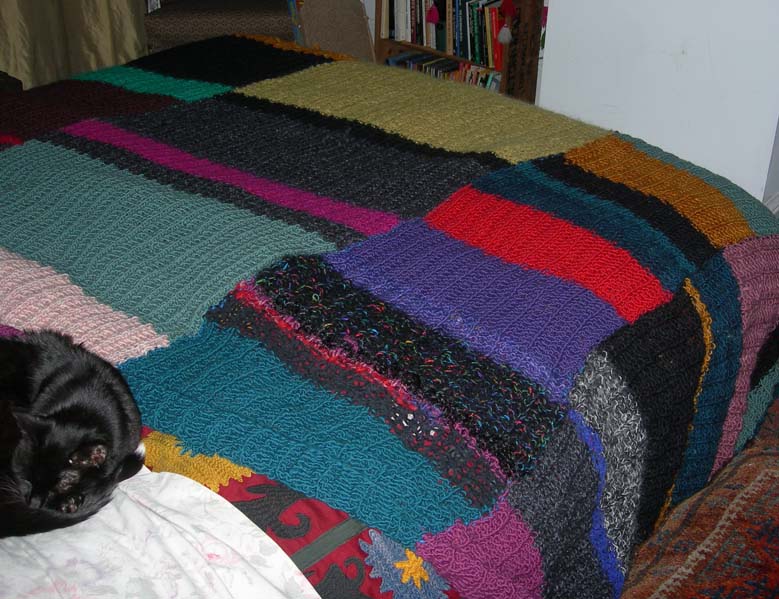
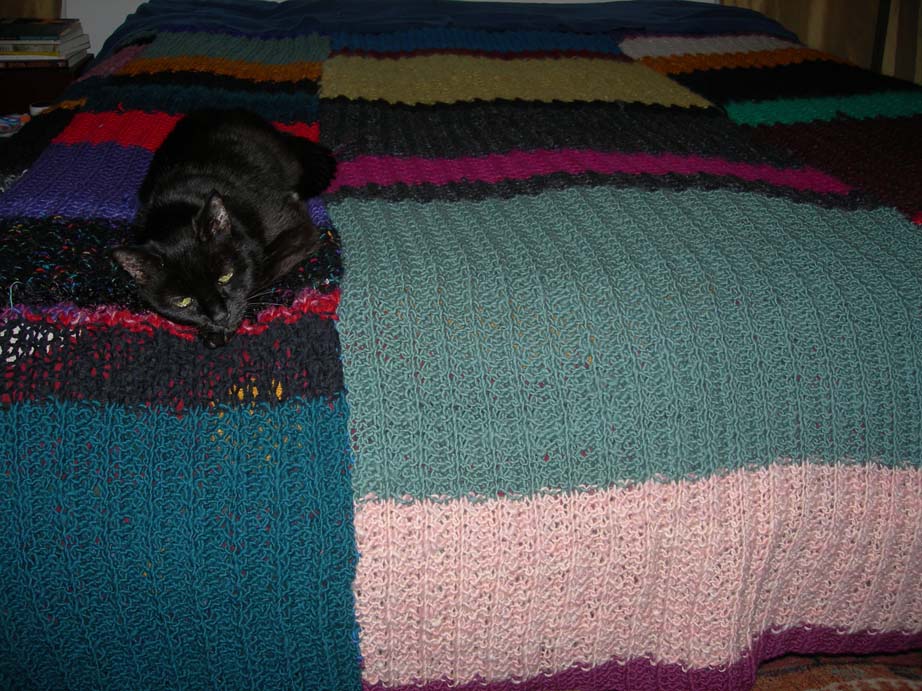
There are lots of ways to clean out a closet. Partly, it depends on what is in the closet. Per my earlier post about freecycle, I think that part of the practice of sauca or cleanliness, is making sure that the hidden parts of our homes are not overfilled with stuff we do not use. Cleaning out the closet, does not mean throwing everything out. It can mean creatively rethinking where things should be and how we should use them. It also means for every artist, cook, crafts person, periodically making use of all those things you picked up or saved because they would be of use in something.
I was raised to save things that possibly could be used later, and to try and make every scrap usable. I was taught this because my father was born in 1929 and my mother in 1936 of Jewish peasant immigrants. Now, we are re-learning how to maximize the use of objects and minimize waste for ecological, rather than financial reasons, though the two are inextricably intertwined. As the recession progresses, it will be interesting to see whether financial constriction will foster more environmentally conscious living.
About four years ago, when I was engaged in a periodic review of what was in the hall closet, I came upon my big box of leftover yarn. In the late eighties and early nineties, I traveled extensively for business, and spent many hours in airports and evenings in hotels. I found it comforting to have a lapful of mohair, homespun, or other delicious to touch yarn. Airport security was less invasive, and it was possible to knit in the airport and take knitting needles on board the airplane. As I love working with multiple colors, that resulted in a leftover skeins from each project. Over a 10-15 year period, even with only a couple of aborted projects and no yarn bought for imagined future projects (unlike a really serious knitter), I ended up with enough yarn for a queen-sized blanket (shocking, really). As you can see, I designed it like a crazy quilt. It took an educated sense of color and line — imagine this as a painting or pastel and you can see the influence of the Washington Color School, but it did not require much in the way of knitting skills (the whole blanket knit in panels of “mistake rib” — (k2, p2), end k2, p1 — about 50,000 times). The patch of fire engine red and the grape juice purple next to it, came from my friend Sara, who is a fabulously talented knitter. I felt the need for those colors, so we swapped for some of the teal and green that I had.
The blanket took almost four years to knit because I only did it in fits and starts. Finally, last year, I decided that I needed to finish it in time for Becky be able to curl up on it. As you can see, she thinks it is great. Now my closet is not stuffed with a big box of yarn, I have an extra warm blanket that helps me keep the house just a little cooler, I made a thing of beauty where I might have been tempted to go out and buy something new, and Becky has a new happy spot.

