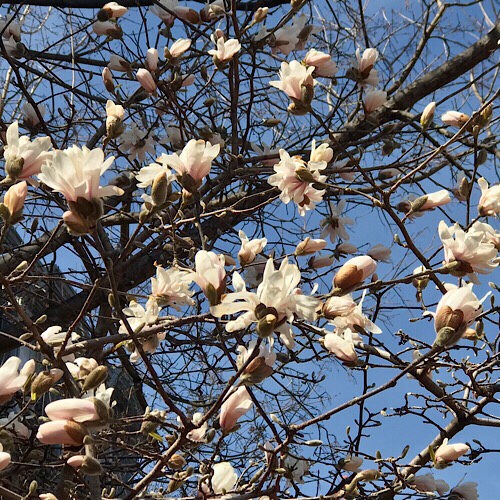
State of the Garden
The garlic chives are blossoming.
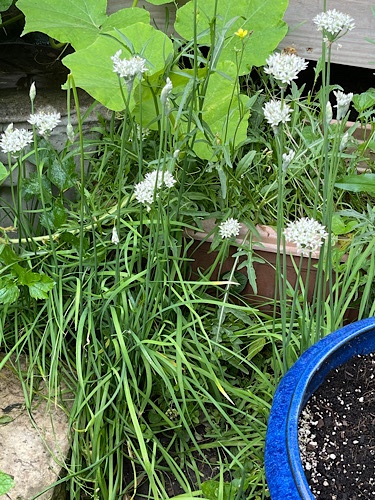
The garlic chives are blossoming.
One of the practical applications of meditating–of the yoga practice of looking within–is to be able to find beauty when things are ugly or challenging or enervating, etc.
Knowing how to find that beauty may not change what comes at us, but it can change our outlook and approach.
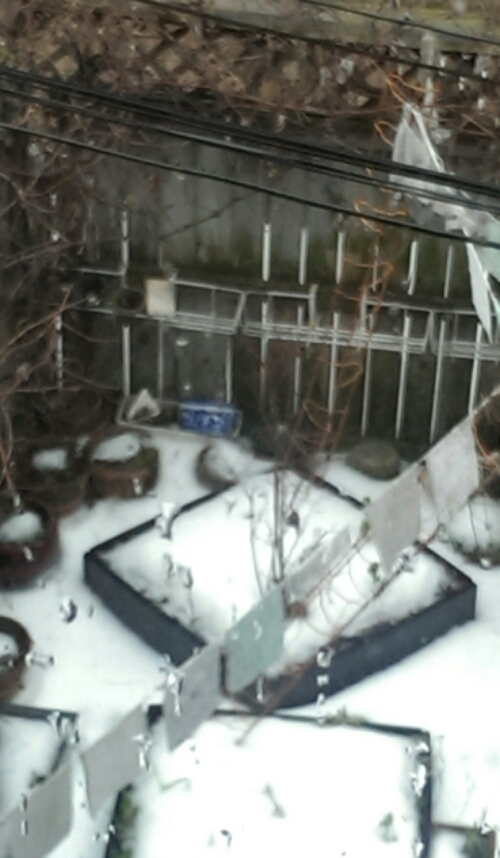
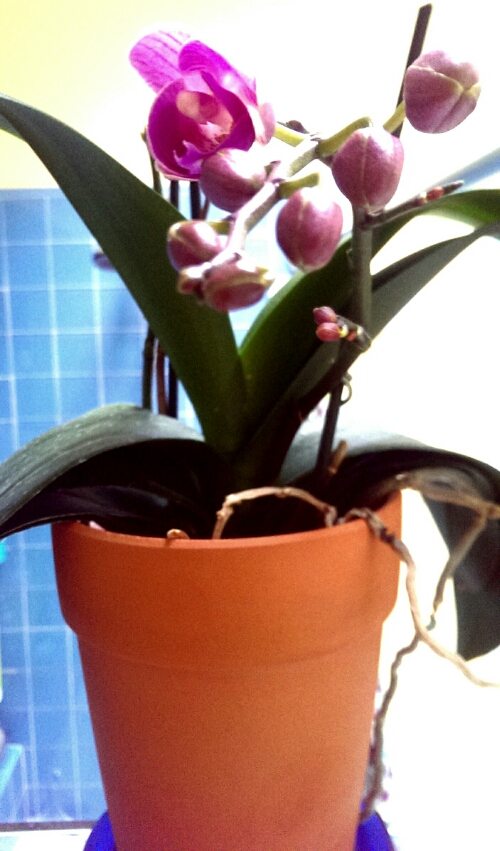
I am easier with the freezing rain knowing that I have invited an orchid to rebloom.
Ahimsa, which is the first of the yamas in Patanjali’s Yoga Sutras, and thus is the first practice or principle of the eight-limbed path, is usually translated as non-violence or non-harming. Over my years of practice and study, I have read and heard many versions–some general, some personal beliefs–as to what it means to practice nonviolence as part of a path of yoga. As I watch the way people around me are behaving and reacting to the heat and drought, I thought about how, for me, the practice ahimsa is as much about seeking to be in alignment with the movements and shifts around us that we cannot change as about refraining from specific acts of violence (though that is obviously a basic element).
In terms of aligning with the world arounds us and the cycles of our own body-mind, when we are sensitive to what will best serve our own self while having the least impact on the environment, we are practicing ahimsa, in other words, “opening to grace.” How does practicing ahimsa by behaving mindfully incorporate many aspects of the Anusara first principle of opening to grace? Opening to grace, as a practice principle, invites us to be open, sensitive, spacious, and radically affirm what is so that we can expand, shift, and serve ourselves and others in the best way possible under the circumstance. To be open in this way, try not to rage at the heat–or whatever is your weather. Soften, listen, and mindfully discover how you can live at your fullest, kindest, and most generous with what you cannot change.
When the temperature soars above 95F for days in a row, it is an act of violence to rage against it or to consume outrageous amounts of fossil fuels to cool our businesses and homes enough to wear warm clothes, sleep under blankets, cook and eat hot foods, or do an athletic asana practice or workout (lest we feel that we are not fulfilling some externally motivated personal notion of fitness–having external notions of how we should look, act govern us without accepting the actual situation is its own form of violence against ourselves) that we would not do if we could not artificially cool our environment.
Perhaps I have no call to speak on this: my central air conditioning is on, though I’ve been keeping it between 78-82F and I have been moving, dressing, and eating in a way that honors the fact that those temperatures are as cool as it is going to be until the heat wave breaks. Some might argue that using any air conditioning or even an electric fan or a refrigerator is doing excessive harm to the environment. That may in fact be true, but asking for more than we can do just makes things seem impossible, and then we are less likely to make any shift at all.
Peace and light, E — Posted with WordPress for BlackBerry.
To this I would add, and make sure to rest well.

I was reading an article in the NY Times about what one can do to “green” a home that led me to this list. There is always something else to learn: unofficial list of energy saving tips.
FYI, PEPCO Energy Services does offer “green” and “wind” electricity. Not perfect, but better than regular PEPCO. I think there are some other alternatives in Maryland. I have not investigated recently in the District, but switched to the “green” electricity a number of years ago.
In recognition of Durga Ashtami.