| | | | | |

Received Exhortation

I ordered some seeds for the garden–Malabar spinach–a spinach-like green that supposedly likes heat and humidity–from Calabash Tea and Tonic. I’m looking forward to seeing whether it will thrive in the summer. It’s hard to find greens that do well in the long, hot summer.

As I was running low, I also got some powdered ginger. Even though I can make my own, because it came with a good story, I included some Jamaican curry powder in my order. They arrived almost immediately, along with an exhortation.

Similar Posts

  • |

    Poor Man’s Caviar

    Last year, when it was dry and hot early, I had an extraordinary season of peppers, tomatoes, and cucumbers.  This year, the peppers and cucumbers were not particularly abundant.  The heat came too late and the rain has been too inconsistent for them to thrive.  The eggplants, though, were ecstatic this year.  Every week brought at least two and sometimes four.  When cooking for one, it is easy to find two eggplants a week far too many.  It was a relief to go to Santa Fe, where I could eat seasonal vegetables that did not include eggplant.

    I was delighted, though, knowing I was about to host a party, to come home to five eggplants almost ready to be picked.  What better base for a potluck party dish than eggplant?  Knowing the crowd, I anticipate baba ghanoush by the bucketful; could not make that.  The tomatoes are not longer succulent enough for caponata (they must all become sauce); that was out.  I chose, then, eggplant caviar.  Not a bad pick.  What could be a better offering for a party in Washington DC at this time in history than what is often called poor man’s caviar?

    I do not know the historical basis for it being named poor man’s caviar.  It does not look like caviar.  Not really.  It does not taste like caviar.  You can put it on bread or crackers the same way you would serve caviar, but that certainly does not further the explanation.  It is, though, a delicious and festive dish that pretty much requires only having eggplant growing in the backyard (or a trip to the farmer’s market) and the time to take care of it.

    Eggplant caviar is a dish that reminds me that with only a little space and the willingness to provide nurture and pay attention for a season and to cook a simple dish slowly, I can experience what it is to enjoy and share little luxuries without being entirely dependent on money.  I am finding that comforting and encouraging.  (I do recognize that there are those for whom a little space and times are luxuries they cannot even imagine.  For me, choosing the simpler luxuries allows for more to share and offer.  Going entirely without comfort would not help much of anything.  As for sharing and giving, I certainly do hope those help.)

    Recipe (adapted from Thomas Keller’s Eggplant Caviar in “New York Cookbook,” Molly O’Neill)

    Take 3 to 5 eggplants, depending on size of eggplant and number of portions desired. Cut them in half, score the flesh and salt it.  Let the eggplants drain cut side down, weighted by a heavy plate or pan, for 45 minutes to an hour.  Rinse and squeeze out the eggplant.  Roast, cut side down, until very tender.  (In my convection oven, that’s about 25 minutes at 350F).  When cool enough to handle, scoop out flesh and chop coarsely.  Drain again in a strainer for 10-15 minutes.

    Meanwhile, wisk together olive oil, pressed garlic cloves, and dijon mustard to taste (to be local, you could use walnut oil, and it would taste excellent; I expect, however, that there may be party guests who are allergic to nuts).

    Squeeze out the eggplant pulp and mix it with the remaining ingredients.  Best if sits overnight or at least a few hours.  When ready to serve, adjust the salt and pepper.

    Variation Make with mushroom.  Skip right to roasting (or even just mince finely and saute until juices evaporate).

  • | | |

    When We Choose the Pleasure of the Beautiful (DWTD)

    When we choose a tantric path, we choose to experience pleasure as an expression of spirit, rather than seeking to transcend such experience as would one who is on the classical renunciatory yoga path. The choice to remain engaged, to honor mind and body as divine, comes with great responsibility.

    When we choose engagement, we choose to experience the divine reality not just of pleasure, but also of pain. The true tantric path does not turn a blind eye to ugliness and suffering. Just taking the pleasure without recognizing its opposite is not authentic practice. If the pleasure of the sunrise is “real,” then the garbage on the beach is just as real.

    Recognizing the reality of ugliness and pain as part of the play of the real does not mean, though, that it should diminish our joy in the beautiful and in the dance of the play of opposites of life.

    Rather, it is our delight in and engagement with beauty that invites us to serve as best we can to alleviate suffering, to try and clean up the garbage where we can. In other words, as we recognize that ugliness and destruction are part of the play (lila), we seek to be heart-full rather than heart-broken when we witness the suffering from violence to others or our living planet. If we let our hearts break, we become blind to the beauty. Like those who only see what brings pleasure, those who only see the painful are also not experiencing all of the real.

    As I head back to the world inside the Beltway, I bring the deepened and replenished sense of beauty and the dance that I always get from collective study and practice. I will try to share the privilege of having this experience by doing my best to clean up what garbage I can, while still dancing and loving in the light.

  • | | |

    Untitled (and Jnanam Bandaha)

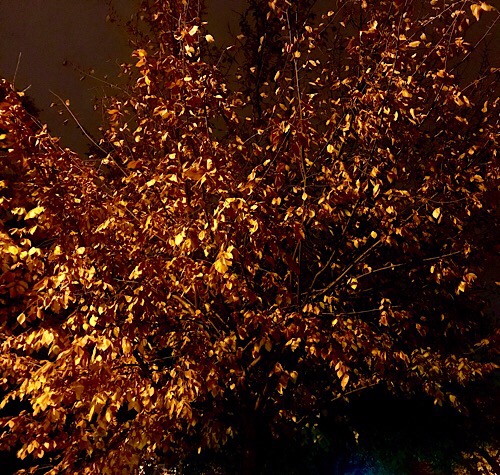
    For me “untitled” as the “title” of a work of art means that the image speaks for itself and that to name it would be to bind the viewer from access to a “pure” and open response of his/her own.

    In the yoga philosophy much is made of the fact that any attempt to describe mystical (for want of a better word) experience already veils or distorts the experience and that which has been experienced.

    Sometimes, then, I show what I cannot say in words, recognizing that the camera, too, alters and separates the viewed and the viewer.

    Jnanam bandaha, by the way, is the second sutra in the Siva Sutras and means roughly, knowledge is bondage. Later in the text, we are also told that knowledge alone liberates. It is a delicious paradox for contemplation.

    Peace and light, E — Posted with WordPress for BlackBerry.

  • | | |

    Murtis Around Town (and Dana and Seva)

    This evening I went for the first time into the Anderson House of the Society for the Cincinnati.  I was attending an event for supporters of Casey Trees, one of my favorite local charities, which is devoted to protecting and expanding DC’s tree canopy. 

    I give because I believe it is an important part of a living practice (dana–charitable giving is a companion to seva–volunteer service).  Getting to discover this garden was an unexpected delight, but not the goal.

    image

Leave a Reply

Your email address will not be published. Required fields are marked *

This site uses Akismet to reduce spam. Learn how your comment data is processed.