Shadow and Light

This anecdote is a powerful incentive for those who could not care less about consequences of fossil fuel consumption.
Total electric bill this late spring/summer by month so far:
May 2011: $6.92 (PEPCO carrying charge); solar output exceeded usage
June 2011: $6.92 (PEPCO carrying charge); solar output exceeded usage
July 2011: $6.92 (PEPCO carrying charge); usage exceeded solar output, but by less than the extra output in May and June
Wow! How much was your monthly electric bill in the Southern and drought states? Do you know any one who would be persuaded only by the money? Tell them what a great investment it is, and they will start thinking seriously about it. Putting a dollar value on social good is the way to get through to those who only look at the numbers and do not see how budget numbers relate to real living beings and honoring the beauty of the web of creation (this would not be a veiled reference to something going on in that big domed building down the street; definitely, not).
It may not always work, but putting what you want in the language of those whose actions and beliefs are not in synch with yours is the beginning of communication and change. These cost savings say, in the language of those who care most about the money, that alternative energies are worth considering.
On my way to a weekend in Philadelphia to attend a weekend yoga asana workshop with Desiree Rumbaugh, I left the house an hour early and stopped at the people’s Filibuster.
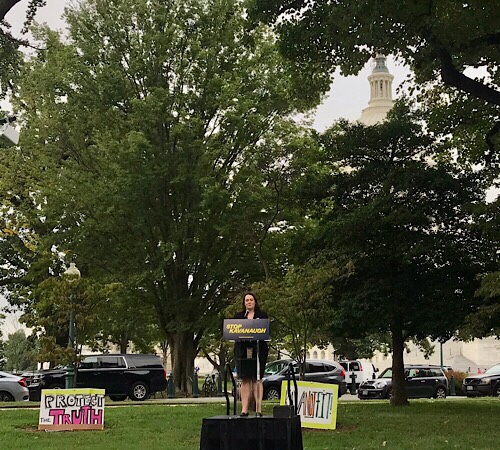
Precious are the mornings when the light is soft
And the air is gentle–for those who consciously clothe themselves
With respect for the intermarriage between
Their body and the day–and when the play of shapes and colors
In the sky and upraised trees dances visions
Of the vast creativity of Being. No doubts arising
Until one reads the news and, once again,
Must reconcile in heart and mind what is there with
The teachings that all is one and full of joy.

Peace and light, E — Posted with WordPress for BlackBerry.
It takes incredible strength to take on the sorrows and poisons of others. How many times have you witnessed someone who is awe-inspiringly dedicated to bringing out change to society, but does so at the expense of his or her own health or intimate relationships? Have you felt yourself getting worn down by trying to make things better?
The archetype of Nilakantha (who drank up the poison churned up by the devis to save humanity) includes what most of the tales of Shiva tell us: that Shiva was able to drink the poison and become stronger from the experience because he was already strong from deep, long term practices.
When we ourselves wish to serve, we must serve ourselves also, and perhaps first. To have the strength and boundaries to ourselves live richly and fully while serving those who are suffering or wreaking destruction without such service destroying ourselves means we must have a practice that enables us to come from a place of light even when going into darkness. (Doesn’t get much more challenging than that).
To some extent, for modern yogis, this includes a physical practice. For all yogis, it means a steady practice of meditation and a way of life that aligns with nature.

Peace and light, E — Posted with WordPress for BlackBerry.
Last night when we walked out of William Penn House from the Tuesday night yoga class onto East Capitol Street, we could see a convocation of police cars in front of the Capitol — presumably in preparation for the President’s speech. Karen asked, “where are the helicopters?” “Maybe, Obama doesn’t need them,” I replied, “maybe he is choosing not to live in fear.” There weren’t any army or police helicopters all night. This was the first Presidential speech in eight years where helicopters did not relentlessly drone overhead, calling people to be afraid and to act from a place of fear.
Patanjali’s yoga sutra II.3, says: avidyha asmita raga dvesa abhinivesah klesah. BKS Iyengar translates this sutra as follows: “The five afflictions which disturb the equilibrium of consciousness are: ignorance or lack of wisdom, ego, pride of the ego or the sense of ‘I’, attachment to pleasure, aversion to pain, fear of death and clinging to life.”
The world is far scarier now than it has been for most of the past eight years. In some ways, though, at least in my neighborhood, it feels less frightening because the signs of being afraid are not being emblazoned everywhere to call all to share in the fear.
We can practice choosing to turn to a place of strength rather than fear on our yoga mats. When we choose to do the difficult poses that are at our edge that bring up fear and aversion, we can notice the fear and aversion, but not become fully engaged in it. By using the Anusara principle of opening to grace, we can accept fear and aversion as part of human being, but then soften and open to the full range of being, and not just cling to the fear. Instead of avoiding the poses or beating ourselves up for being afraid, we can choose to use the yoga principles we know to invite a full experience of the moment and the possible poses. Remaining open to witnessing the full range of our being through the pose, we next engage muscular energy (strengthening by embracing the muscles to the bone, hugging into our center [midline], and drawing from the periphery into our core). Having found our strength, we expand more fully (expanding/inner spiral). We then have space to draw more deeply into our core power (contracting/outer spiral). With this balance of embrace and expansion of ourselves, we then can fully embody strength by reaching outward (organic energy) and making offering. This pulsation of principles in poses has led me to discover physical and energetic abilities in my middle age I had not dreamed possible.
Off the mat, the same principles can lead us to move from love and strength instead of fear and clinging. As I got into bed with the peace of the night uninterrupted, I pondered how these principles can manifest and gave a profound thanks to whomever decided the harbingers of fear — the helicopters — were unnecessary.