Gratuitous Cat Photo
One moment in a long day.
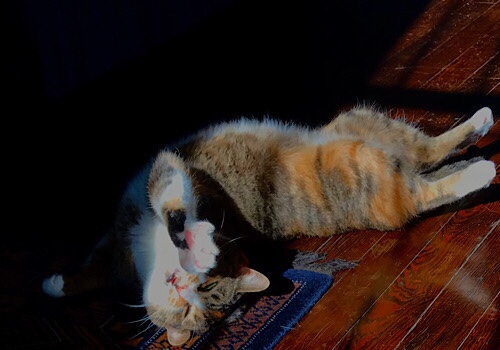
One moment in a long day.

I got caught up in something in the middle of the day today. By the time I could reasonably take a break (I did eat my lunch from home), it was too late to be able to get a real break. I then worked fairly late. By the end of the day, I really noticed the difference between a day when I have taken a walk, met a friend, sat at the Botanical Garden or the museum for even 15-20 minutes and this day, when I let myself get so tangled in the demands of work that I did not take a break.
I work better in the afternoon when I have taken a break, just as my work, my body, my digestion, my sleep, and my relationships are healthier when I practice consistently. I no longer need a reminder how important it is both to take a good break each day and to find time for practice. I am looking at this day, though, as a teaching lesson, an extra reminder of the importance of finding some delicious time to bring into the rest of the day.
Do you take a break to eat quietly or take a walk in the middle of your day? Can you notice the difference the days you do and the days you don’t? What about the weeks you practice and the weeks you do not? Does this not fire you up with resolve to be steadier in your practice and kinder to yourself?
A work colleague of mine graciously said to me that he did not know how I got through certain meetings without yelling, he did not know if he could do it. I replied that lots of yoga helped. “Maybe I should get back to transcendental meditation,” he said, “but I found it did not really help; I should find something, though.”
I said that I tried to think of the challenges at work as just part of the dance that yields such rich abundance for me. The discussion carried on, and we not only resolved the minor problem that had led to the phone call, but also felt a deeper connection that will make it easier in the future to resolve work issues that we mutually encounter.
What I like best about the myth of Nataraja is that the dance is not for the purpose of creating the world or with any particular design, but for the sheer bliss of dancing — anantatandava. The dance makes possible both destruction and creation, but it is not its reason. When we engage in the dance of our own lives, yoga invites us just to dance fully with wonder at the rich diversity of experience. We make choices and seek to be more aligned, but ultimately we are just dancing.
I have been walking past this sculpture regularly ever since I was a judicial clerk in 1987-1988. It is in the plaza between the Federal and DC court houses. It is dated in the subject matter. The partner-associate relationship has shifted over the years, both from the inclusion of women in the law place and the changing economics. The shift in economics to assume that most associates will not be partners because the firm simply does not have the space for more partners and because the associates feel freer to move around and for a whole host of other reasons, some more benign than others, has left new workers bereft of the support of a mentor. In the disruption of the continuity of the workplace, those who stay are less motivated to serve as mentors and lose the delight and strength that comes from the action of mentoring. Those who come into a workplace without a mentor never learn the way they could. Although some of the changes are good, the missing mentor is indeed a loss.
Though the sculpture reminds me of something lost, I love this sculpture, especially where it is set. It is absolutely suited to its location and was made with great skill and love.