| | | |

State of the Garden (and Choosing Where to Focus Your Attention)

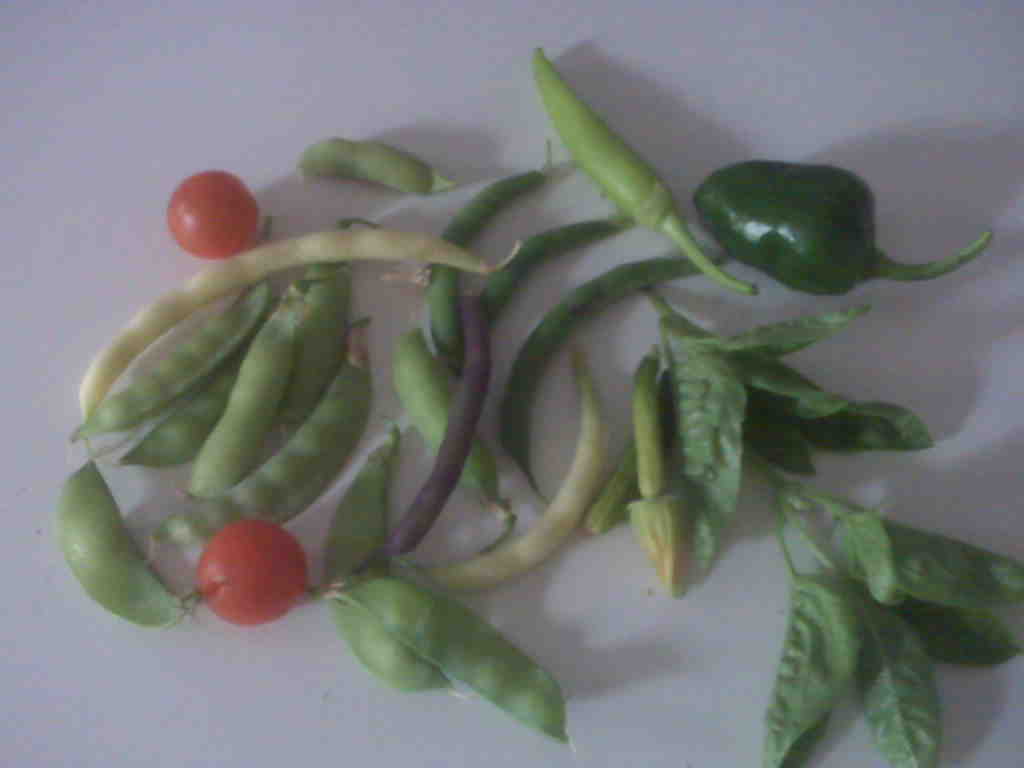
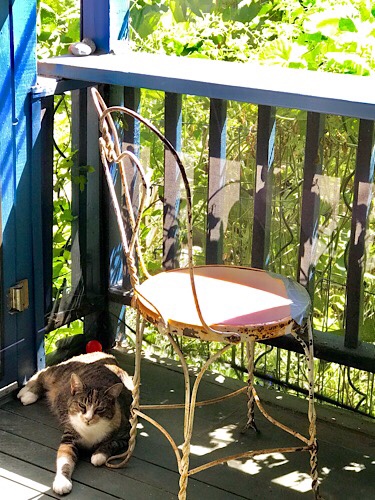
You wouldn’t know, from seeing Maitri enjoying the shade while the sun shines brightly on the curtain of beans and soon to come next wave of cherry tomatoes, what an extremely agitating work day I was having that started too early and was not as productive as I think would have been desirable.

Work day done, I prefer to remember the moments with Maitri and out in the garden.

Similar Posts

  • | |

    Intention, Discipline, and Freedom

    One of the primary themes at the Anusara certified teachers’ gathering this week with John Friend has been how discipline and technique serve our yoga. In keeping with the elemental Anusara principles of “attitude, alignment, and action” (iccha, jnana, kriya), the point has not been to emphasize rules for the sake of rules, form over substance, or technique for its own sake. Mastering technique, by itself, will not bring us to the ultimate intentions of yoga: living liberated (jivamukti), experiencing the very wonder, bliss, and dance of being.

    But just playing or seeking freedom for its own sake, while we are embodied in human form, will not likely lead us to the most expansive and steady experience of ultimate freedom (svatantra). It is discipline and technique with the constant remembrance of the reaon for being disciplined about how we practice and live that will take us further on the path.

    It can be nice, for example to go to a class where there is little emphasis on form, and the call is just to flow and feel. For me, though, because of my physical limitations (degeneration in my spine, old groin injury, etc–these do not define my being; they just inform how I practice), I feel far freer and more able to expand how much I can play the more attention I give to the physical alignment. In such a situation, the rigorous attention to detail is not for the sake of an external idea of what is right and what is wrong. Rather, it is the constant disciplined attention to alignment that frees me to play as free from injury, pain, and fear of injury as is possible in my body.

    The discipline then becomes a way of self-affirmation. It is the limitations that lead me to have to focus more on technique than if I did not have the limitations. That attention then provides a ground for a more expansive practice and a deeper appreciation for the beauty of what the practice can offer.

  • | | | |

    “They’re Still Here”

    “They’re still here,” said the evidently conservative (by other things he said and his dress) and cynical young man sitting on the seat in front of me on the bus, as we drove past the “Occupy DC” group. The bus moved forward, and the running commentary on what was outside the window moved to derogatory statements about the homeless. I thought about the discussion a group of us had after meeting for worship this morning about seeking to live witnessing and honoring the sacred in every being. This includes, of course, recognizing the universal spirit worthy of love in those who proudly do not do so nor feel the need to try. Easier said than done, but that is true of most of the profoundly deep practices.

    Peace and light, E — Posted with WordPress for BlackBerry.
  • | | | |

    Teaching Less to Practice More

    This morning is the last Saturday in the foreseeable future when, even waking up before dawn, I have to cut short my morning practice to get on the metro to go teach. I have a strong memory of a relatively novice teacher telling me, before I started teaching, that she was going to stop teaching indefinitely because she needed more time for her own practice. At times over the years, when my other job was at its most demanding, I would think about that statement. Mostly, though, I have circumscribed other activities to fit in time for work, teaching, and a full practice.

    It came time to admit, though, after nearly two years of steady study with 0Paul Muller-Ortega, which expanded my meditation practice from 25-30 minutes a day, in addition to asana practice and studying, to an hour a day plus additional practices and more studying, that there are not enough hours in a day for all I want to do.

    I have been teaching on Saturday mornings for a number of years now. I love my Saturday morning students and have embraced the discipline of getting to class to teach.

    The energies have shifted. I will still teach my noon class on Saturday and my weeknight classes, but I will have more time for a full practice and perhaps some extra garden time from this shift. I expect that this time to deeper into my own path will bring new energy and light to my teaching. I hope trust I will see my Saturday morning students at other classes and workshops, both when I am teaching and taking class together at Willow Street.

Leave a Reply

Your email address will not be published. Required fields are marked *

This site uses Akismet to reduce spam. Learn how your comment data is processed.