Moment of Meditation

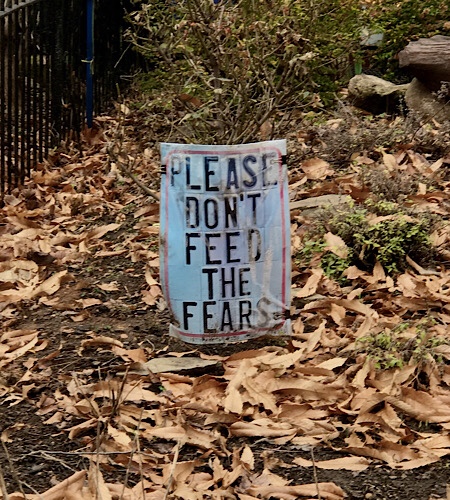
This weekend, a friend whose marriage of decades is precipitating towards dissolution, said to me, “I am having trouble reconciling being yogic and still needing to do what I need to do in connection with divorce. How do I deal with that?” I told her about a yoga principle I learned at the first Inner Harmony Retreat I attended with John Friend in the summer of 2003. He had asked a student a question that yielded as the answer the four yoga principles of ardha (physical and material well-being), kama (relationship, including intimate and love relationships), dharma (life path or work), and moksha (liberation or freedom). The fellow student answering the question, who was also my teacher, gave the classic yoga explanation that we try to do the first three elements in alignment so that we can then transcend and go beyond them to become free (enlightened). John replied that was the traditionally correct answer in dualist, classical yoga, but that from the tantric perspective of a person living in the world as a yogi, we look apply the principles differently. By living in a way that we have taken care of our physical and material well-being, have happy and loving relationships, and work with delight and passion that we will be embodying a life of the spirit; we will then be living and embodying freedom (jivanmukti). That encapsulation of tantric yoga resonated deeply and is a significant part of why I have chosen a path of tantric yoga rather than one that preaches renouncing the body and mind (which I think is impossible for one staying in the world).
My friend’s question seemed especially significant to me in light of the dialogue that has ensued following the publication of the New York Times article on John Friend, John’s blog in response, and the Elephant Journal interview. The essence of the article and the reactions, to me, seem to be about the intersection of our “outer” notions of societal success–fame and fortune–and yoga and whether the two can be reconciled. The New York Times article is obviously intended to be sensational and to create controversy; that is what makes a journalist who gets fame and fortune. But the alleged tension highlighted in the article is indicative of a bigger societal confusion of how and whether we can be spiritual or religious beings and also have human needs and wants. Ours is a society that hungers for panaceas and palliatives. In “discovering” yoga and its benefits in the late 20th century, far too many have put onto it expectations that have no basis in what is yoga and how it is supposed to aid us.
There is no word in yoga philosophy or in India for “yogic.” The word “yogic” is a western creation of relatively recent vintage. Webster’s dictionary does not have it as a separate word, but just has it at the end of the definition of “yoga” as “adj, often capitalized.” What do we mean by being “yogic?” It seems that we have gotten this notion that if we practice yoga seriously or teach it, that means we must be perfectly pure and good. We will need only light and air to nourish our bodies (and maybe a little local raw food in season); we will have neither needs nor desires; we will be so suffused with peace, compassion, and equanimity, that we never feel or show anger or grief, even in the face of injustice, violence, pain, or outrageous behavior. We expect that somehow we will be a perfect monk while still living with family and going to work.
We expect this not only of ourselves, but even more so of our teachers. In essence, we somehow expect yoga to release us from the realities of being human. To have such expectations inevitably will lead to disappointment in ourselves and our teachers (for being unable to reach this impossible ideal) or in the practice (both for not yielding this ideal and for, in our delusion, creating this expectation in the first place). My meditation and philosophy teacher Paul Muller-Ortega would say that to have such expectations is “adolescent” spirituality. When we practice “adult” spirituality, we take responsibility for ourselves and our own practice. We expect our teachers to offer us the teachings, but we honor and recognize them as human beings.
To practice yoga sincerely while still living in the world should make us more humane to ourselves and to all around us, not beyond being human. This is the true essence of Anusara yoga. To be richly and freely and wonderfully human and feel great love and compassion for that, even as we balance the realities of life with attempts to live in greater alignment. I am incredibly grateful for the teachings and the community that John Friend has created and the offering to study and get as deeply into the yoga as makes sense for me. Whether there are things I might do differently in the realm of ardha, kama, or dharma if I were “the yoga mogul” is of little moment because to find moksha we all strive to do our best in our own way (and one thing I know of John is that he always strives to do his best).
They are only visible for a short while between the time it is dark enough for their light to be visible and before they set.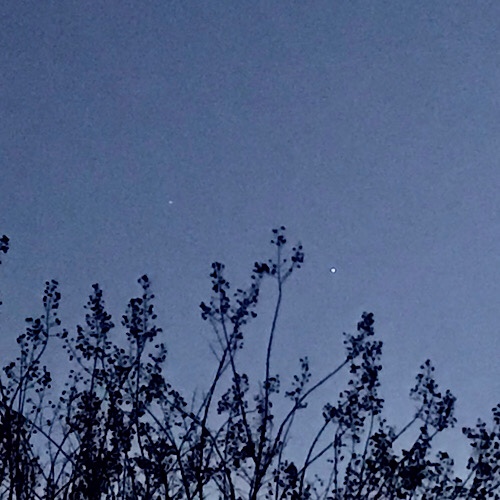
I am sitting in Phoenix’s Sky Harbor International airport waiting for the plane that should already be carrying me home to finish being repaired. After having done a full hour of practice this morning in my room, having a last delicious breakfast at the retreat center, and enjoyed the two-hour ride with friends to the airport, I find myself perfectly happy to sit in the airport. I am warm and well-fed. I have bought a novel to read on the plane — Lev Grossman’s “The Magicians” — and put aside a philosophy handout to write. The handout, a translation of the beginning of Abhinavagupta’s “Tantrasara” that was given to us by Paul Muller-Ortega to support our meditation practices, teaches us to seek the power of bliss through the practices, this bliss being true knowledge and true freedom. The more we practice, the more we can draw on this power and abide in a state of true happiness. Paul Muller-Ortega sometimes says that we want to be “unreasonably happy.” As I sit here feeling perfectly content after my weekend of practice and community and watching others in the airport get progressively grumpier with the delay, I feel unreasonably happy. I also feel fully motivated to practice and study ever more deeply so that I can abide ever more steadily and this glorious unreason.

I’ve seen lines drawn in
Sand, but never thought I’d see
Lines drawn in the clouds.

Peace and light, E — Posted with WordPress for BlackBerry.