Similar Posts

  • |

    Change of View (and the tree rebate program)

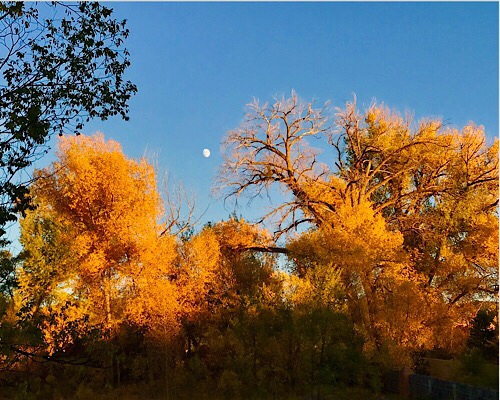
    In October through early November, I have autumnal color right outside my bedroom window as the red maple in my front garden and the sugar maple in the tree box right in front of it, blaze into glorious color.  Through the winter, the view is decidedly urban.  I look right out at the apartment building across the street and must keep the venetian blinds down for privacy even during the day.  If we get snow or an ice storm, I look out at branches gilded-jewel like with winter frost.

    Only two weeks ago, there was only a hint of red and green on the two maples.  Now they are in fresh, full leaf.  Not only is my yard shaded, but my view is changed and my privacy veiled by a curtain of leaves.

    These trees cool my house and the street, help make the air more breathable, provide needed habitat for birds, and give me the pleasure of their beauty.  If you have space, consider planting a tree.  Extra bonus, the District has extended its rebate program for planting trees on private property.

  • |

    Madya Vikashac Cittananda Labhah (and moving from the core)

    After my morning practice, while I was riding on the bus to Georgetown yesterday to volunteer at the Lantern, the sutra “madyama vikasha cittananda labah,” Pratyabijna Hrdayam, 17, started resonating in the forefront of my consciousness.  Swami Shantananda in The Splendor of Recognition, translates this sutra as “[t]he bliss of Consciousness is attained through the expansion of the center.” What an elegant reminder of the true purpose of practice and the essential basis for the alignment principle of “stabilize the periphery; move from the core” about which I wrote yesterday.

    When we practice, we seek to go inward to discover that of our true nature that is light-filled and joyous.  We do so not just to stay in that place still and inert, but so that we can then extend out into every thought and action from a place of illuminated, blissful wisdom.  It will not change the fact of difficulties, challenges, strains, etc, but when we stabilize the outside, remember to go inward, and find the inner space of stillness and light, then when we move back outward into the world, we will be better able to respond in the highest.

  • |

    Novelization of the Mahabharata

    I found used a novelization of the Mahabharata a couple of weeks ago, which I am now reading.  I’ve read other versions put into English prose, all of which have some stamp of the presenter (author?).  The version I am reading brings to the fore that those who are deserving of the love of people and who are blessed by the divine are physically beautiful, wealthy, and possess great military prowess.  Righteousness includes unquestionably obeying the orders of rulers and parents and accepting your station in life as the determination of God.

    The book jacket proclaims the Mahabharata “the greatest spiritual epic of all time.”  I agree that it is a great epic and a rather amazing one.  Some of the precepts, like all presented in great writings that have lasted over the centuries are worthy of contemplation for one’s own life (I am all for recognizing guests as divine visitors and treating them with due regard, for example), as well as for understanding the society in which the work was created.  But any work that mostly reflects the societal mores of the time in which it was written and is designed to perpetuate the powers that be is perhaps best read as fiction.  Saying this does not mean I do not recognize the good of some of the teachings interwoven into the fairy tales, but rather that I think it must also be understood in the confines of its context, lest we perpetuate societal evils that no longer serve.  (This, of course, has Western parallels.)

Leave a Reply

Your email address will not be published. Required fields are marked *

This site uses Akismet to reduce spam. Learn how your comment data is processed.