Chandra


I have been told more than once that one cannot technically be a true practitioner/believer in the tenets of Kashmir Shaivism without believing in some form of Godhead. As a nontheist who still finds the teachings and practices informative and useful for how best to live, I ask consistently whether that is really true.
I’m sure a purist (religious or academic) would say there’s no anything to the philosophy without being a full believer. But what I think one gets from practices designed to heighten awareness of a divinely connecting universality in the wild diversity of life without a belief that what is universal a priori points to “God” is a recognition that with all that is troubling and difficult and hurtful and evil in this world, the very complexity and outrageousness of being is yet wonderful and inspiring in itself.
In a word, when all else fails, laugh (and create and live) with an ecstatic fatalism.
Painting by Sandra Dooley. Cuba 2014
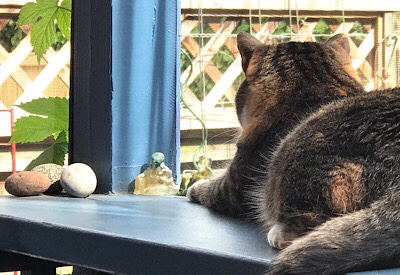
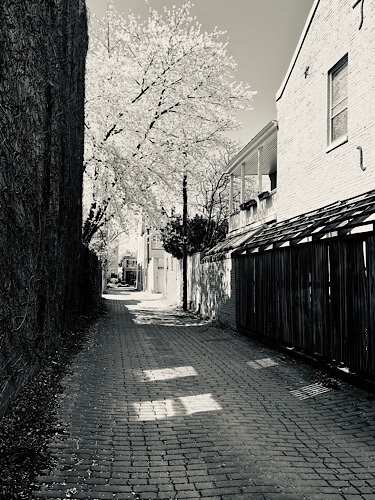
For me “untitled” as the “title” of a work of art means that the image speaks for itself and that to name it would be to bind the viewer from access to a “pure” and open response of his/her own.
In the yoga philosophy much is made of the fact that any attempt to describe mystical (for want of a better word) experience already veils or distorts the experience and that which has been experienced.
Sometimes, then, I show what I cannot say in words, recognizing that the camera, too, alters and separates the viewed and the viewer.
Jnanam bandaha, by the way, is the second sutra in the Siva Sutras and means roughly, knowledge is bondage. Later in the text, we are also told that knowledge alone liberates. It is a delicious paradox for contemplation.
Peace and light, E — Posted with WordPress for BlackBerry.