Found Exhortation

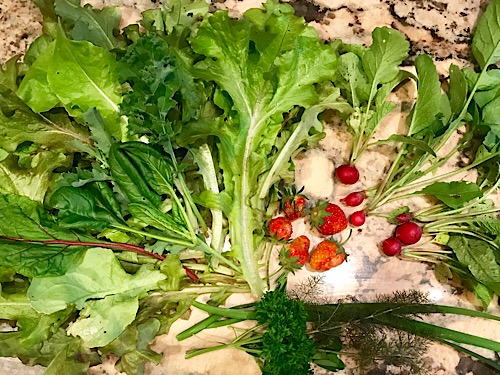
It is wonderfully healthy to grow some of our own food, and taking care of ourselves with diet today became that much more important. But we still all need access to medical care too. Please, if you have one, pick up the phone and call your senators to defend the Affordable Care Act and move towards a single payor system that would cover more people not fewer and would respect the rights and health needs of women.
This summer, we will be exploring a very few of the names of Shiva and how they can draw us to a better understanding of ourselves on and off the mat.
According to the sources, Shiva has either 108 names or 1,000. Each name has a different meaning. All of the meanings point to aspects of our own being that are worthy of contemplation. Some aspects will resonate more deeply for us. Some less so.
For me, besides my almost childlike delight in of lists, words, and myths, contemplating the various aspects is of deep usefulness in exploring my understanding of myself on and off the mat. The various names describe different aspects human nature and how we relate to others and the earth.
The multiplicity of the names also highlights that each of us names and experiences spirituality in a unique way and should have the freedom to do so. (As an aside, I think this multiplicity of forms of worship could be seen as a kind of rebellion within a rigid system of religious laws, but that is a whole other set of thoughts).
In using these forms of meditation as part of our yoga practice or otherwise, whether we meditate on highly abstract notion of “Shiva” representing the auspicious nature of all beings or on one of the names that points to individual aspects of personality, contemplation on any aspect or name can be used to deepen our relation to our best self so that we can be more aligned with our world inside and out.
For class this summer, we obviously cannot get to more than a very few. Feel free to send to me your suggestions about names to highlight.
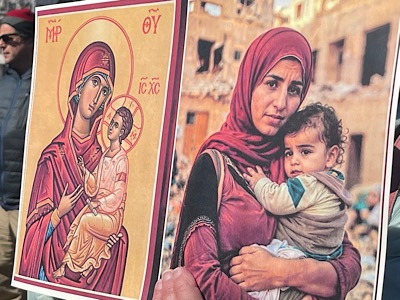
Yesterday I walked over to the White House and joined at the final step of a pilgrimage for peace in Gaza. Among the walkers and those giving voice at the White House were Jews, Muslims, Catholics, Baptists, AME, Hindus, Quakers, Lutherans, and other Christian denominations.
The speaker representing Hindus for Human Rights said this was a shanti yatra—literally a pilgrimage for peace. Every step, every action, every word for peace a prayer embodied.

Peace and light, E — Posted with WordPress for BlackBerry.