Similar Posts

  • | |

    Found Exhortation (With Caveats)

    loveThe ubiquitous exhortation to love that we find in so many spiritual teachings does not, I think, require us to love the individual as an individual.  Loving an individual particularly requires liking, and liking is an idiosyncratic thing and as with all tendencies and preferences is much out of our control, even though acquirable to some extent.  The love exhorted as a spiritual practice and aim to be possible must be that of the universal, of what is common, even if the only thing that is in common is the fact of being.

    dusk

  • |

    Iccha, Jnana, Kriya

    Above (or perhaps beyond, or maybe more elemental, or more universal — words inevitably tangle us in discussing essential philosophical constructs) the six kanchukas (cloakings or coverings) are the five universal elements.  These are suddha vidya, ishvara, saddha shiva, and shiva-shakti.  John Friend suggests that we think of the first three of these tattvas as corresponding to the principles of iccha (will),  jnana (knowledge), and kriya (action).

    When I think of the Anusara principles in practice on and off the mat, I think of them in terms of the tattvas, particularly the five universal elements and the five mahabhutas .   Those of you who practice and study Anusara yoga are familiar with the principles of “open to grace, muscular energy, inner/expanding spiral, outer/contracting spiral, and organic energy.”  As part of the physical practice of asana, I think of these alignment principles as corresponding to the mahabhutas (the five great elements of earth, water, fire, air, and space/ether; see previous posts on how I experience the alignment principles as relating to the mahabhutas).  At that level, “open to grace” has physical characteristics.  These principles, when applied consciously, help us to align the physical body with the energy body, so that we can more fully delight in our bodies.  When we are in alignment and experience expansion through alignment, we can more optimally move in and experience the physical and mental realms in a way that helps us recognize the universal spirit in all beings.

    The reason I come to the mat, the ultimate purpose of yoga in an of itself and for me as a practitioner, is informed by the five principles of the universal.  The yearning to connect to the spirit is in essence an opening to grace at an elemental, non-physical level (an uber opening to grace).  The next aspect of our practice, which is more important than the physical technical details of the alignment principles, are what John Friend terms “attitude, alignment, and action.”  These are by definition more universal and fundamental than the physical principles and correspond directly to the principles of iccha (will),  jnana (knowledge), and kriya (action).  The essence of yoga, especially from a tantric perspective, is the will (iccha) to embody and experience the union of mind, body, and spirit with a radical embrace of our being.   Knowledge (jnana), when used as a way to align with our true nature, is not to correct, but to better enable us to align our body, both physically and energetically, and our mind so we best can experience and express our will to connect.   The ultimate action (kriya) of a pose or what we do off the mat is a spontaneous offering or an expression of our will to connect, using ever increasing refinement, skill, and knowledge.

  • | | | | | |

    Still There Were

    Whatever might
    have happened
    or didn’t happen,
    whomever I might
    have encountered
    or didn’t encounter,
    whatever might
    have worked
    or did not work,
    whatever I might
    have completed
    or left unfinished,
    whatever I might
    have stirred up
    or might have
    begun to heal,
    whatever might
    have been, or was–
    still there were
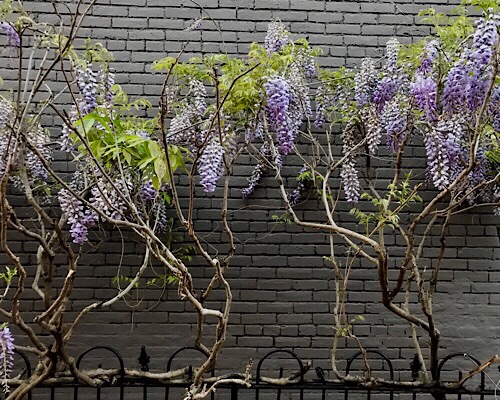
    the blossoms,
    still the moon.

    Peace and light, E — Posted with WordPress for BlackBerry.

Leave a Reply

Your email address will not be published. Required fields are marked *

This site uses Akismet to reduce spam. Learn how your comment data is processed.