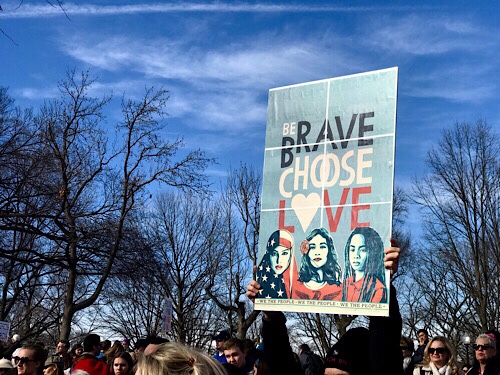
Found Exhortation (Women’s March DC 2018)

Peace and light, E — Posted with WordPress for BlackBerry.

Peace and light, E — Posted with WordPress for BlackBerry.
The third front in a row. It is starting to be a long while not to rain in the summer. It is a tough gardening year: extreme drought conditions all winter, overly cool and wet spring, now no rain again.
Watching how the erratic weather patterns are impacting my garden, I am reminded that I am not a purist about gardening or food or my impact on the earth. As much as I enjoy tending my garden and eating its fruits, there is no hesitation in my mind that if my garden does not produce, I will buy more food at the farmers’ market. If the pickings are slim at the farmers’ market because of local conditions, I am in no doubt that I will buy food from whatever source, even if I try to make sure it is first local, then humanely picked, then organic.
When I write about gardening and eating and yoga, I am sharing what I enjoy, what makes me feel healthy. I do not think of myself as trying to set an example. In some senses, my yoga practice is similarly about what works for me personally and no more. The yoga teachings are fairly clear that the design and purpose of aligning with the subtle energies, including living in a more peaceful, less destructive way, is for the enlightenment of the individual practitioner and not for “making the world a better place.” If by seeking to live in a healthier, more aligned, more peaceful and compassionate way ourselves also brings more global benefits, that is a bonus.
Looking at our lives from this perspective could cause discouragement. I hear this question all the time: “why should I change what I am doing [consuming/eating/driving]? My behavior is not going to change the world when there are all of those billions not changing.” In some senses, looking at shifting our behavior from a completely selfish perspective makes it more accessible and meaningful. If we see our choices having the possibility of making ourselves healthier, happier, and more at peace with ourselves and the world around us, why would we not want to try to live more consciously?

Peace and light, E — Posted with WordPress for BlackBerry.