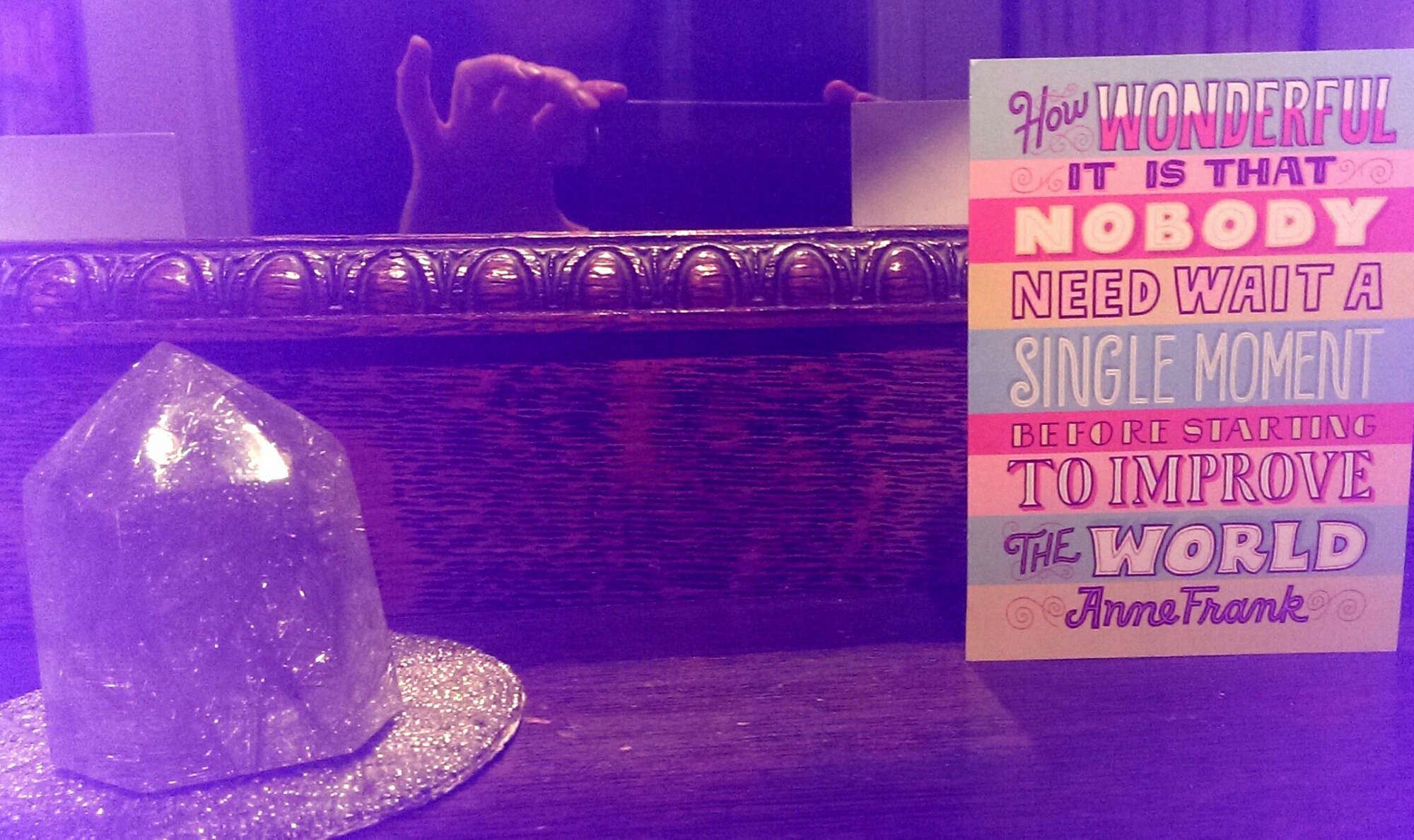
A Reminder Received in the Mail from the Southern Poverty Law Center
Check out this link, and then, if it is something you want and care about for yourself and others, please call and/or write your elected officials. It’s not single payor (that’s what I believe would be best), but we should at least be able to offer something.
There are three important things going on under my desk:
(1) my feet are planted firmly on the floor with the inner edges of my feet parallel. This is the foundation of a good, comfortably upright posture where my low back, shoulders, and neck are in alignment and not overworking; my inner organs are in the right place for optimal functioning; and my lungs and diaphragm are situated for full, easy breathing, which helps me be healthier and more alert.
(2) the only shoes for the day have flexible, supportive soles and leave my toes free to work–whether I am walking or sitting. I do not change into narrow-toed and/or high-heeled shoes to look “professional” or fashionable. I think if we try hard enough, we could make shoes that are good for us be in style. Think about how much we would reduce health care spending and lost work time (for foot, knee, and back surgeries and treatments), if we all wore shoes that fit and did not alter our posture in an unhealthy way. Eventually, foot binding when out of fashion in China, but we still require women (mostly) to harm themselves with their footwear to fit in.
(3) I have two different-sized rubber balls to do foot exercises. Feels great, helps me stay grounded, and is a nice way to take a break.
Come to one of my yoga classes to get tips on great exercises for the feet you can do at your desk or just about any where.

Peace and light, E — Posted with WordPress for BlackBerry.
Sometimes I wonder why a thing appears in a particular place at a particular time. Then I wonder why I wonder. It is not as though I am going to get an answer. It can be good fun, though, speculating on the how and why as long as we don’t get too caught up in needing an answer.

Peace and light, E — Posted with WordPress for BlackBerry.
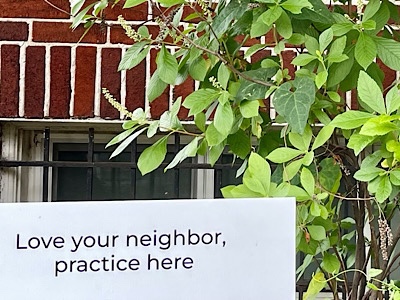
Also—found exhortation and be here now variation. I consider this a reminder that loving your neighbor is a practice. As is how, when, and where to use commas.
We have a choice. We can emphasize what we don’t think enhances life (for example, an over-sized, gas-guzzling, suburban SUV with city plates) or we can focus on an exquisite reflection of beauty. That we see what optimally would better be changed or shifted to be more fully aligned with nature or that we speak of it does not mean that we are not seeing beauty or embracing the whole of life with love.