| | |

Jnana and Vijnana (and the State of the Garden)

When teaching meditation, Paul Muller-Ortega says that we need both to practice with awareness (gain experiential knowledge) and to study the texts and teachings (explore theoretical knowledge).

With the dirt blanketed in snow and ice, it is time for jnana–time to study and theorize about possibilities for the coming gardening season.

image

Similar Posts

  • | | |

    “Who Goes On A Diet to Lose Three Pounds?” (and the Carbon Footprint of Orange Juice)

    The other night after yoga class, a group of us went out to celebrate a friend’s 39th birthday.  During the ambling course of the conversation, I said that I was turning 50 later this year.  I added that I would grow my hair another couple of inches longer and lose three pounds, and 50 would be just fine (let’s leave aside for now all the societal conditioning that goes along with feeling that such an age marker wouldn’t feel too old as long as my hair was long and my body at a youthful weight).

    “Who goes on a diet to lose three pounds?” asked one of my friends.  I find that people sometimes look at me and are shocked that I pay attention to my weight.  They have an idea that someone who stays slim is just lucky rather than consistently mindful.  My grandmother who was 4’11” in her high-heeled slippers was the one who taught me to be mindful in this way.  Once or twice a year, she would moderate her diet to lose the two pounds that crept on after one too many desserts over the course of a few months without any other change in her modest, healthful for those days diet.

    Going on a diet to lose three pounds means never having to lose 10 or 20 pounds or more.  It means returning to mindfully eating a little extra less for a couple of weeks after a couple of months of having eaten a little more than what is perfectly sustaining rather than having to go through a major lifestyle change.  In my middle age, I pay attention to my diet not as much for how I look in my clothes and feel about my body, but more for whether what I am eating is healthy for me and the planet.  One of the best and easiest ways to be at an optimal weight, feel healthier, and have less impact on the planet is simply to eat less (though this is a new announcement by the government, any one with even an ounce of common sense knew that, no matter how much exotic, novel, or challenging diets seemed more appealing).

    Part of eating the right amount for your ideal fit with your body and its relationship to the planet and society is having food that is not necessary for a healthy body only on special occasions (which is different than rigidly forbidding it to yourself).  In reviewing what is sustaining for me and the planet while still enjoying a delicious diet, I periodically take a look at what I am eating and think about what is really fulfilling.  One of the things I enjoy, but have known really should be a treat is orange juice (which I stopped drinking on other than an occasional basis several months ago and truly have not missed).

    If you are eating multiple servings of vegetables and a piece or two of fruit a day, orange juice processed, packaged, and shipped outside of a grower state provides little more benefit to your diet than does a can of soda.  If you kept everything else in your diet consistent and aren’t already eating enough to be gaining weight, eliminating the unnecessary glass of juice would not only diminish your carbon footprint (and if it is not organic, your chemicals into the drinking water footprint as well as your carbon footprint), but you also would be eliminating the number of calories it takes to gain a pound over the course of a month.  And if you live in one of those states covered in snow and ice and are yearning to eat something from the land of sunshine, eat an orange or some other tropical fruit–organic if you can get it — and skip the processing, the cooking (pasteurizing), and some of the packaging that goes into it being shipped to your grocery store as juice.


  • Asana Practice and Digitalis

    During last night’s yoga practice, we were exploring how advanced yoga postures such as headstand drop-overs could have therapeutic applications. If the practitioner is able to do the poses preparatory to the pose (for headstand drop-over to be accessible in a healthy way, the yogi should be able to do dwi pada vipariti dandasana and, of course, sirsasana, in good, easeful, steady alignment), then the pose can be integrating and healing for the shoulders and strengthening for the neck. For those with little cervical curve, really working to lengthen the side body, integrate the shoulders, and radically melt the heart (which is what is necessary to get into the pose), can help develop the cervical curve. Done out of alignment, the headstand drop-over risks the shoulders and neck–the very parts of the body that would be healed and strengthened if the pose were done in alignment–are at risk of injury.

    Four or five years ago, I was at an advanced intensive with John Friend where he likened advanced asana practice to digitalis. Digitalis, which is a beautiful flower, is one of the most poisonous plants in the garden. Taken the wrong way, it can make you very sick indeed. Properly distilled and administered in just the right dose, digitalis is one of the most powerful and curative heart medicines available.

    When we approach asana, especially the more physically challenging postures, with great respect, care, and discernment, we can not only benefit from its extraordinary healing and life-expanding powers, but revel and delight in dancing in our bodies. If we approach asana without honoring ourselves and the power of the practice, however, we put ourselves at risk and we fail to realize the benefits that are possible.

  • | | | | |

    Signs Around Town

    Signs with intelligent, thought-provoking, and action-inspiring quotes are proliferating in my neighborhood.  I took this photo last night when I was walking home after getting a Friday evening massage in the neighborhood.

    This morning, after practicing, I took care of cat, house, and garden, reading the news, signing petitions (not as helpful as visiting/writing to a Senator/Congressperson–but I don’t have those as a DC resident) and doing targeted giving (today to support a free press) in addition to my expanding monthly giving. This afternoon, I am attending “Active Bystander” training.  Then off to share dinner and then watch friends I know from Contact Improv perform works in progress at Dance Exchange.  I will get time outside by traveling as much as possible on foot.

    How are you spending your Saturday?  Did it help you feel more engaged, connected, and grateful or less?  If less, what small shift could you decide to make that would be easy enough that you would actually do it?

  • |

    Karma, Dharma, and Interconnectedness

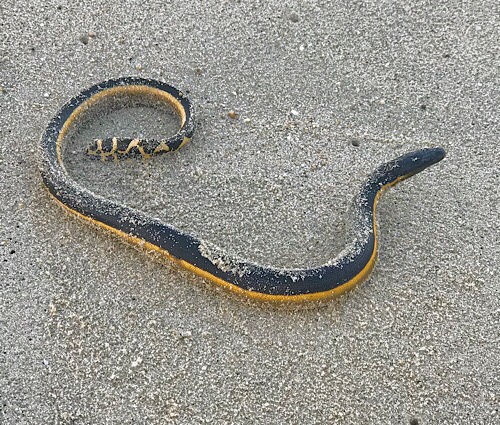
    Near the beginning of my last morning beach walk (I’m now in Houston waiting for my connecting flight home), I met this water snake washed up on the beach. It was still pretty active, so I made an effort to get it back into the water.

    It swam into the water, and I hoped I’d saved it. On my return, it had been wave-tossed back above the water line and was looking far more feeble. I tried again, but this time it was just thrown again on the beach and no longer moving.

    It made me think about how connected are all of our destinies and how sometimes we can change things and sometimes we cannot.

Leave a Reply

Your email address will not be published. Required fields are marked *

This site uses Akismet to reduce spam. Learn how your comment data is processed.