| | |

Cat on the Hat

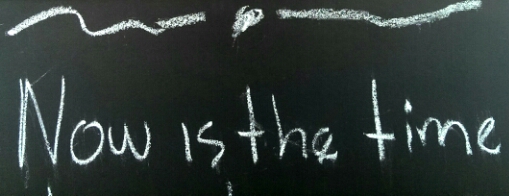
My friend who was driving the car, pointed out the cat on the hat and asked if he should stop the car. I waffled; he encouraged. I already had my camera out in my lap, so it was nothing to run out of the car for the photo.

The cat gave a purring grin (though he wouldn’t keep his face towards the camera, too busy was he looking at something down the street). The guy asked if I would give some money so that he and the cat could get something to eat. Sure; I was happy to give them a dollar for their offering.

I thought about how much I appreciated being reminded of how we can use needing to get by, when getting by can be so challenging, to spur creativity and connection instead of letting it beat us down.
cat on the hat

Similar Posts

  • | |

    What Does It Mean to Study War?

    Martin Luther King, Jr. said:   “A true revolution of values will lay hand on the world order and say of war, “This way of settling differences is not just. …A nation that continues year after year to spend more money on military defense than on programs of social uplift is approaching spiritual death.” Still, the Pentagon suggests that Martin Luther King “might” have supported the war in Afghanistan.  Not sure on what basis.

    Last night at the Willow Street Book Club, where we were reading Ram Dass’s Paths to God–Living the Bhagavad Gita, one of my fellows raised the question of how we could read as a spiritual guide a book whose context is war.  Another asked a similar question from the perspective of a feminist.  It was a fabulous, engaged, lively discussion, and I hope to see more next month.

    It would be an injustice to the text and the historical context to read entirely out of the Bhagavad Gita the duty of a warrior to kill, a wife to practice suttee, and persons born into each caste to accept their lot in life in a society structured on the caste system.   There is much richness in the text, though, that can provide guidance for a feminist, pacifist, who believes that “all men are created equal.”

    We have reread “men” in the Declaration of Independence to include women and those of all races (though we cannot manage to rewrite the Constitution to explicitly state that women are equal, but that’s a thought for another day).  Similarly, without doing injustice to the text, we can see that the ultimate teachings about living in accordance with duty (svadharma), love, devotion, and sacrifice in the Gita, like the concepts of “life, liberty, and the pursuit of happiness,” provide guidance and force for social action and spiritual devotion beyond a historical context that oppressed and bound on the worldly plane the very persons who are now seeking the deeper meanings in the text.  In fact, I believe that we can use the essential intent of the text to teach and transform the oppressors, to use the very text to show why the violence and oppression of the historical context is injust and needs to be changed so that the spiritual intent can be expanded and spread beyond the privileged.

  • | |

    Coming Snowstorm (and Heyam Dukham Anagatam)

    As I think about whether I will be able to get up to Willow Street to teach my last classes of the session, how much shoveling I will need to do , whether the next forecast storm (middle of next week) might create challenges for my planned trip to NY, etc, etc, my favorite (well, in the top 10) sutra of Patanjali, sprang to mind:  heyam dukham anagatam, 2.16, which means roughly:  the pain that has yet to come can be avoided.

    I have several translations/commentaries of the Patanjali’s Yoga Sutras in my library.  All have a different spin on what this means in practice.  What I know is that it is at least partly about being in the present and taking things as they come.  One should still practice and plan.  By practicing and planning, we are better prepared for inevitable pains and challenges.  (For those of you who are giddy with excitement with the thought of a “white Christmas,” this Sutra still helps.  Part of the pain that can be avoided is disappointment when expectations are not realized the way we hoped they would be realized.)  Once we have prepared in a healthy way, though, there is no point in agonizing about what might come, in being in pain in the present because of the possibility (or even inevitability) of a future pain.

    The snow seems inevitable.  I am charging my camera battery.  I’m picking what is probably the last of the chard and the baby leeks from the garden, and I am getting ready for Serenity Saturday restoratives.  As long as I can walk to the studio — eight inches is just plain fun, not impassable — I’ll be there with a warm and full offering.  In the meantime, I am enjoying my day instead of worrying about the potential barriers to enjoyment.

Leave a Reply

Your email address will not be published. Required fields are marked *

This site uses Akismet to reduce spam. Learn how your comment data is processed.