| | |

State of the Garden (and Lila)

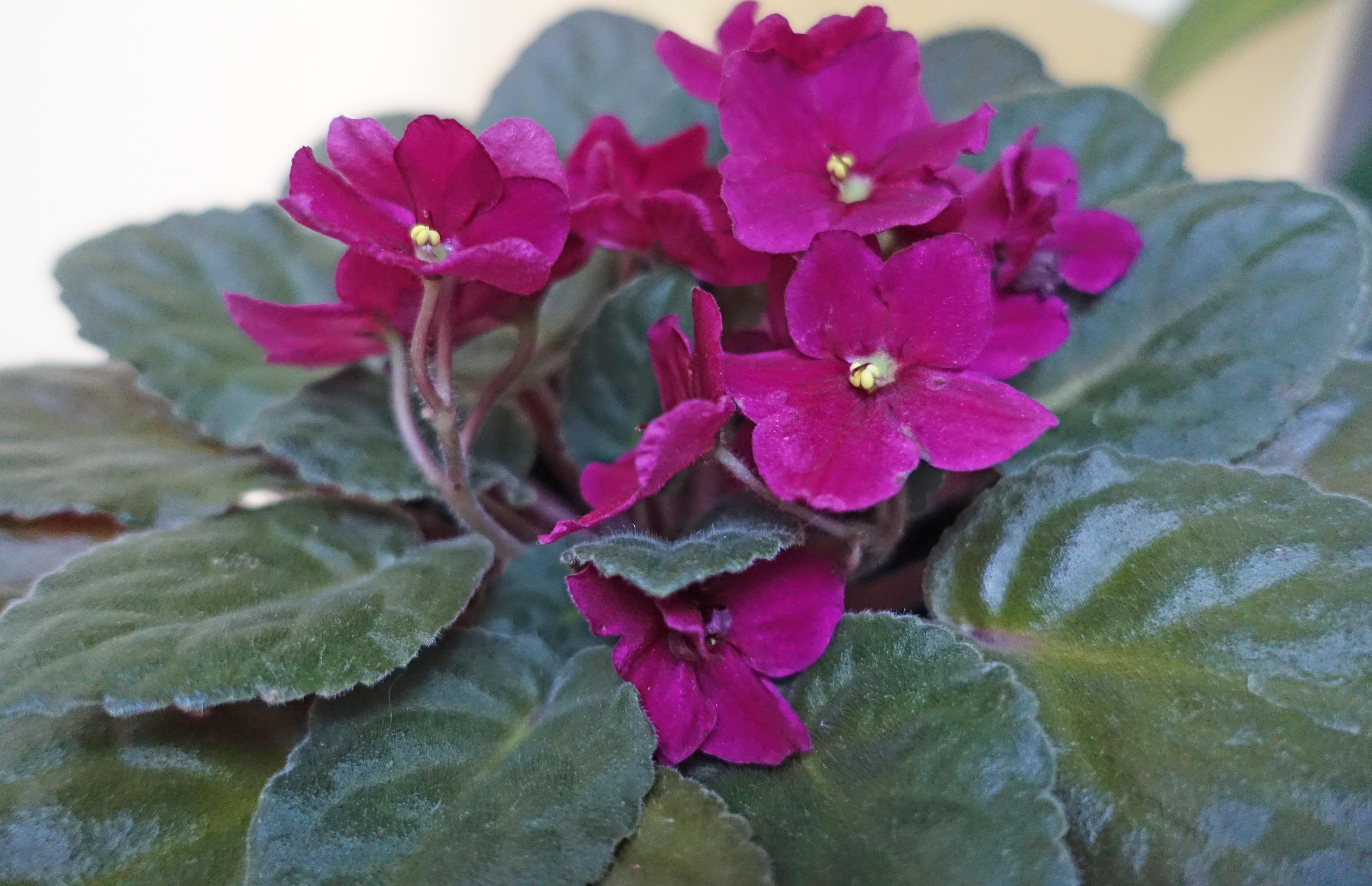
I meant to post a picture of yet another heart-shaped cloud (this one a rosy pink at twilight).  The memory card that had the picture, though, insisted on being reformatted and dissolving the data.  One minute there, the next second dissolved–play (lila) like Shiva.  I offer you instead this picture of the African violet again in full bloom.  It is a plant happy to be where it is.

african violet

Similar Posts

  • |

    An Unplanned Break from Air Conditioning (and Yogic Physical and Emotional Equilibrium)

    I came home last night from my cousin’s funeral to discover that the temperature in the house was 83F (it is now up to 86F). The air conditioning system, which had been serviced last week, is now not working at all. The repair person is not scheduled to return until Friday afternoon, and the forecast is for blazing heat. I have two choices: (1) I can get into a dither about whether the work last week in fact broke the system and get stuck in suffering from the heat; (2) I can be grateful that I have electricity, which is giving me ice and fans. I can wear comfortable clothing, eat lightly, and do yoga practices suitable for the heat.

    I am choosing the latter (I am not long from the period of years when being too hot on an irregular, but consistent basis is both inevitable and beyond my control, so this will be good practice). I may not be able to control the heat, but I can, to some degree, control my reaction. Part of controlling the reaction is just accepting the situation with equanimity and grace, so that my mind and emotions do not get heated. One of the reasons we do strenuous and challenging poses on the mat is so that we can get progressively more skilled at feeling comfortable with where we are, even when mind and body are taken out of our comfort zone by forces beyond our control.

    By keeping my reaction cool, I actually physically am noticing the heat less. As I will not be able to cool off much after practice, I will be choosing practices that are still and inward and take advantage of how warm are my muscles, rather than engaging in exertion that will make it hard for me to get cool afterward. Balanced and cooling breathing practices, meditating on stillness, and sweet hip openers and forward bends are definitely in the picture.

  • |

    Upheaval (and Nilakantha)

    Last night when I arrived to teach, I found that the room where I teach had been booked with something else (mistakes happen) and the alternative offered by the space just was not viable.  I was peeved, but just canceling class did not feel right for the space (which has treated me well), my students, or myself.

    Instead, I waited until class time, gathering the students together and giving the options.  Fortunately, class was small because it is summer.  Two  students agreed to drive us to my house, which is usually a walk, but one already had her car with her on her way home from work; and the other had hers just a couple of blocks away at her house.  All the students, including two brand new students who came along for the adventure, arrived at my house less than 10 minutes after the usual class start time.  To honor everyone for being so flexible, I turned the class into a donation class, with the proceeds going towards July’s cause:  the ACLU.

    This turn of events seemed to me to fit well with the message of the Shiva archetype Nilakantha, which just happened to be the name of Shiva that I have been contemplating this week as I have been preparing my classes.

    Shiva drank the poison that was stirred up when others were searching for the nectar of immortality.  In the quest for the unrealistic, these beings brought to the surface a poison that would have killed all humans.  Shiva drank this poison and trapped it in his throat, which turned it blue.  This gave him the name blue-throated, or nila-kantha.

    The challenge I encountered yesterday was certainly one of the well-off middle class.  If it were not for our lifestyle, the abrupt change of plans and disruption could not have even felt poisonous, but we are creatures of our place and time.   We took the potential chaos from having been stirred up and instead of letting it ruin our evening, we made it into a celebration and an offering.

    And I am working with the space not to have it happen again.  Many thanks to the students who came and were so gracious.

  • | |

    Some Idiosyncratic, Feminist Musings About Ayyappa

    Ayyappa is the half-brother of Ganesha and Subramanyam. Ganesha and Subramanyam’s mother is Siva’s wife Parvati.  Ayyappa’s mother is Siva’s brother Vishnu while he was the woman Mohini.  Even in the glossed over versions that don’t get into what a modern reader might think of Ayyappa’s mother, he is the extra and unwanted child of the family, although he is needed to save the world from evil.  Ayyappa is the character in the story who represents those who have ever been or felt unwanted or third-wheel or lost or excluded or is somehow missing in society or in relationship, but is still inherently worthy and divine and essential to the functioning of society, even though he is cast out into the wilds of the forest.

    Being the god of such, at the festivals at a major temple in Kerala on the pilgrimage route, all castes are welcomed. No need to be a Brahmin.

    But only prepubescent girls and elderly, post-menopausal women are permitted; women who have the capacity to conceive are forbidden.  Those connecting with the god of the unwanted, the extra, the missing, the cast out, themselves deliberately exclude from access to this god others they make even less privileged.  Even for the men of the lowest caste, the step-brothers, the bastards, and the otherwise unwelcome and unrecognized for their intrinsic worth, by the exclusion of all women of child-bearing age/capacity, Ayyappa’s pilgrims get to experience the sense of inclusion and privilege in society of the more powerful and glorified and popular brothers who have never been themselves cast out.

    Could this by design?  Is it that one cannot really understand what it means to be excluded unless one also experiences the power of being able to exclude in turn? If yes, how easy to pick, in a patriarchal culture, women of child-bearing age as the outcast and denied.  (Do they ask any woman who shows up whether she still bleeds?  If a woman has stopped bleeding, but doesn’t look “elderly,” does the prohibition still apply?).

    I have personally experienced far too many things that have been partly or completely closed off to me, overtly or invidiously, because I am a woman or not of a particular social or religious background, and much where it was worth risking ease to challenge the status quo.

    As for an Ayyappa pilgrimage, I’ve seen photos of half a million escstatic and determined male worshippers surging towards the temple for festival (looks something like returning to the tube station after seeing the Rolling Stones at Wembley Stadium in 1982 or the infield on a muddy day at the Preakness only more testosterone than that), and what first came to mind was not, wow, I really want to join that party.  Rather, I asked myself where do they urinate and defecate.

    I personally cheerfully leave this one to the men (and my more intrepid and determined sisters), even if it makes some of them feel special in part because they have excluded a whole class of people from being able to formally worship.  I’d much rather spend time with Kali. Thank you very much.

    Maybe I’d go stand outside Sabarimala in off season, when the temple is closed.  I’d take a photograph and contemplate what the idea of Ayyappa–god of the unwanted, the unwelcome, the third wheel, the excluded, the extra, the cast out from the benefits but saddled with the hardest task–means to me–both as one who has experienced the pain of exclusion and one who has excluded others (as most all of us do even when we try not to), and how it can inform me to relate to others with more grace and compassion.
Leave a Reply

Your email address will not be published. Required fields are marked *

This site uses Akismet to reduce spam. Learn how your comment data is processed.