| |

On Looking at Clouds

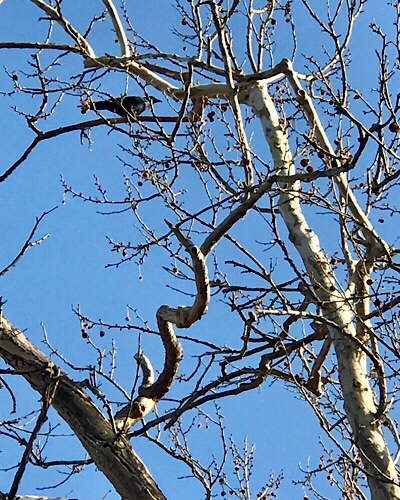
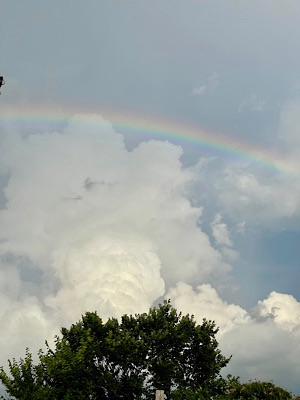
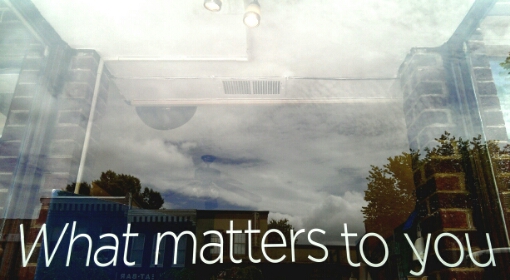
One reason to look up is to avoid the troubled response to a view of highway and homeless shelter.  The other is because I am captivated by the never ending exquisite beauty of sky and how much I can learn about my environment from the sky if I pay steady and open attention to it.

Sometimes I practice because I want to move my attention away from something unpleasant. More often it is because to practice is an abiding joy.

image

Similar Posts

  • |

    Yoga Alignment for Snow Shoveling

    When out shoveling (see photos from tonight here), use these Anusara alignment principles as a mantra to keep yourself doing them:  shins in, thighs out, tailbone tucked, upper arm bones integrated into the shoulder socket, shoulder blades hugged to the back of the heart.  Oh yes, arm bones integrated, shoulder blades onto the back of the heart.

    Afterwards, try a few slow sun salute variations to reintegrate and align.  Follow with vipariti karani (legs up the wall), supported supta baddha konasana (supported reclining bound angle pose, and a few hip openers of choice.

  • | | | |

    Invite to Practice Yoga and Gardening

    I am pleased and excited to announce my first public, in person practice since the inception of the pandemic.  Is it any surprise that this yoga offering is an invitation to the garden, which is a place dedicated to creating and sharing joy, learning, and nourishment throughout the community for over 50 years?

    Come get out into beauty and into your own body and into the dirt on Tuesday, June 6th, from 9 am to 12 pm: at the Washington Youth Garden, on the grounds of the National Arboretum.  After the welcoming yoga practice, we will all join the staff and the regular volunteers (I’m one of them), in the garden.  Throughout the time, I will be available to respond to individual questions about yoga and about optimizing physical alignment/orientation to make it more sustainable to work in the garden, especially for older bodies.  Here’s the link to get more details and to register:   Yoga and Volunteering at the Washington Youth Garden

    Think this sounds great, but you’re hoping for a different time or location, please feel free to reach out.

  • | | |

    Yoga for Our Troops

    It is too far from my current world and beyond my temporal limits at the moment, but if you are interested, please contact my friend Robin through the website link below, who writes:

    Dear Friends and Colleagues,

    As some of you may know, the last 5 years or so I’ve been fortunate to have had the opportunity to take yoga way beyond the reach of a yoga studio and teach yoga and iRest meditation at Walter Reed Army Medical Center. It’s been a life-changing experience.
    Though its only 5 minutes away from the WSYC Takoma Studio, Walter Reed is a world away in many ways. I’m sure you’ve heard the news reports about the soldiers suffering from trauma, brain injury, loss of limbs, etc. And their families carry enormous burdens that are not all met by military services. I regularly see 22 year old women with a baby on back and toddler beside them pushing a young husband who is seriously injured in battle. And these wounds may be more readily addressed than the wounds that are invisible to the eye — depression, flashbacks, anxiety, sleep deprivation, mood swings and isolation.
    One piece of good news is that the military is now beginning to embrace mind-body approaches such as yoga and bring them into healthcare settings.
    Several teachers, including Karen Soltes, and I have created a training program that helps (200 hr +) yoga teachers to teach safely and effectively in military settings. Our experience shows that one must have a respectful understanding of the culture of the military AND a basic knowledge of the signature war-related conditions and injuries.
    Part One: Fundamentals of Teaching Yoga and Meditation in Military Settings is a 7- week teleconference program that you can take from anywhere with just a phone and email. It runs  Wednesday June 8 – July 20. If you miss a class, we record every one of them so you can listen at your convenience.
    Please visit our website at www.warriorsatease.com.  I’ve attached a flyer, if you feel inclined to post this at your yoga studio. Let me know if you have any questions.
    Also, please pass this message on to anyone in the country or Canada who might be interested in working with the military community.

    Take care and thanks so much, Robin

  • |

    “Stabilize the Periphery; Move from the Core” (and blogging)

    For the past week, I have been contemplating, practicing with, and teaching the axiomatic sequenced alignment principle of Anusara yoga “stabilize the periphery; move from the core.”  It means exactly what it says.  We stabilize the outer edges of the pose (feet, hands, head) and move from our core to get into the full expression of the pose.  For example, have you noticed how often the yoga teacher will have you put your hand on your hip when you are first in a standing pose and working the alignment of the foundation and core body?  Only when the central alignment has been reached, do you extend the arm and hand to complete the full form of the pose.  The reason Anusara teachers are taught to use this technique is that it stabilizes the periphery, so that the students can concentrate on the major alignment and then move from the core.

    Off the mat, this principle means to me that we start with our overall goals and needs and the essential principle of trying to move from and respond in the highest before getting distracted by the details of whatever is going on.  As I contemplated and taught the principle this week, I found myself thinking and talking about lots of different examples on and off the mat.  The central idea was there, and then as the classes progressed, depending on the level and the students, I wove in illustrative examples that made sense with what was happening in the classes.

    I found myself struggling, though, to write about this principle.  I had too many different things I wanted to explain about how it helps in yoga asana both as an important therapeutic practice and as a way to expand one’s core abilities.  A plethora of examples of how it works off the mat came to mind.  To write coherently when one has limited space/attention span of reader/number of words, one has to first stop getting into the details and start with the central theme.  Then it is necessary to flesh out the central theme with very select details that enhance the understanding of the central premise.  The writer chooses not to scatter the central theme into so many details that the central point is obscured or lost in the details.  My struggle to write about this principle served then as a perfect example to myself about the very principle about which I was choosing to write.  I needed to “stabilize” the details, so that I could express coherently the core principle.

    Do you have good examples of how applying this principle has helped you on or off the mat?

Leave a Reply

Your email address will not be published. Required fields are marked *

This site uses Akismet to reduce spam. Learn how your comment data is processed.