Art and Culture | Community and Family | Food for the Mind (Yoga Philosophy, etc) | Meditation | Photos
Spanda?


Peace and light, E — Posted with WordPress for BlackBerry.
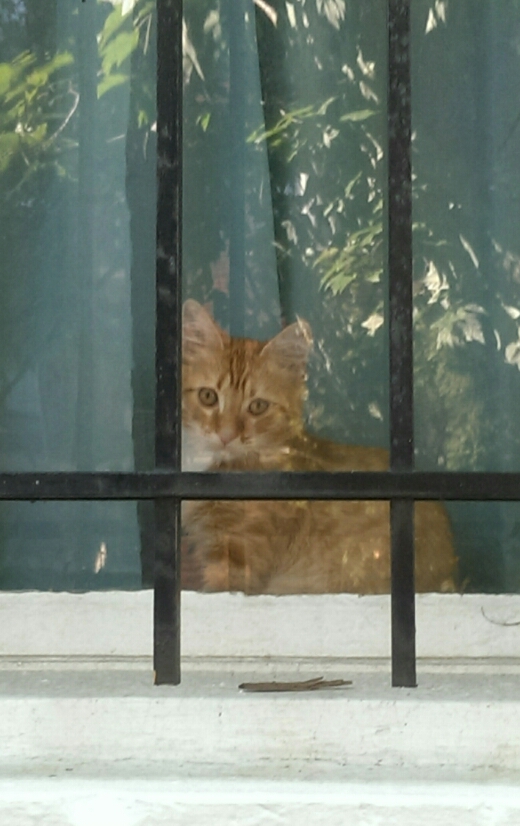
My adorable new neighbor appears in the photo to be outside looking in with me taking a picture from inside looking out. From the perspective of who was in the house and who was standing on the sidewalk, it was of course the was the opposite.
The paradoxical illusion in the photo led me to think about moksha — the yoga concept of liberation.
What I get from the various teachings for my own living practice is that to experience freedom in this embodiment we need to be able simultaneously to be on the inside looking out–from our individual embodiment appreciating a sense of universal connection–and also be on the outside looking in–bringing back to particularized embodied action what spaciousness we learn from practice and study.
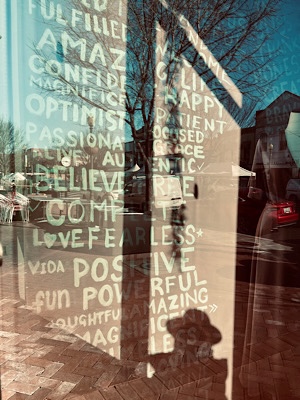
Throwing shade on toxic positivity.
Peace and light, E — Posted with WordPress for BlackBerry.