
Similar Posts
- Asana, Pranayama, and Yoga Practice | Community and Family | Food for the Mind (Yoga Philosophy, etc) | Meditation
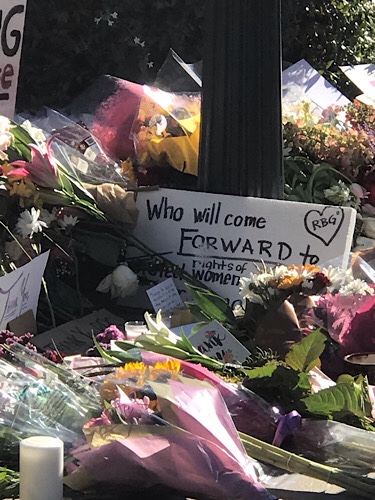
Signs Around Town (Temporary)
The sign may be temporary, but this is a state that I would want to be as long-lasting as possible. Yoga, well-practiced and studied, provides us with ever more resilience–one hopes a lifetime’s worth– to handle the wild vagaries of existence with as much grace as is possible.
Peace and light, E — Posted with WordPress for BlackBerry.
Agni (the fire element)
Agni or fire is the third of the mahabhutas. Fire does not just give us warmth and light. It also transforms. Just think of what happens to the humble ingredients of flour, water, yeast, and salt when they are baked. When working with agni in our asana practice, using the Anusara principles of alignment, I have drawn on the intersection of pelvic loop and kidney loop (which together create the action of uddiyana bandha, using these principles as I understand them to activate and strengthen my core.
One of the niyamas of Patanjali’s eight-fold path is tapas, which means heat or austerity. We are exhorted to bring fire or fervor to our practice to experience bliss, to know true consciousness.
Fire without balance, without a sense of detachment or surrender, though, will burn us up. We must be careful how we work with agni as the element.
Note: Agni is also the name of the god of fire. Not only do we need to be careful how we draw on the fire element — this town’s culture places perhaps too much value on “fire in the belly,” but we should be wary of how we invoke the gods: India’s nuclear missile program is named “Agni.” Of that invocation of the gods and of fire, I am afraid.
Sadness (Sukha hara, dukha hara)
Last night I was feeling deeply sad not having Becky with me any more. The first week, I was telling myself how lucky I was to have had her for so long, that she lived a long, happy, well-loved life, and that it was truly time. Then I threw myself into work, errands, the garden, etc. This week, I have been filled with a deep sense of grief and loss.
Classical yoga would have us try to transcend the pair of opposites — pleasure and pain. Tantra would have us experience the full range deeply, knowing it is all part of the play of being manifest in human form. I have been thinking about my teacher, John Friend, who often talks of the intensity of grieving for loved ones who have died, because of having loved truly and fully.
Thinking about Becky, this chant started repeating itself in my head (I have it recorded by Dave Stringer): “sukha hara, dukha hara, hara, hara Shankara.” “Hara” is an epithet of Shiva, from the root word to bear away or destroy. “Sukha” means ease; “dukha” pain. “Shankara” is another epithet of Shiva in benevolent form. I think of this chant not so much a call to have Shiva energy destroy or remove both pleasure and pain, but rather a reminder that both pleasure and pain are integral parts of our experience of being. Recognizing that grief and loss are as much part of our own humanity as love and pleasure, helps remind me of my own connection to spirit. It ultimately inspires me to try and live in a way that is more benevolent and generous, and to respond with the most light, whatever I face. (This of course is a life work).
I would not give up the full and wonderful years of companionship I had with Becky and her sister Henrietta (and others who I have loved) just to avoid the grief of loss.
- Asana, Pranayama, and Yoga Practice | Community and Family | Food for the Mind (Yoga Philosophy, etc) | Photos | Quaker
Bhakti
I went down to the White House and joined a prayer vigil for ceasefire and disarmament in the Middle East led by the Franciscan Action Network. Another group was beginning a march on front of the World Bank, pointing out the conflation of oil and gas dependence, continued bombing, and ecocide. Such action is bhakti (spiritual devotion), not empty prayers combined with a niceness that passively allows the status quo.
How are you living your faith?