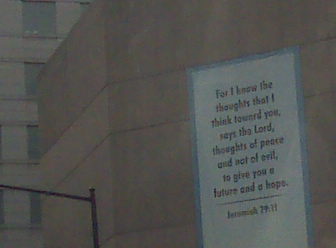
Found Exhortation (Biblical, Up the Street from the White House)
Peace and light, E — Posted with WordPress for BlackBerry.
Peace and light, E — Posted with WordPress for BlackBerry.
“I have always believed that hope is that stubborn thing inside us that insists, despite all the evidence to the contrary, that something better awaits us so long as we have the courage to keep reaching, to keep working, to keep fighting.” President Barack Obama (on accepting reelection November 2012)
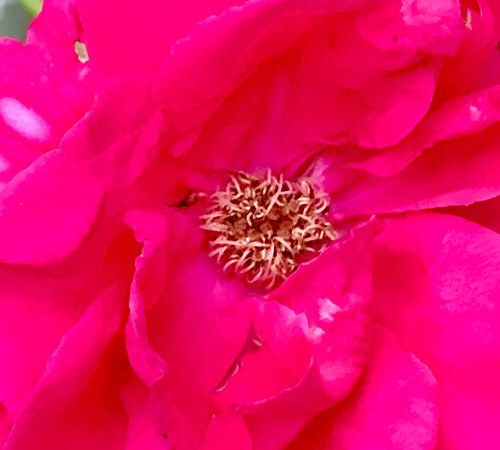
The first wild flush of the rose in the back garden passed a couple of weeks ago. But even in the heat, with leaves distressed by the beginnings of summer black spot, there are still a few exquisite blooms.
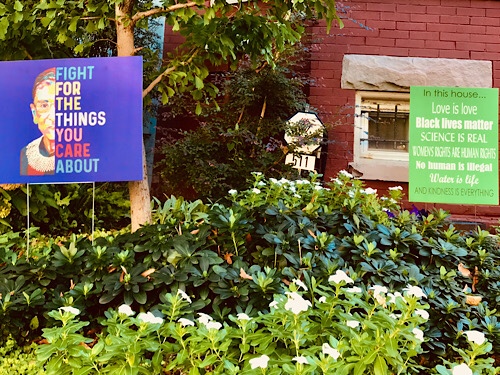
One sign reads: “Fight for the Things You Care About” the other reads: “In this house we believe–love is love, black lives matter, science is real, women’s rights are human rights, no human is illegal, water is life, and kindness is everything.”
I am having a momentary yearning that it is hard for me to imagine realizing. Given all my commitments (commitments that I treasure for the groundedness, sense of place, and community that they give me in return), I cannot quite figure out how I could fit in a long weekend in Paris before March 11, 2012.
Nonetheless, I have been enjoying this morning a fantasy of picking up and going to Paris to see the Tagore exhibit at the Petit Palais, and incidentally eating and walking and photographing and delighting in everything else Paris has to offer. I suppose I could buy the catalogue–the internet has made such things ever so easy, but it wouldn’t quite be the same.