Metro Bus Detour
Something was going on; the police detoured us North around the highway. I wondered for a moment whether it was at all related to the fire last week, and then I remembered that the filming of Transformer 3 is disrupting the city..

Something was going on; the police detoured us North around the highway. I wondered for a moment whether it was at all related to the fire last week, and then I remembered that the filming of Transformer 3 is disrupting the city..
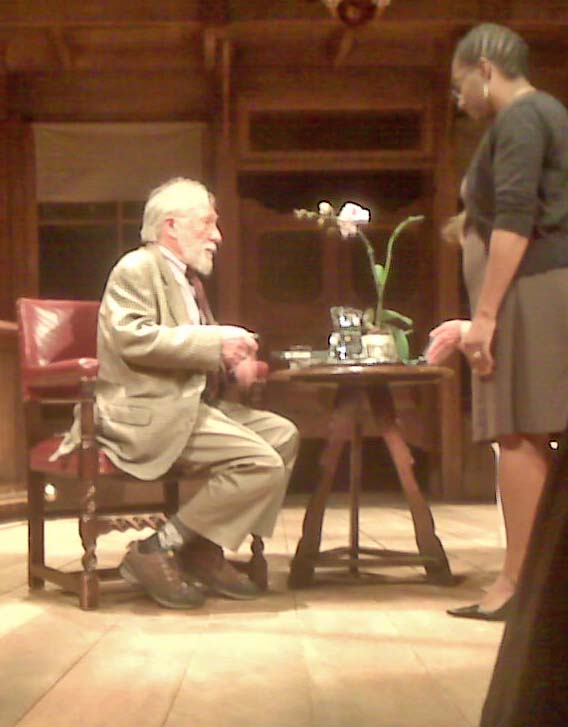
Last night I had the singular pleasure of hearing Gary Snyder read his poetry at the Folger Shakespeare Library. At the end of the reading, Mr. Snyder answered a few questions. In response to one question about advice he gives to aspiring poets, he said: “Don’t be journalists. Do hard physical labor that leaves y0ur mind open.” This is not surprising advice, coming from one who has chosen a life requiring regular manual labor. “Meditate only for its own sake,” he added, in an apparent non sequitur and without elaboration.
Gary Snyder’s poetry is evidently influenced by his dedicated study and practice of Buddhism. The insight and clarity of his poetry surely reflects not only his intellectual study, but the deep wisdom of a dedicated, long-standing, and steady meditation practice. The advice to “meditate for its own sake” seemed almost the offering of a koan by the master (poet) to his pupils. Meditation, in my experience, definitely enhances clarity, insight, creativity, and health. Meditation is not meditation, though, unless when engaging in meditation that is all one is doing and without any goal (like the “actionless action” of the Bhagavad Gita). It is the deepest of practices to engage fully, but not be doing except for the sake of doing itself (and in alignment with the deepest truths).
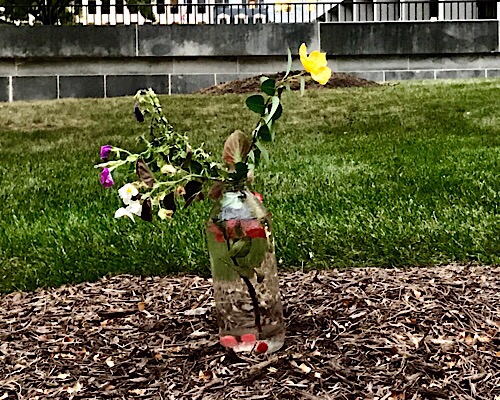
Thinking about privilege, including the privilege to choose whether to take time away from the conflict and not think about it. I’m trying to be conscious of that particular privilege whenever I find myself instinctively trying to turn away and then to gather myself from the recognition of my good fortune and reengage.
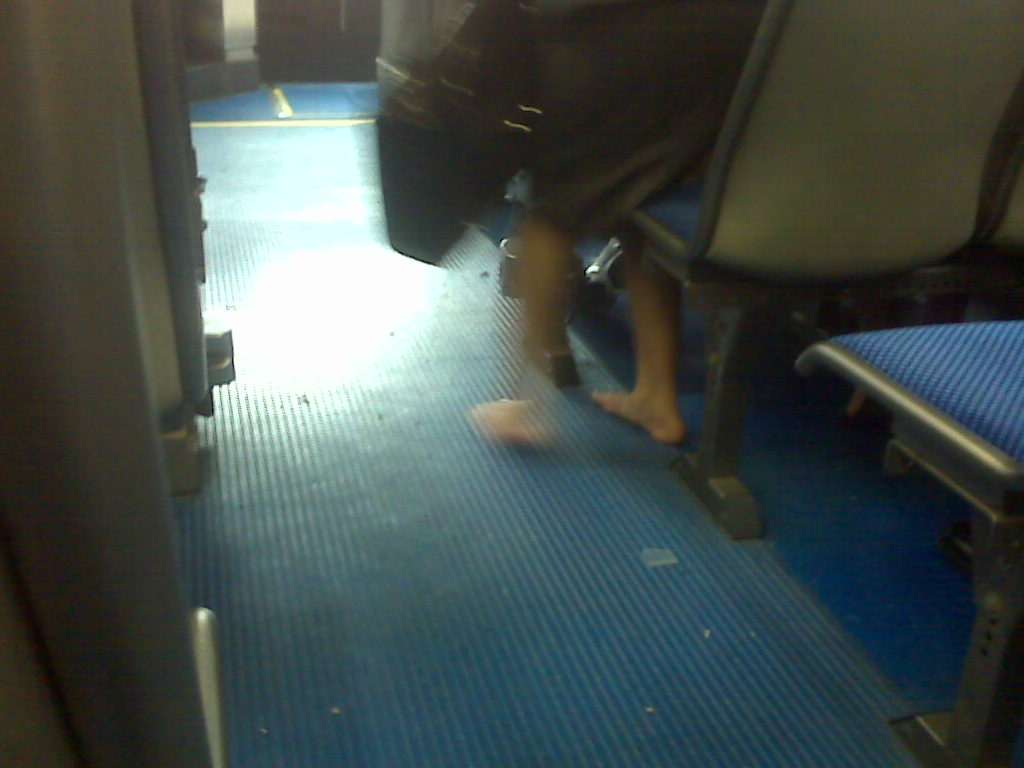
Just guessing that the bare feet on the bus are not a fashion statement, but a reaction to painful high heels.
Peace and light, E — Posted with WordPress for BlackBerry.
The tantric yoga philosophy ascribes the characteristic of svatantriya or ultimate freedom to the energy that infuses all of us. We all want to be free, but when we get stuck in our embodiment, forgetting that we ourselves are manifestations of spirit, then we lose sight of our true freedom. To find our own freedom of spirit, we need to be disciplined, to practice, to study, to live in a way that brings us into better alignment with ourselves and world with which we are inextricably interconnected.
In this country, one of our principle ideals and buzz words in dialogue about how we should live is freedom. What can so often be forgotten in this dialogue, though, is that freedom is a contract. To be in a society where all have the opportunity to experience freedom, we need to agree, with discrimination (viveka) to certain limitations (for example, we agree to stop for red lights so that we can be free to drive and walk without a constant risk of being hit in crowded city).
Granted, I am grossly oversimplifying here, but part of the great losses of freedom we are currently experiencing is the abdication by individuals of the responsibility to shape the agreement to maximize our collective freedoms. Like the agreement with ourselves to practice steadily to experience inner freedom, we need to stay engaged, even when it seems impossible or deeply frustrating, in order not to lose sight of the ideal entirely. Here’s some information from FCNL on why it is important to lobby despite how fruitless an act it may appear to be.

Peace and light, E — Posted with WordPress for BlackBerry.
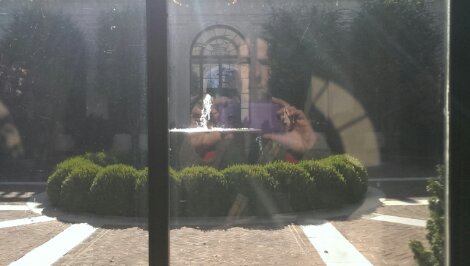
What we see in front of us depends on where we choose to go and what crosses our path.
What we see reflected depends on what we bring to the picture (including how we look at things).
Inner courtyard at the Freer Gallery.