One of the important principles of yoga practice is viveka — discrimination. The longer and more steadily one practices, the greater ease with which one will find path that leads towards recognition and remembrance of our own light and the light in others. In modern culture, I think one of the critical aspects of practicing viveka is having a healthy doubt and willingness to question claims that consuming certain things will make us happier, or better, or will make the world better. Paying too much attention will probably just create a tangle of intellectual confusion that will not lead to a greater openness of spirit. Learning to listen well to your body and mind and what and how you feel and hear on and off the mat will help you start to know better your body and mind and how they interrelate with all around you, is likely to shift your choices and actions.
It is now fashionable to be “green.” Discerning what that means, though, is where we need to practice discrimination. For example, claims of “natural” foods, “organic” foods, and “green” products are now ubiquitous by companies that are part of the existing Wall Street profit-driven industrial and marketing complex because they think they are money-makers and expect most consumers not to question the claims. We are also seeing more and more articles and stories debunking these claims and calls for regulation so that consumers will understand what is bunk. If we stop and pause, we can probably figure out some of this without reading about the pros and cons. Do you know who is selling it to you? Does it come in packaging with a lot of small print? Is the packaging recyclable? Are shareholder profits critical to the entity selling you the food or garden supplies or other consumer good?
Taking the example of the success of the big companies, small entities are using “green” in their names and advertising without discrimination. Around town I see fairly regularly, landscaping companies with cozy-sounding “green” names. When I watch them working, though, they are using Round-up or other chemical weedkillers, throwing into the trash compostable yard waste, and planting non-native shrubs. They may be making a garden the color green, but they certainly aren’t doing “green” gardening.
Here’s some great information on having a “climate-friendly” garden from the Union of Concerned Scientists. The tips are more helpful for a yard large enough to have a lawn, and do not fully apply for my small patio (though I have a tree in front, don’t leave bare soil, and do not use pesticides or chemical fertilizers. I haven’t yet tried planting winter crops in my containers, but I’ve rearranged the patio so that I have a place for a raised bed (to sit on the brick where the table and chairs once were). This winter, I’m hoping to add the bed and a cold frame to lengthen the growing season.


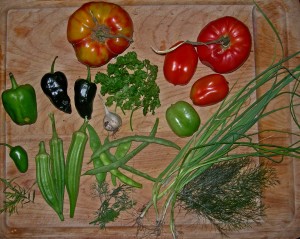 Could not resist the french name. More fun than summer local vegetable stew. An alternative name could be: how to make three okra and six beans into dinner for two. Or maybe four. When I was out in the garden this morning, I simply picked what needed to be picked. Featured here: three okra, six beans, one jalapeno, two ancho chiles (one partly dried on the plant), two large tomatoes (both of which are only partly viable), two ripe and one green (fell off while I was picking the ripe ones) roma tomatoes, one very small garlic clove, baby leeks, garlic chives, tarragon, parsley, dill, and herb fennel. Serve over quinoa, couscous, rice, or pasta, and it is easily a meal for two. Add some red beans or other dried beans, and it could be dinner for four.
I agree– moderating the 6-legged population can be a very good thing. I’ve been wondering what the recent cold weeks have done to the large colony of yellow jackets that took up residence in our yard last summer (within long underground tunnels created by the rotting of old tree roots). Perhaps we will after all be spared making the decision on how to get them to go elsewhere.